

About The Infinite Dungeon
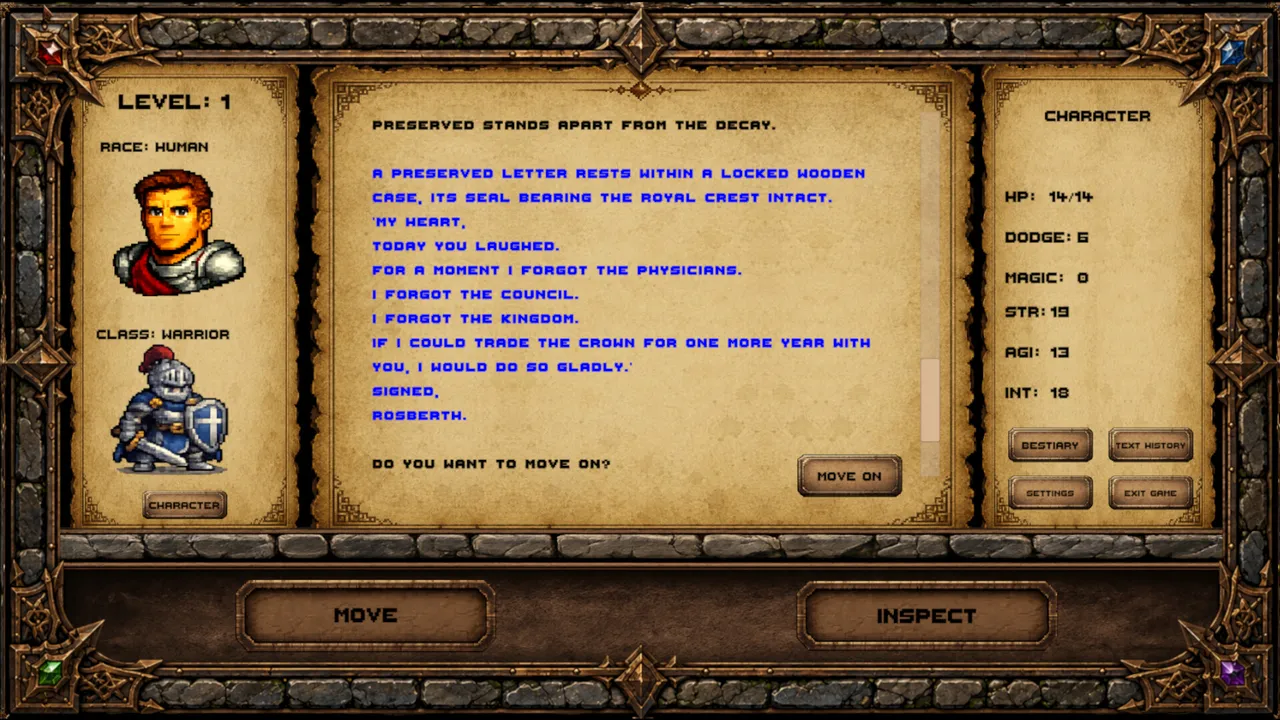
The Infinite Dungeon is a turn-based fantasy RPG built around one core tension: whether procedural generation can sustain strategic depth across a theoretically endless descent. The release date for The Infinite Dungeon is July 2026 on PC, developed and published by Rafael Seyssel as a solo project.
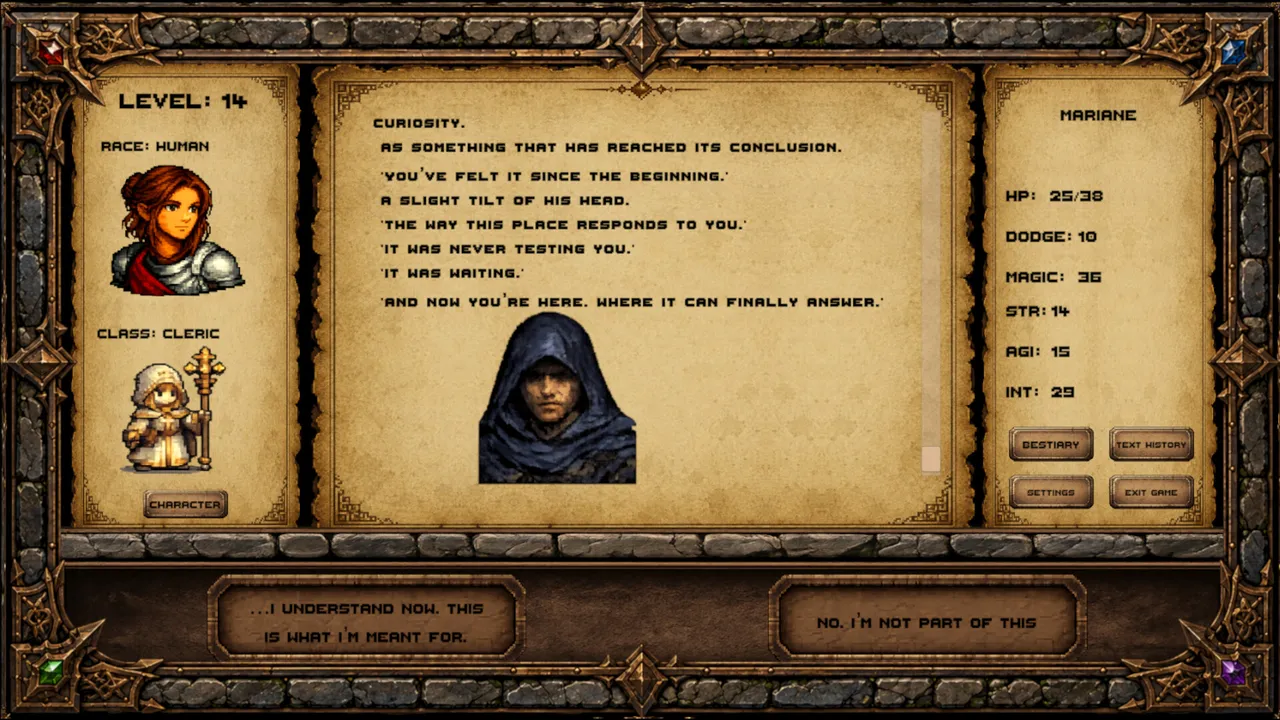
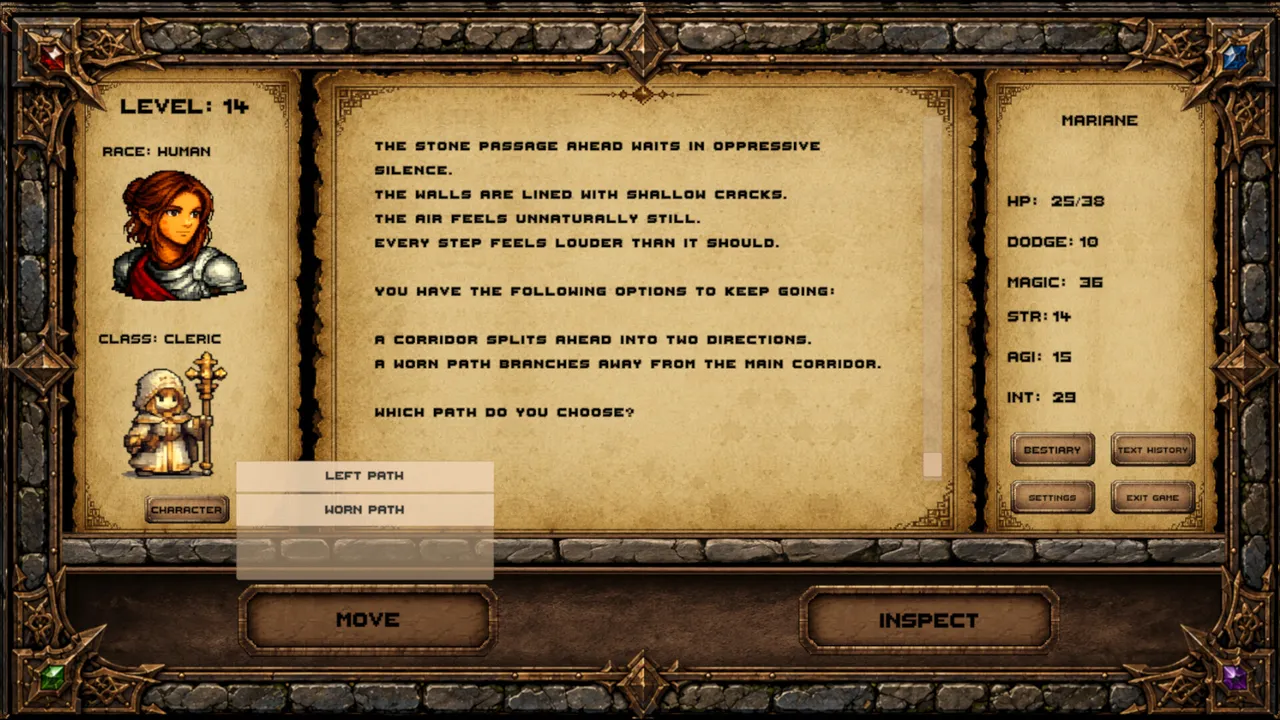
The game's entire experience hinges on whether the procedural systems can keep tactical combat engaging for dozens of hours. Each expedition sends you into a dungeon that never generates the same way twice, forcing you to adapt rather than memorise layouts or optimal routes. This matters because it separates The Infinite Dungeon from fixed-design roguelikes or traditional turn-based RPGs where the map is knowable and mastery comes from learning it. Here, mastery means reading threats on the fly and making sound decisions under genuine uncertainty.
Four Classes, Four Strategic Identities
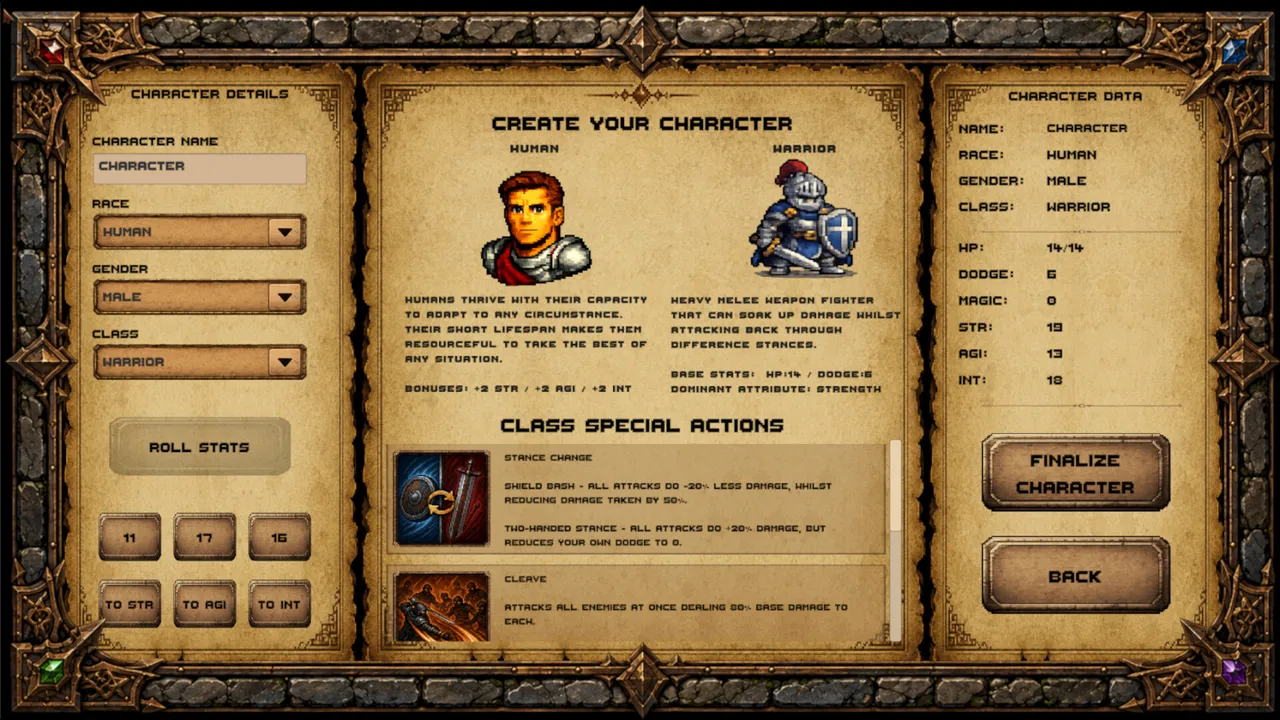
The four classes—Warrior, Cleric, Wizard, Thief—are not cosmetic variants but fundamentally different approaches to combat. A Warrior leans into stance-based mitigation and direct damage, a Cleric into healing and undead suppression, a Wizard into elemental control and battlefield manipulation, a Thief into critical strikes and poison. This structure suggests the game expects you to specialise rather than retool mid-run, which means your early class choice locks you into a playstyle for the entire descent. That constraint creates stakes: picking wrong is a commitment, not a minor setback.
Combat and the Resource Gamble
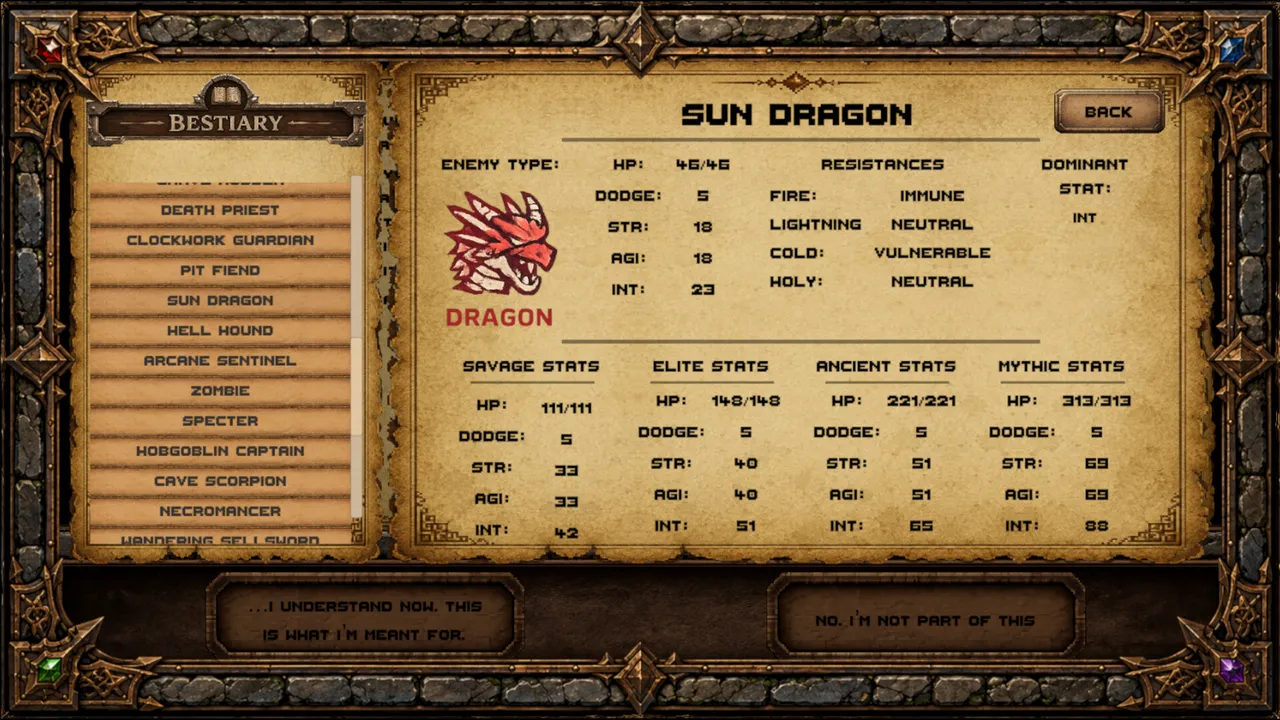
Turn-based combat rewards planning across three layers: reading enemy weaknesses, managing status effects, and rationing limited resources against the pressure to push deeper or retreat to recover. The interplay between these three—weakness identification, resource control, and the push-versus-pull decision—is where tactical depth lives. Whether this stays fresh across a procedurally infinite dungeon, or settles into a routine of exploiting predictable enemy patterns, is the open question the release date will answer.
Solo players invested in methodical, turn-by-turn decision-making will find a home here. Anyone after fast-paced action or a narrative-driven campaign should look elsewhere. For those willing to wait for player feedback on whether procedural generation sustains engagement, holding off until after July 2026 makes sense; for early access players and roguelike veterans curious about a solo dev's take on endless descent, wishlisting now is justified.
Features
System requirements
Minimum
- OS
- Windows 10 (64-bit)
- Processor
- Intel Core i3-2100 or AMD FX-4300
- Memory
- 2 GB RAM
- Graphics
- DirectX 11 compatible GPU
- DirectX
- Version 11
- Storage
- 500 MB available space
- Sound Card
- Any
Recommended
- OS
- Windows 10/11 (64-bit)
- Processor
- Intel Core i5 or AMD Ryzen 3
- Memory
- 4 GB RAM
- Graphics
- NVIDIA GTX 750 Ti / AMD Radeon R7 370 or better
- DirectX
- Version 11
- Storage
- 500 MB available space
- Sound Card
- Any

No comments yet. Be the first to share your thoughts.