
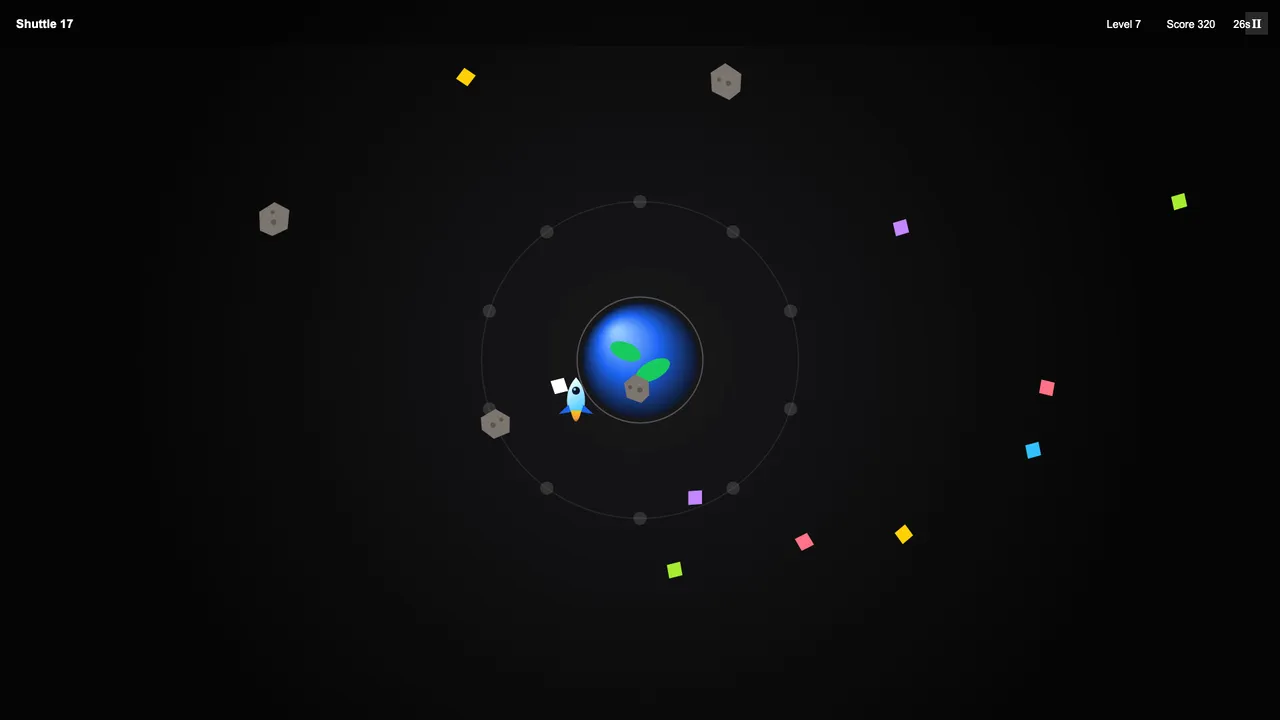
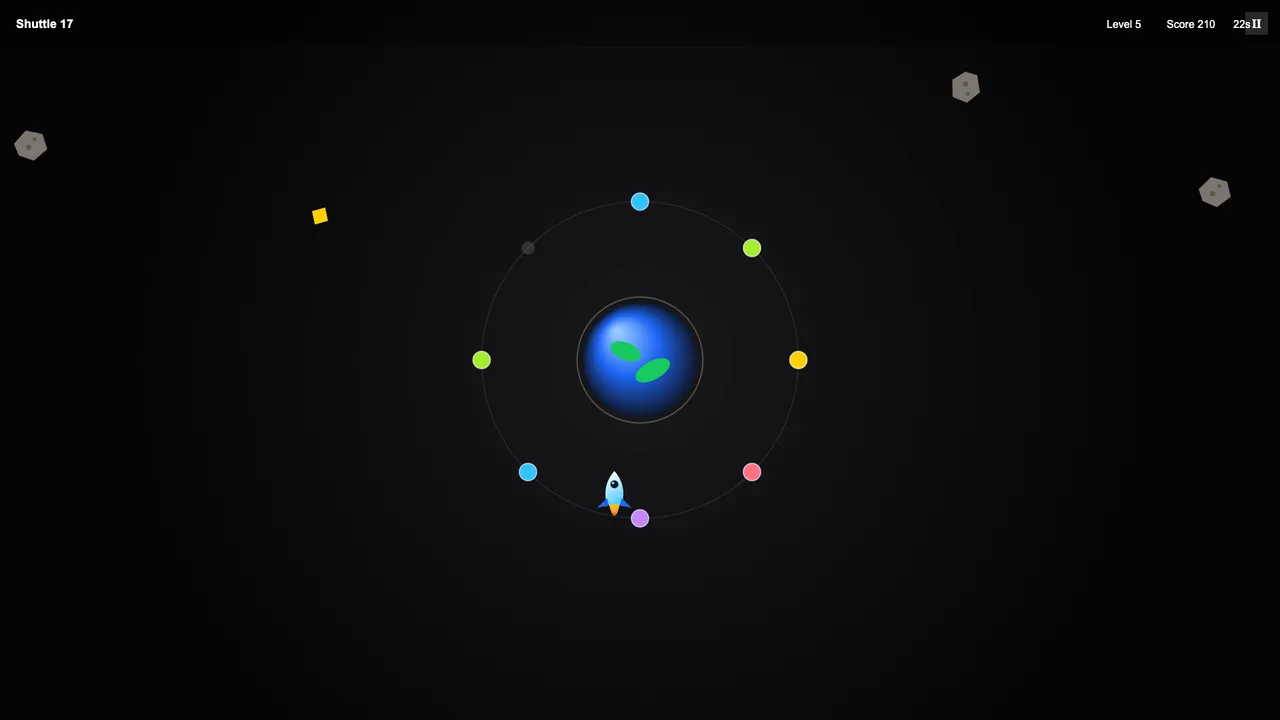
About Shuttle 17
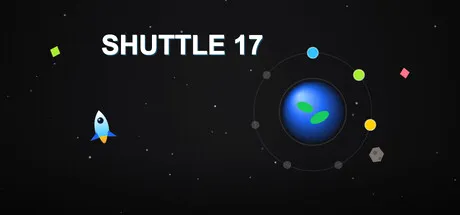
Shuttle 17 is a minimalist arcade game built around a single, punishing loop: collect energy shards drifting in orbit, deliver them to matching slots around a planet, and do both before asteroids or time kill you. It launches on PC on July 15, 2026, and it makes no pretense at being anything more than a high-score chase, which is exactly what arcade games are supposed to do.
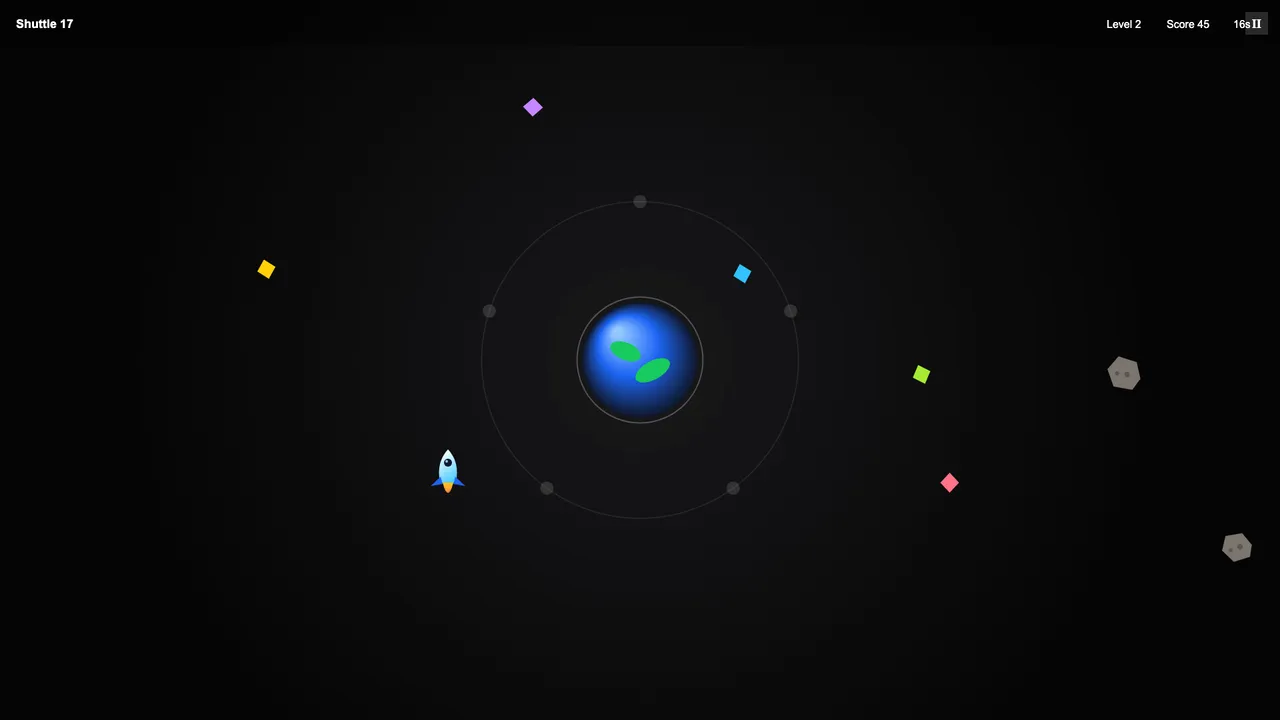
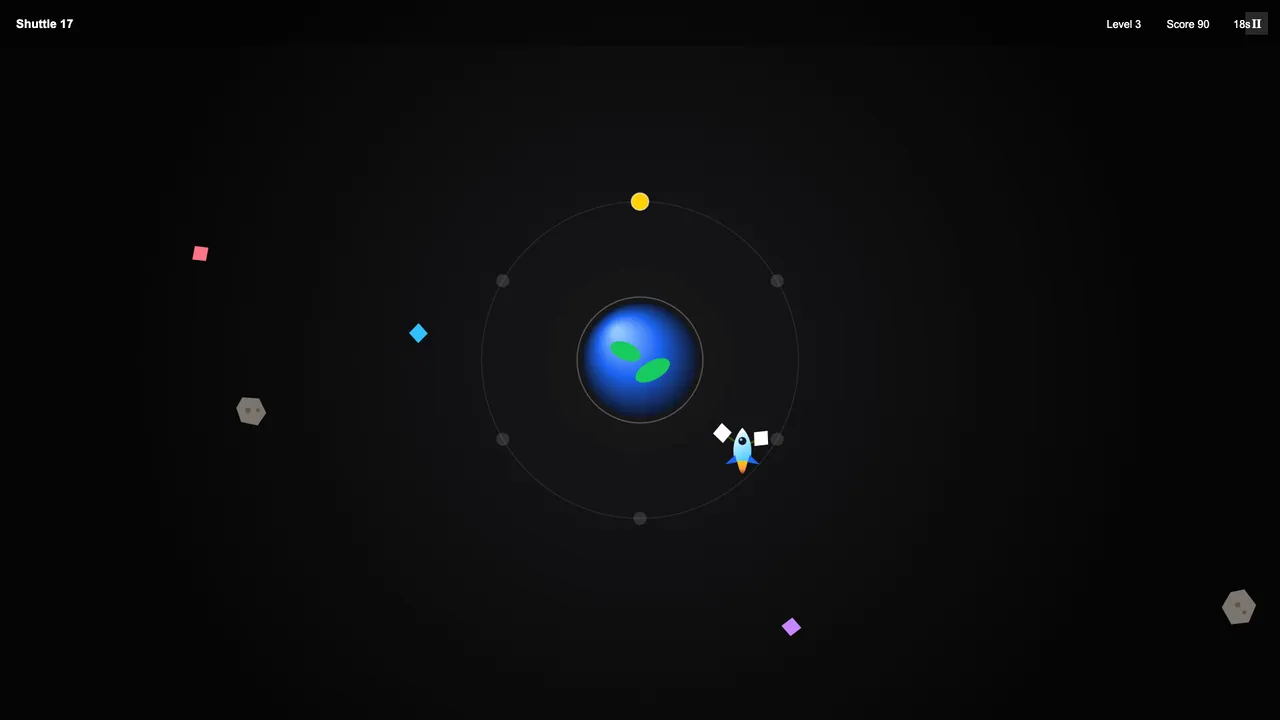
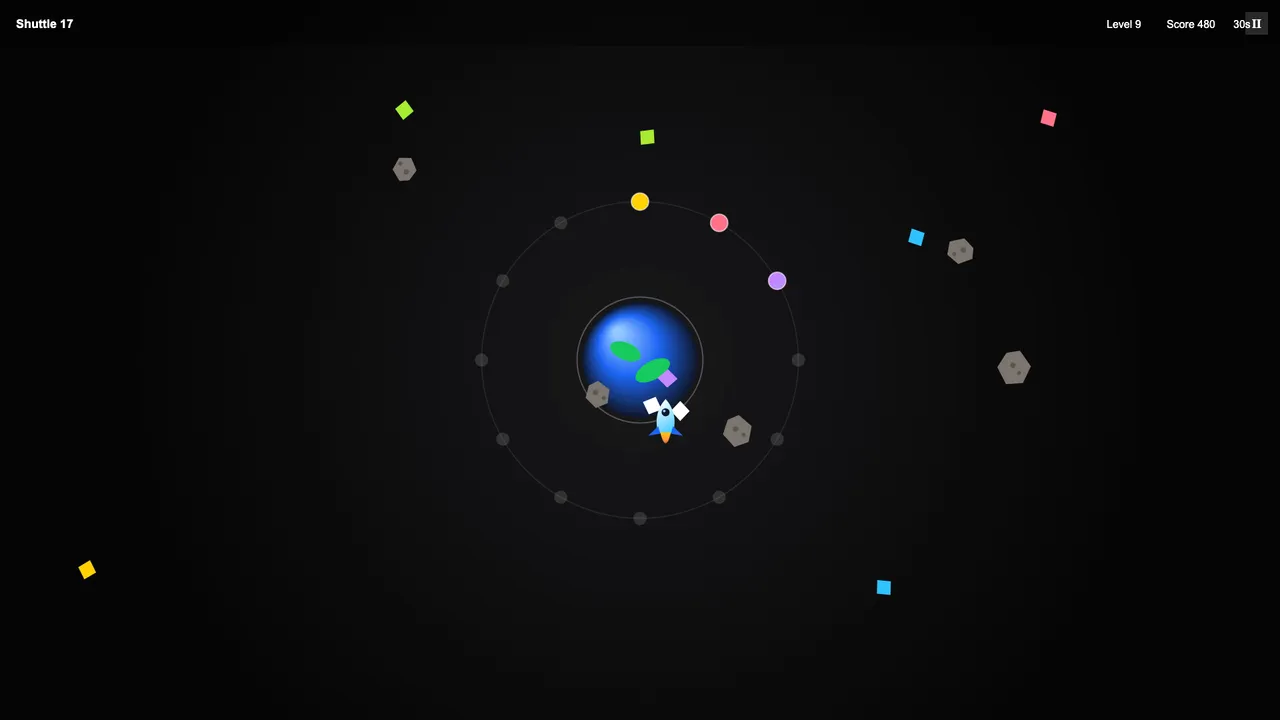
The core mechanic is straightforward but creates real tension. You fly a shuttle with mouse, keyboard, or touch, grab a shard, tow it behind your ship, and thread it to the correct slot on the planet below. The moment you touch an asteroid, you lose points and drop your cargo. Every second matters. The game does not pause between rounds or reward you for taking time to think; it pushes you forward, faster and harder, with more asteroids, tighter orbits, and multiplying objectives as you climb. This is the oldest arcade formula there is—simple entry, escalating pressure, one perfect run chasing your own score—and Shuttle 17 appears to execute it without distraction.
A release date set for fast repeatability
The release date for Shuttle 17 is July 15, 2026. The game is built entirely for offline play and local high-score tracking, which signals a deliberate rejection of modern momentum systems, battle passes, or online rankings. You cannot unlock cosmetics or progression gates; you can only improve. This restraint matters. Arcade games live or die by whether they stay tense on your hundredth attempt, and every design choice here—the minimalist sci-fi visuals, the absence of narrative, the local scoreboard—is built to keep you focused on the mechanic itself, not on external rewards.
The honest question is whether the core loop stays engaging across the difficulty curve. Delivering shards to slots sounds routine, and if the asteroid patterns feel predictable or the deliveries become rote, even a lean arcade game can sag under repetition. Orkhan Taghizade has built this alone, and solo developers can struggle with the playtesting depth needed to keep a high-score game taut for dozens of sessions. If the difficulty scales in jumps rather than curves, or if the later levels lean on density over strategy, the game could exhaust its novelty quickly.
Buy this on release if you live for arcade scores and want a clean, distraction-free experience. Skip it if you need narrative, progression systems, or social elements. Everyone else should wait for early player reaction to confirm that the difficulty curve holds your interest beyond the first hour.
Features
System requirements
Minimum
- OS
- Windows 10 64-bit
- Processor
- Intel Core i3-6100 / AMD FX-6300 / ARM64 processor (Snapdragon X or equivalent)
- Memory
- 2048 MB RAM
- Graphics
- Intel Core i3-6100 / AMD FX-6300 or equivalent (64-bit)
- DirectX
- Version 11
- Storage
- 500 MB available space
- Sound Card
- Any
- VR Support
- Not supported
- Additional Notes
- Single-player offline game. Mouse, keyboard, or touch supported. 1280×720 display recommended.
Recommended
- OS
- Windows 10/11 64-bit
- Processor
- Intel Core i5-8400 / AMD Ryzen 5 2600 / Apple Silicon–class ARM64 Windows PC
- Memory
- 4096 MB RAM
- Graphics
- Dedicated GPU or modern integrated graphics
- Storage
- 500 MB available space
- Sound Card
- Any
- VR Support
- Not supported
- Additional Notes
- Single-player offline game. Mouse, keyboard, or touch supported. 1280×720 display recommended.





No comments yet. Be the first to share your thoughts.