
About Galatria
Galatria is a fast-paced 3D arcade shooter that trades complexity for reflexes, built around a single core tension: speed versus precision. The release date for Galatria is July 14, 2026, on PC.
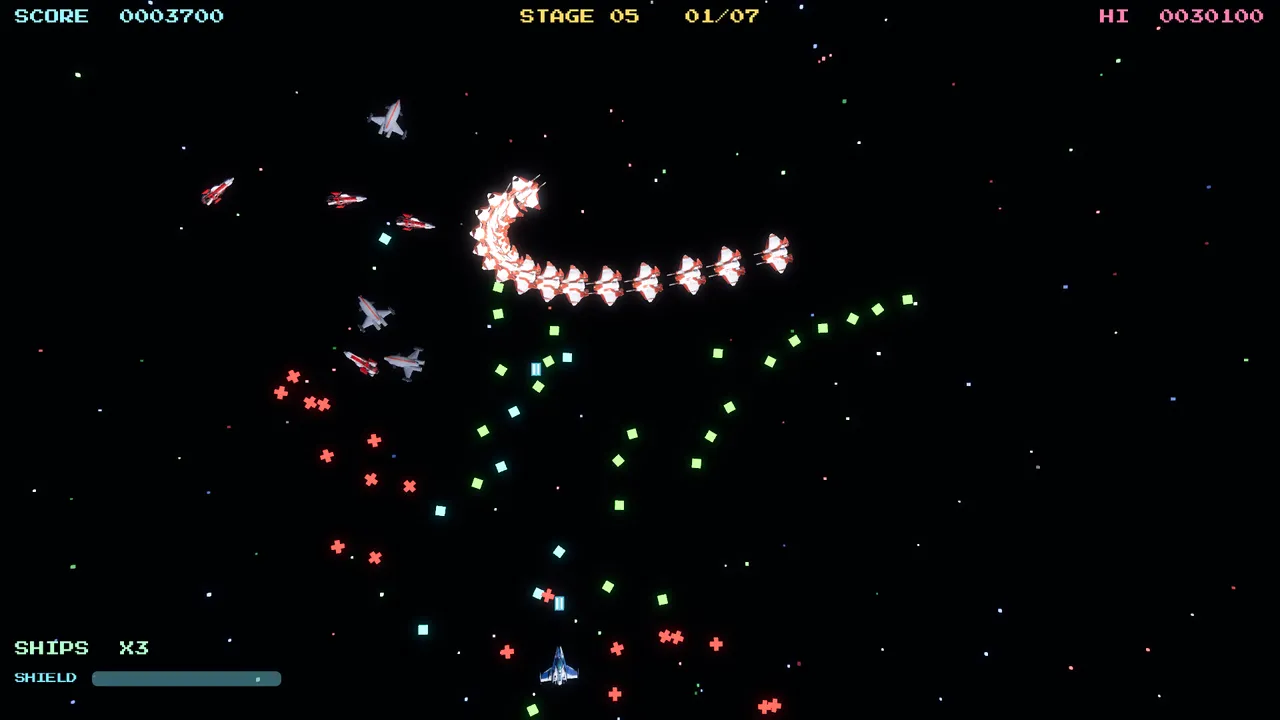
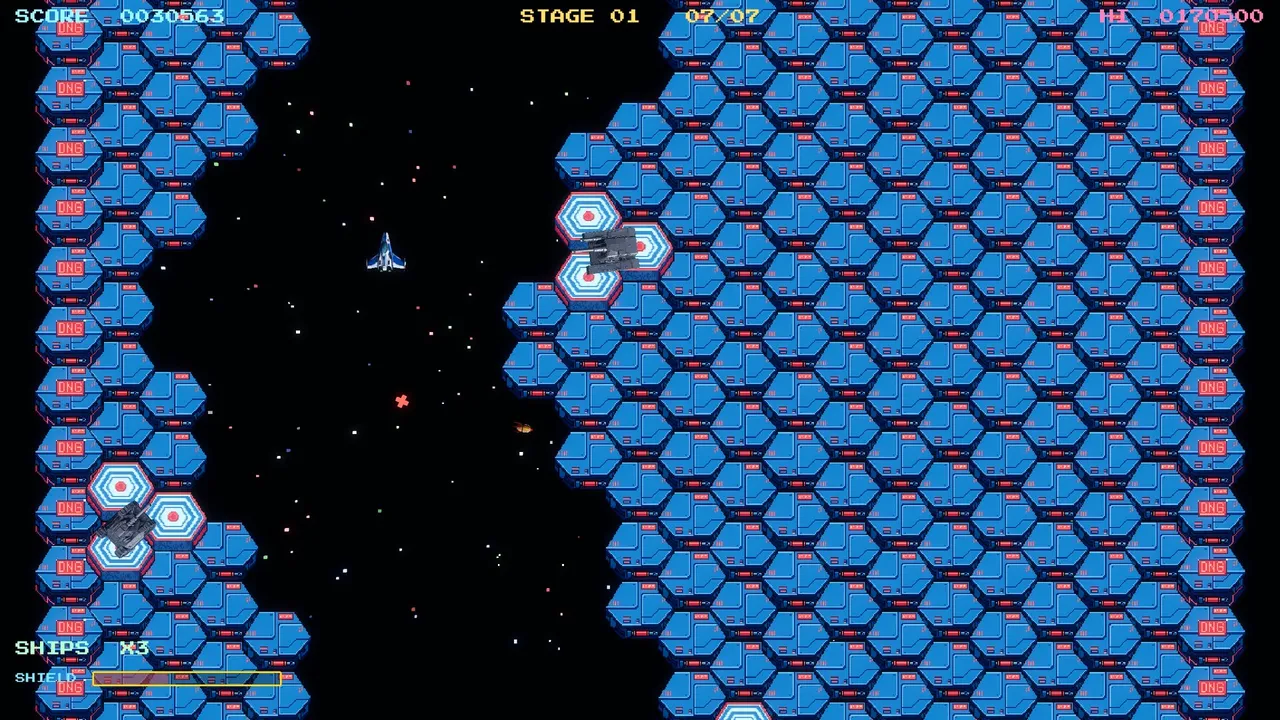
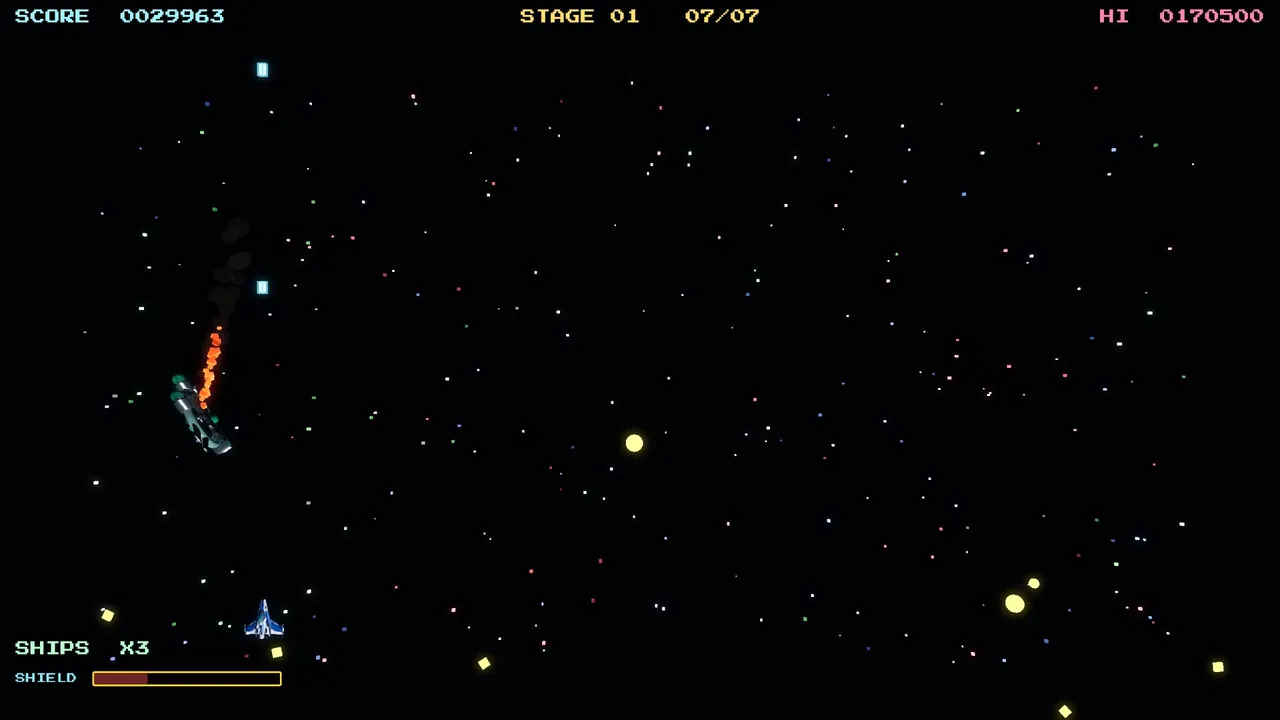
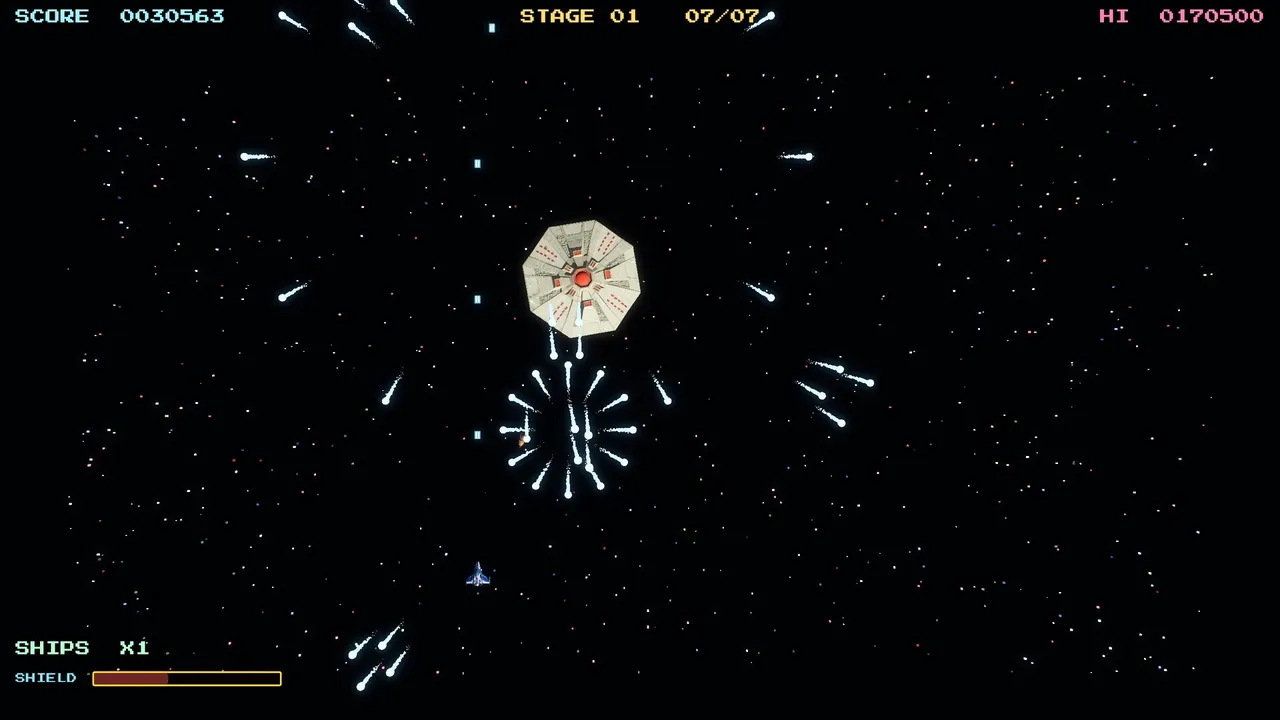
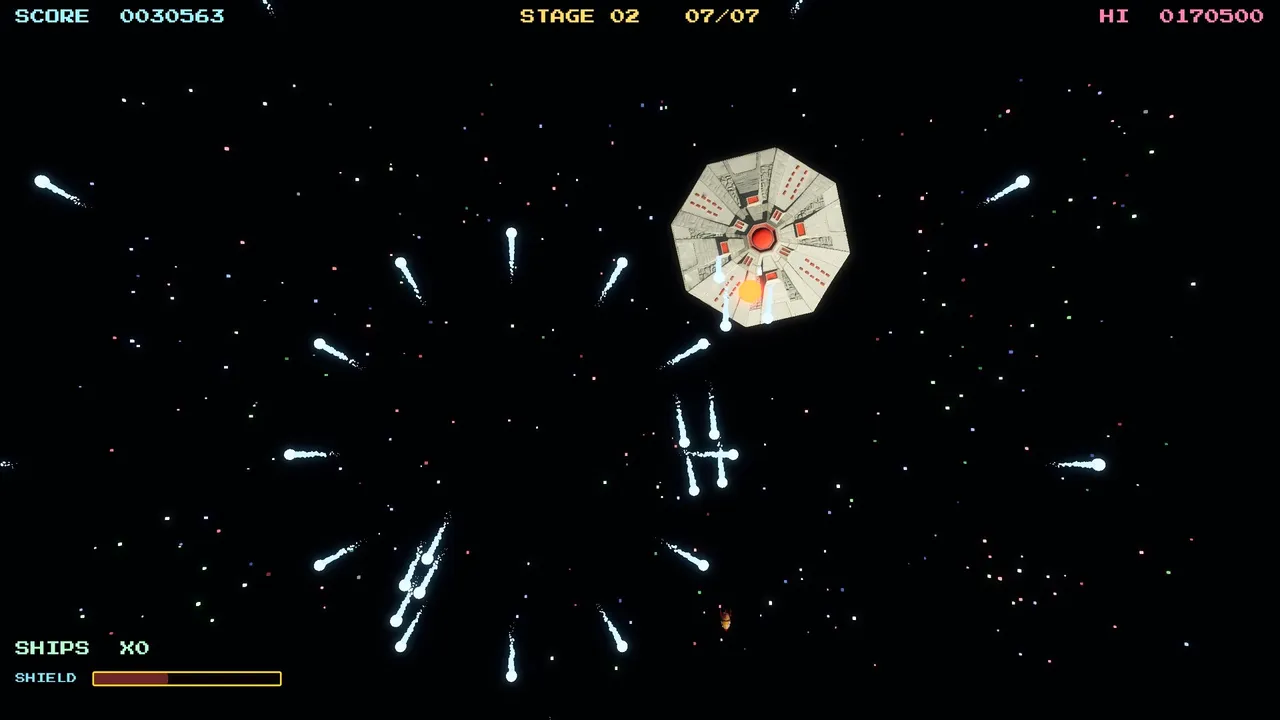
The game splits its structure into two contrasting halves. Wave combat throws relentless enemy formations at you across hand-crafted 3D battlefields—tanks that fire homing rockets, towers and spider-turrets that track your position, all pushing you to keep moving or die. Then, after each boss, the tempo shifts completely. You enter a floating island labyrinth where the danger is no longer enemies but geometry: glowing walls that kill on contact, narrow corridors you must thread at speed. This alternation between offensive chaos and precision-threading is the design's defining idea. Most arcade shooters stack difficulty through bullet density; Galatria stacks it through mode switching, forcing you to shift from aggressive manoeuvring to cautious threading in the same run.
Retro mechanics with modern construction
The visual language is unmistakably 80s and 90s arcade—chunky polygonal fighters, capital ships that physically break apart when destroyed rather than vanish, a driving original soundtrack. But the execution belongs to the present: fully rebindable controls, arcade cabinet support (including unusual 9:1 ultrawide aspect ratios), tight frame-rate-dependent responsiveness, and a shield mechanic to soften the instant-death punish. This is not a vaporware nostalgia trap or a museum piece. It is a contemporary game dressed in period hardware.
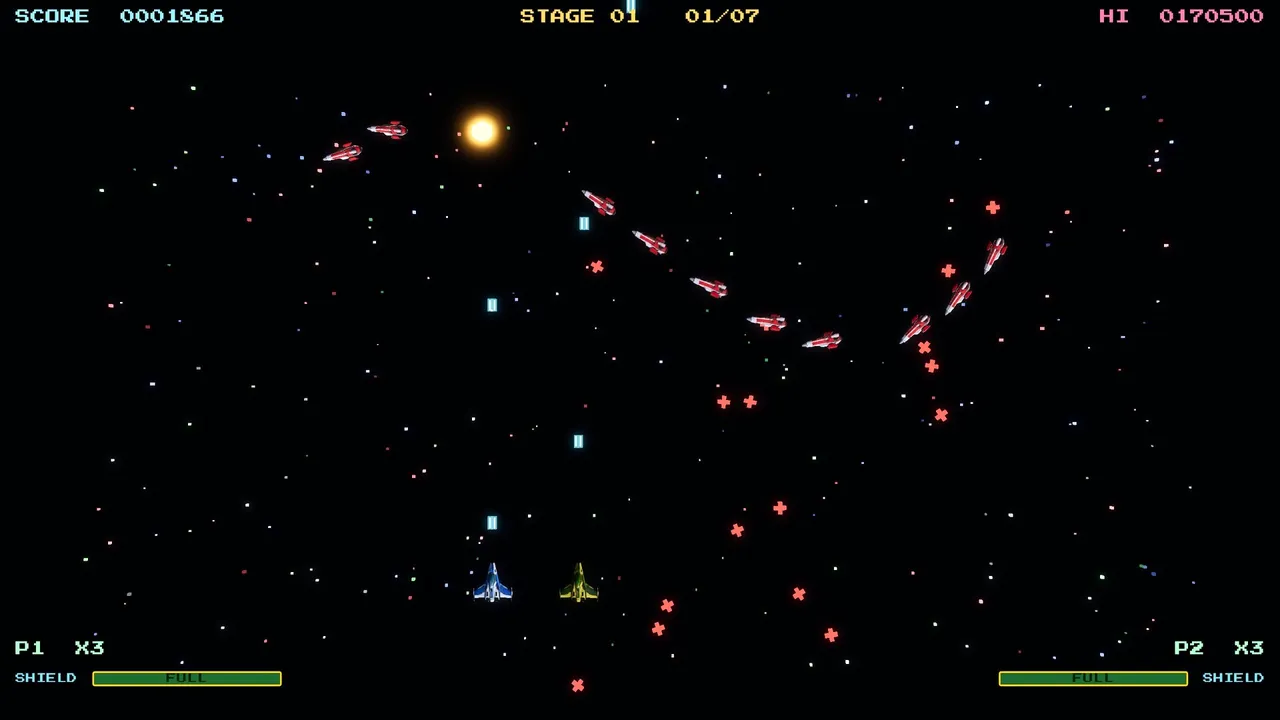
The only honest uncertainty is whether threading floating mazes at speed stays tense for a full campaign or settles into muscle memory once you have learned the layouts. In arcade shooters, replayability lives in score-chasing and time-attack competition, but if the maze sections randomise little or not at all, the second playthrough may feel like executing a script rather than improvising under pressure. A two-player co-op mode and split-screen competitive play suggest the studio expects long-term engagement, but whether the core loop justifies it remains unproven.
Skip this if you want narrative depth, exploration, or forgiving difficulty. Buy it if you loved classic arcade shooters and can handle instant failure as the cost of learning. The release date places it as a summer arcade fix for players who view a game's value in how many times they can clear it cleaner, faster, and with a higher score.
Features
System requirements
Minimum
- OS
- Windows 10 (64-bit)
- Processor
- Dual-Core 2.0 GHz (Intel Core i3 / AMD gleichwertig)
- Memory
- 4 GB RAM
- Graphics
- Vulkan-1.0-fähige GPU (NVIDIA GTX 660 / AMD Radeon HD 7850 / Intel HD 520 oder neuer)
- Storage
- 2 GB available space
- Sound Card
- DirectSound-kompatibel
- Additional Notes
- Benötigt eine GPU mit Vulkan-1.0-Unterstützung. Einzelspieler, keine Internetverbindung nötig.
Recommended
- OS
- Windows 11 (64-bit)
- Processor
- Quad-Core 3.0 GHz (Intel Core i5 / AMD Ryzen 5)
- Memory
- 8 GB RAM
- Graphics
- NVIDIA GeForce GTX 1060 / AMD Radeon RX 580 oder besser
- Storage
- 2 GB available space
- Sound Card
- DirectSound-kompatibel
- Additional Notes
- Benötigt eine GPU mit Vulkan-1.0-Unterstützung. Einzelspieler, keine Internetverbindung nötig.
No comments yet. Be the first to share your thoughts.