
About Tiny Circuits
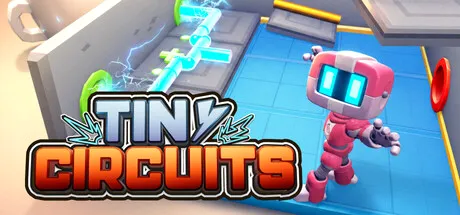
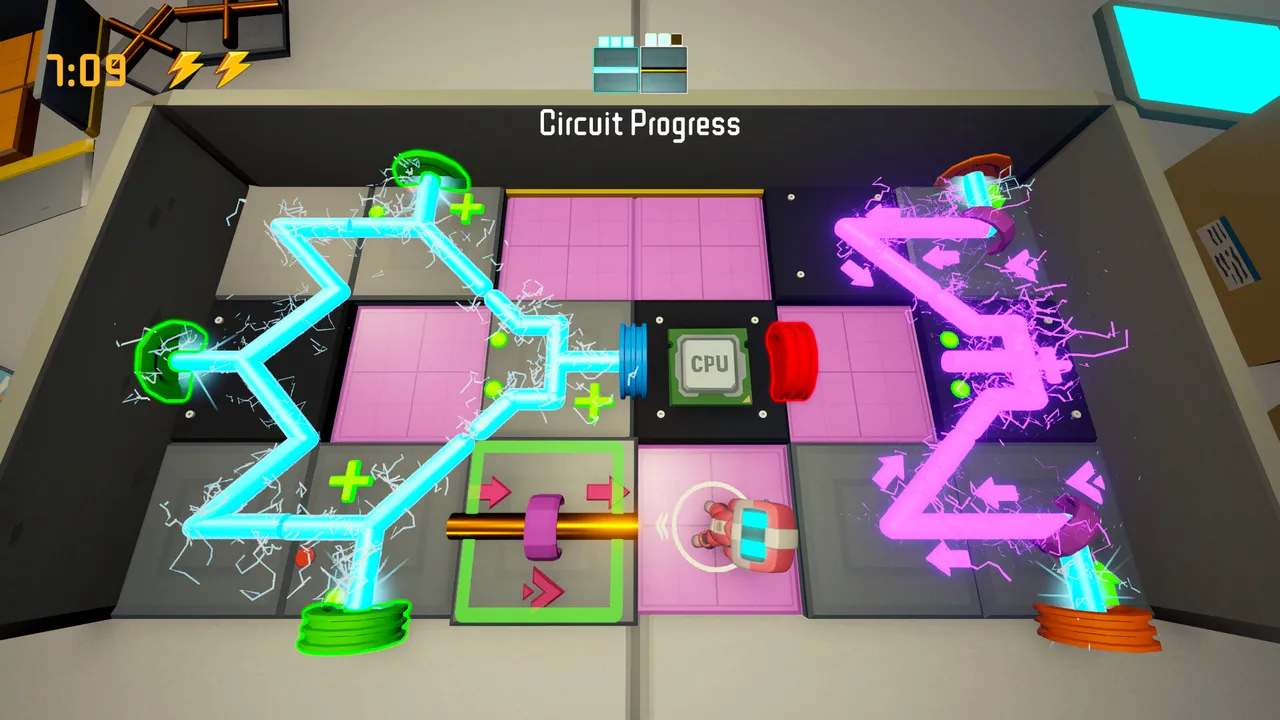
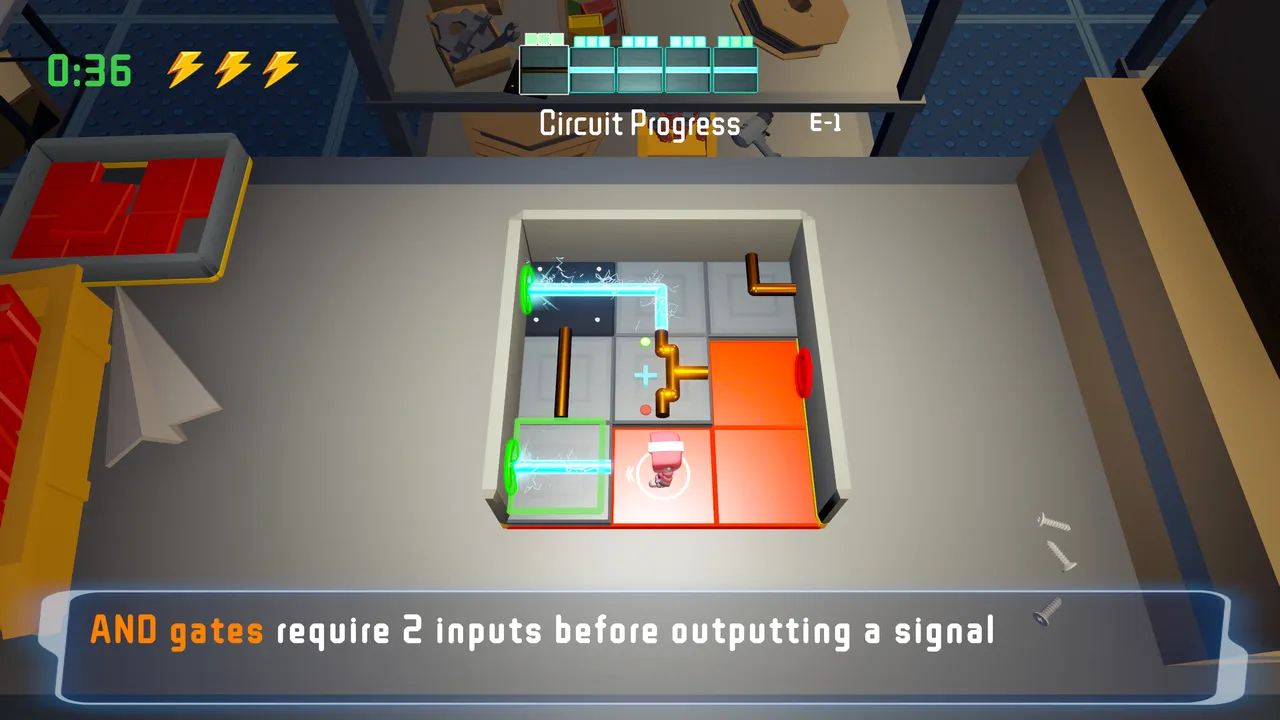
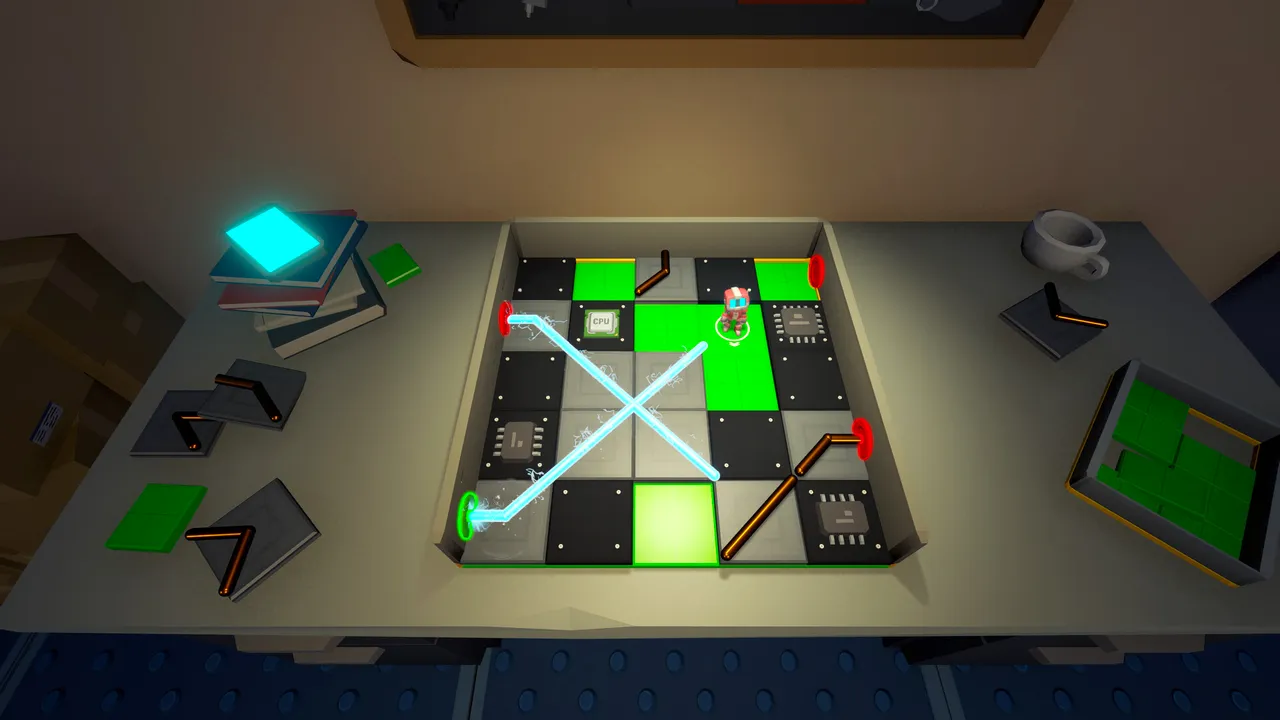
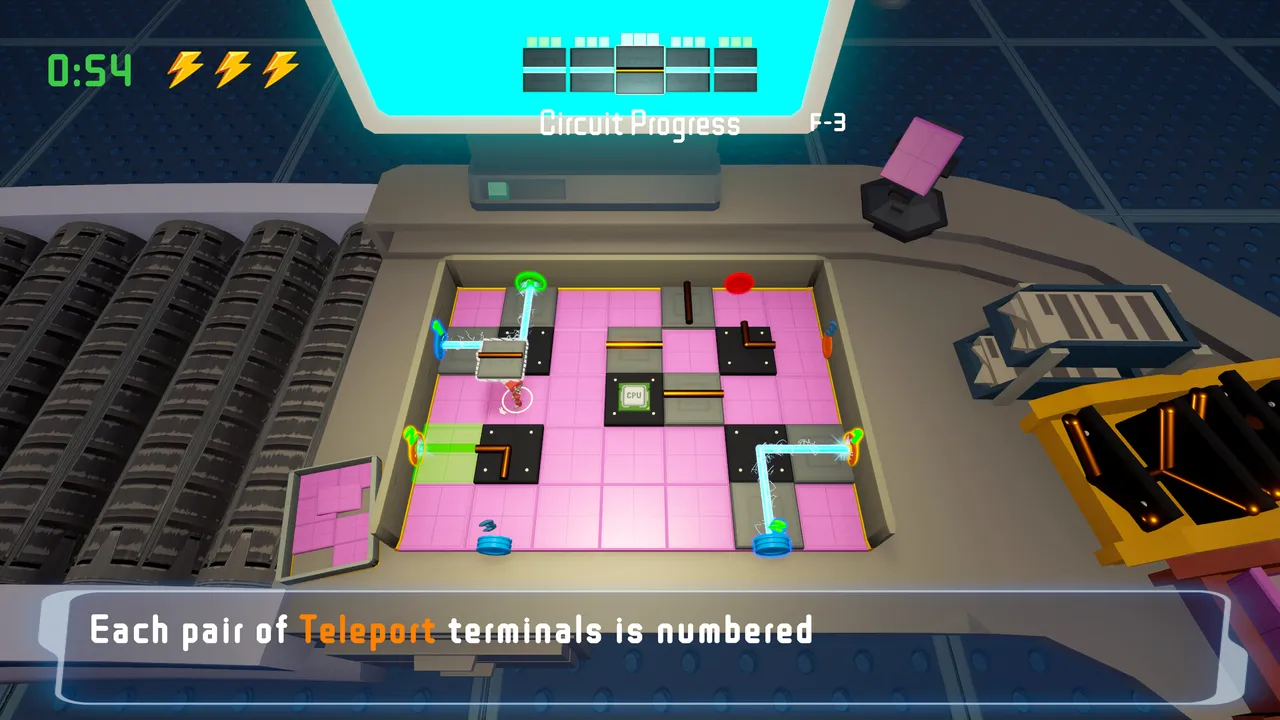
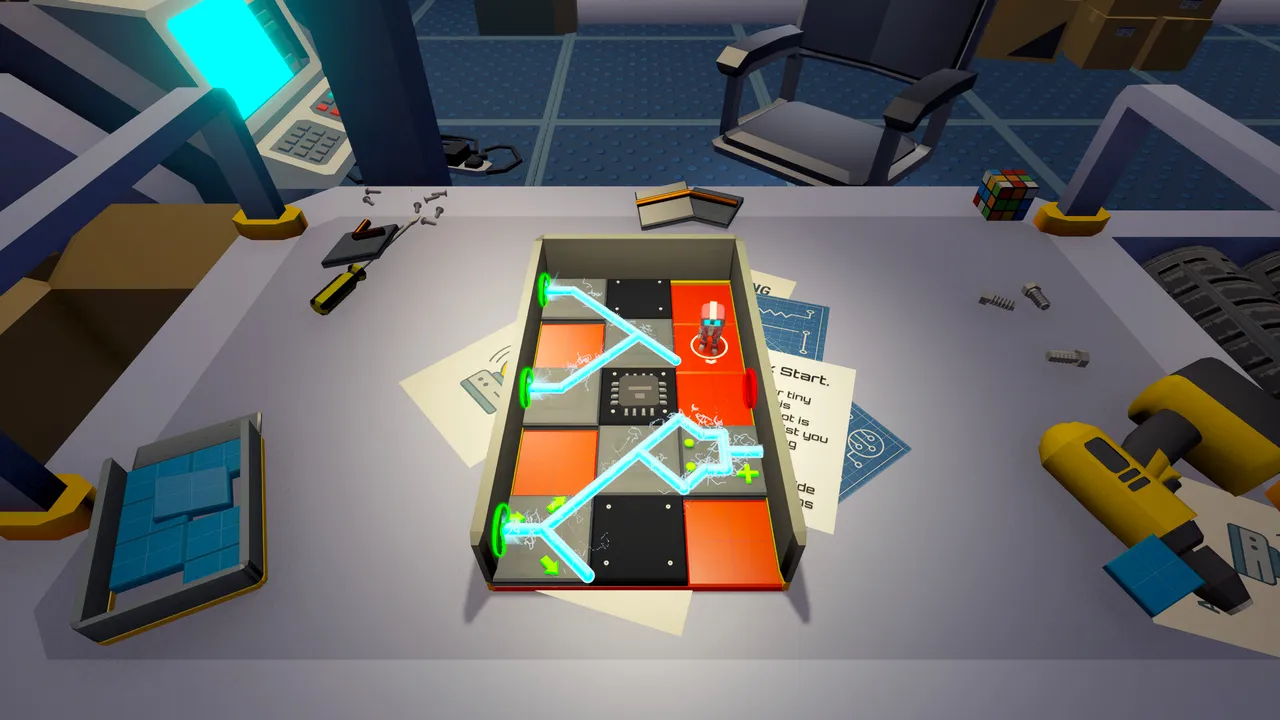
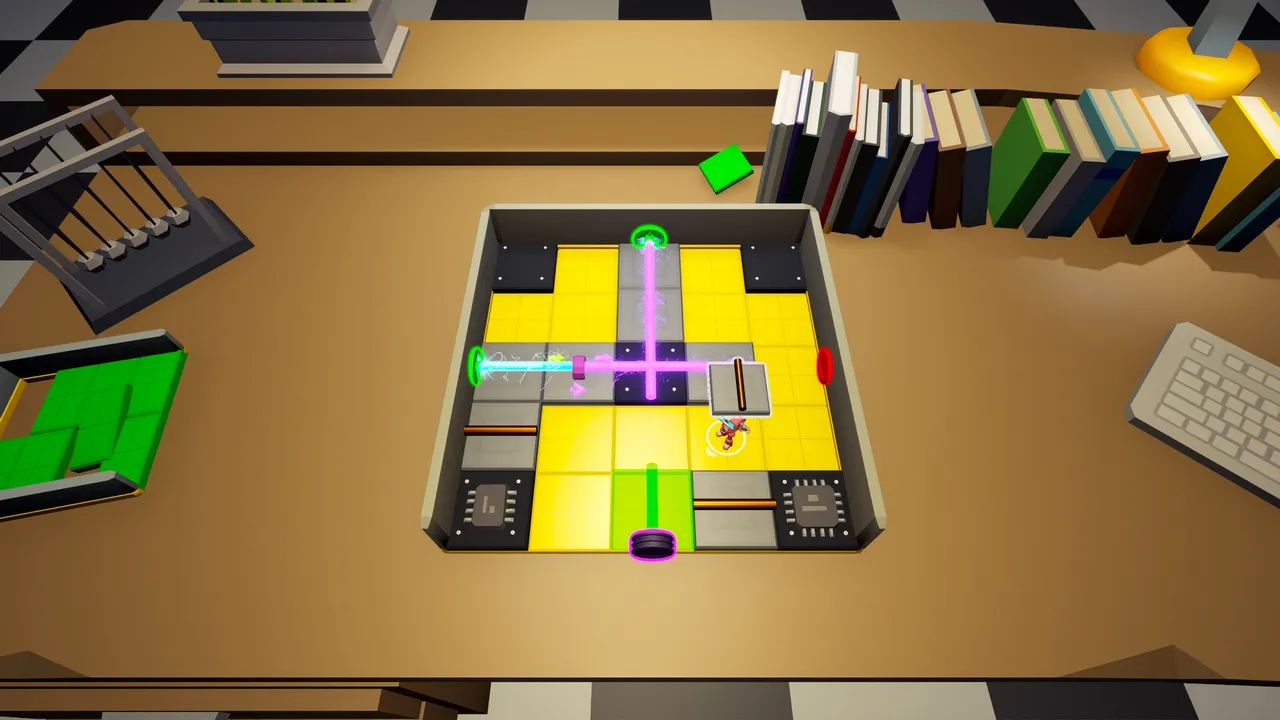
Tiny Circuits pivots puzzle design around a single constraint: your robot occupies a grid cell on the board you are trying to solve. This is not a cosmetic detail. It forces you to think in two layers at once—routing electrical signals through tiles while managing your own position as an obstacle or necessity within that same tight space. The release date for Tiny Circuits is July 16, 2026 on PC.
Most circuit-routing puzzles let you place and rotate tiles from above, a god's-eye view with no stakes attached to your own location. Here, the puzzle grows around and sometimes against you. As components introduce new signal behaviors across six themed worlds, the systems layer in, and your body becomes part of the problem. A tile that blocks a signal in one position might route it correctly if you stand elsewhere. You cannot stay out of the way; you must decide where to be, and every attempt reshuffles where you begin.
Randomized starts and single solutions
The randomized starting position is the design anchor that prevents rote memorization. Each of the 70+ puzzles has only one or two valid solutions, which means you cannot simply replay a memorized sequence. You must understand the actual flow of each component—how signals move, where they collide, what each new mechanic does—rather than pattern-match your way through. This is approachable challenge rather than brutal difficulty; the game introduces new mechanics one at a time across its worlds and builds on them steadily.
The real risk here is whether the friction of randomization enhances the puzzle-solving experience or simply adds busywork. A puzzle that requires understanding but whose solution remains fixed rewards mastery. One whose starting point shifts every attempt forces genuine understanding but risks becoming repetitive if the underlying logic feels thin. Tiny Circuits must prove that the constraint deepens rather than just lengthens the experience. For players who tire of memory-based puzzle sequences and prefer systems that demand reasoning over rote, and anyone drawn to cozy indie design with mechanical teeth, this is worth adding to your wishlist now ahead of the July release date.
Features
System requirements
Minimum
- OS
- Windows 10 64-bit or later
- Processor
- Intel Core i3 (2.5 GHz) or AMD equivalent
- Memory
- 8 GB RAM
- Graphics
- Intel HD Graphics 4000 or Radeon Vega 3
- DirectX
- Version 11
- Storage
- 2 GB available space
- Sound Card
- DirectX Compatible Sound Card
- Additional Notes
- Gamepad recommended
Recommended
- OS
- Windows 10 or 11
- Processor
- Intel Core i5 (3.0 GHz) or AMD Ryzen 5
- Memory
- 16 GB RAM
- Graphics
- NVIDIA GeForce GTX 460 / AMD Radeon HD 5770 or equivalent with at least 1GB VRAM
- DirectX
- Version 11
- Storage
- 2 GB available space
- Sound Card
- DirectX Compatible Sound Card
- Additional Notes
- Gamepad recommended





No comments yet. Be the first to share your thoughts.