
The Living Atlas: A Fantasy Chronicler
About The Living Atlas: A Fantasy Chronicler
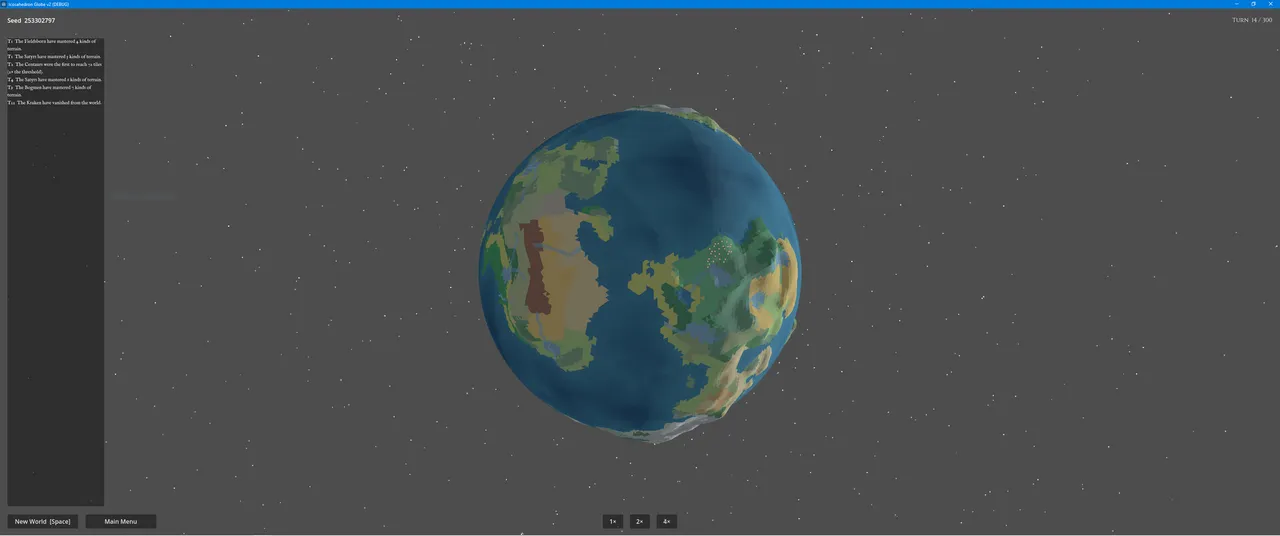
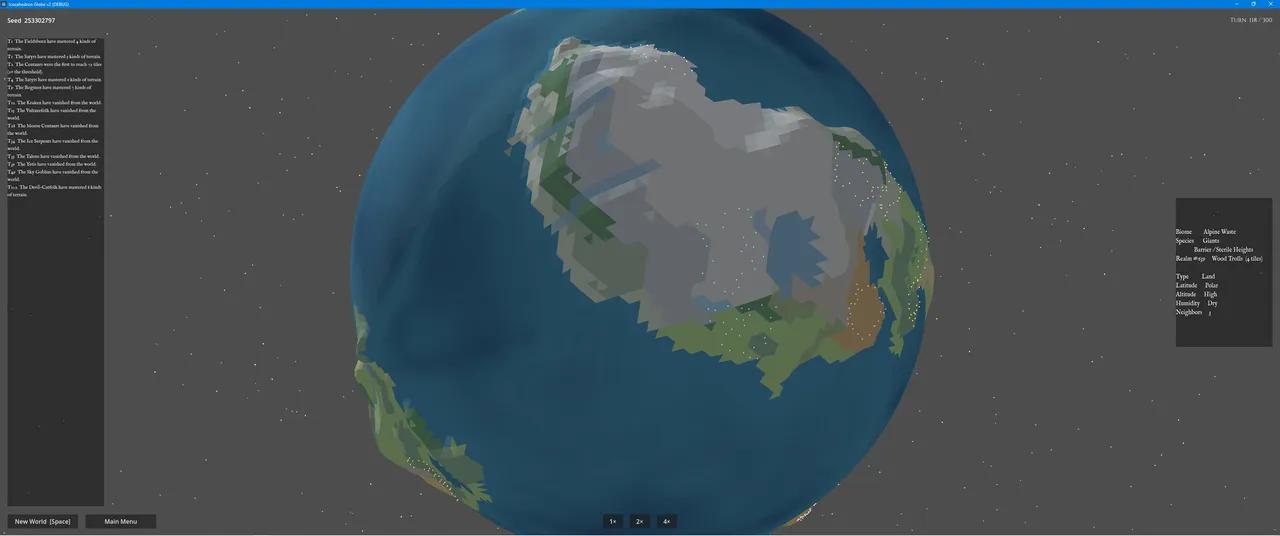
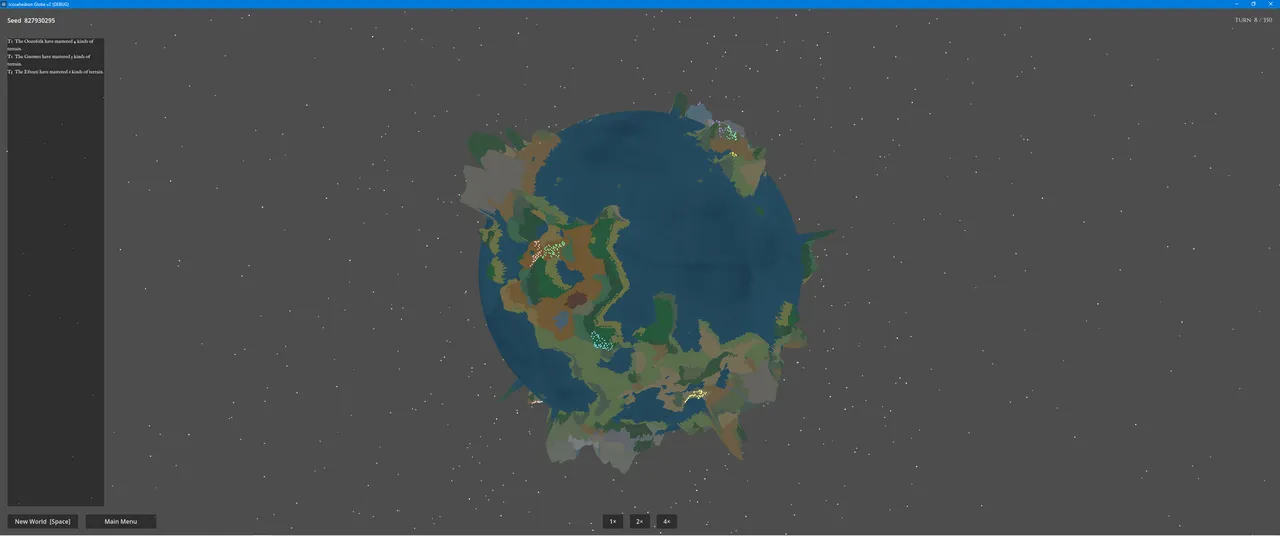
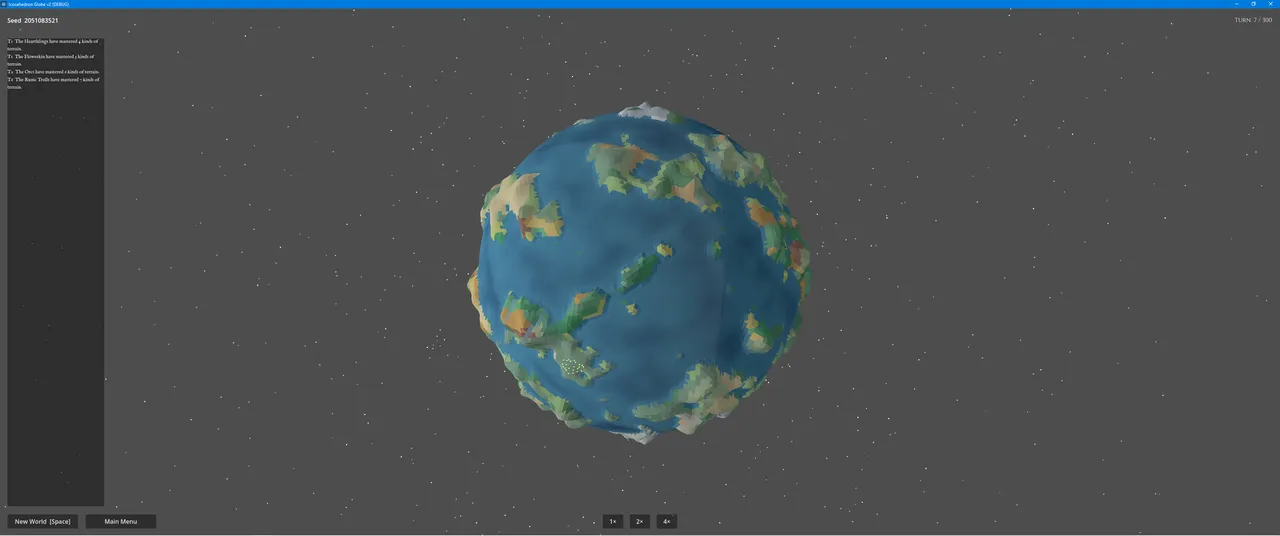
The Living Atlas: A Fantasy Chronicler is a world-watching game, not a world-building one. You generate a planet by seeding it with a number, then observe as tectonic forces carve terrain, rivers find their valleys, and dozens of fantasy species—from Mammothkin in frozen wastes to Efreeti in volcanic zones—stake territory across 27 distinct biomes. The core loop is passive: press generate, then watch civilizations rise, wage wars, collapse, and reshape the map across geological timescales. There are no quests, no failure states, no win conditions. You are a chronicler, not a player in the traditional sense.
This shift from agency to observation is the entire design bet. Most games reward interaction; The Living Atlas rewards attention. Civilizations expand based on terrain affinity and population size, governed by an emergent state machine that drives peace, conflict, and recovery cycles. The historical event log tracks extinctions, territorial gains, and cultural milestones as a narrative unfolds without your hand. Whether the slow churn of autonomous systems can sustain engagement for hours—whether watching is enough—is the open question the game must answer.
Release date and core mechanics
The Living Atlas releases on PC on July 20, 2026. The release date marks the debut of developer A.R.B. Andrews' procedural engine, which builds every world from a single seed number. Share a seed, share an identical world with someone else, turning each generated planet into a shareable artifact. The 100+ species are distributed ecologically, meaning each biome hosts different civilizations with different strengths and weaknesses, forcing the emergent system to generate distinct histories every playthrough.
Who this suits and what to skip
This is for players who found Creatures or Rain World's ecosystem simulation hypnotic, or who enjoyed watching Dwarf Fortress unfold through a text log. It demands patience and curiosity rather than reflexes or optimization. Anyone seeking narrative, progression, or measurable goals should skip it; the appeal is pure emergence and the stories you infer from data. Casual genre fans comfortable with low-friction, zero-pressure observation will find the procedural variety and seed-sharing system worth exploring.
Features
System requirements
Minimum
- OS
- Windows 10 64-bit (version 1903 or newer)
- Processor
- Intel Core i5 or AMD equivalent (quad core, 2.5 GHz)
- Memory
- 4 GB RAM
- Graphics
- Vulkan 1.0 compatible GPU (NVIDIA GTX 900 series / AMD RX 400 series / Intel UHD 620 or newer)
- Storage
- 200 MB available space
Recommended
- OS
- Windows 10/11 64-bit
- Processor
- Intel Core i7 or AMD Ryzen 5 or better
- Memory
- 8 GB RAM
- Graphics
- NVIDIA GTX 1060 / AMD RX 580 or better, 2GB VRAM
- Storage
- 200 MB available space
- Additional Notes
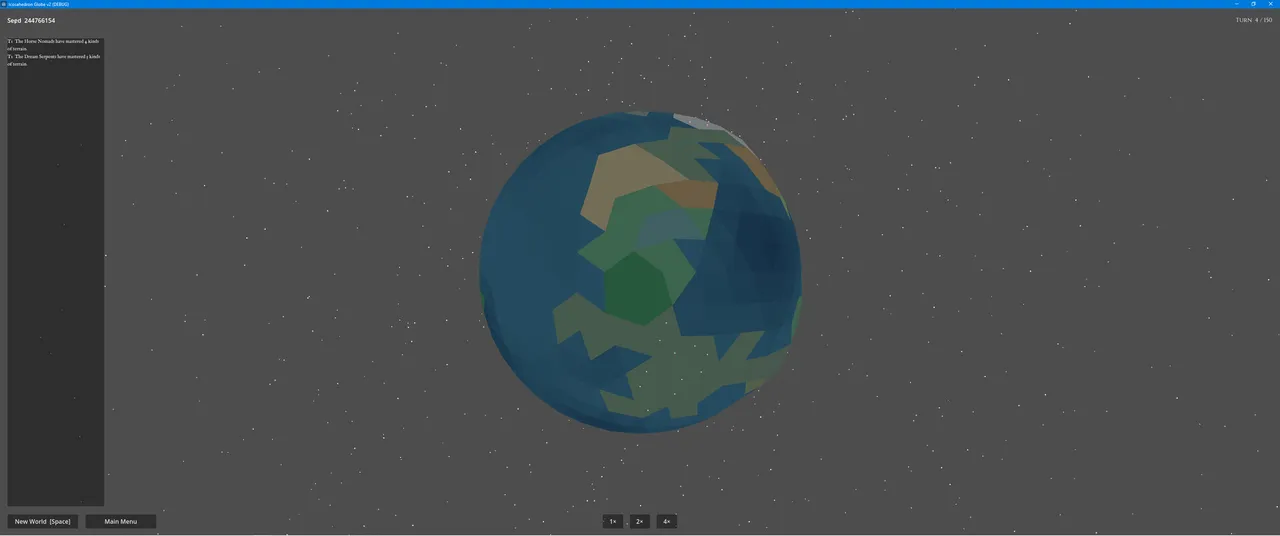
- Detail Level (subdivisions) significantly affects generation time and simulation performance. The default setting of 6 is recommended for most systems. Settings of 8 or 9 may require several minutes to generate a world and are intended for higher-end hardware. Setting 3 generates instantly and is suitable for low-end systems or quick exploration.






No comments yet. Be the first to share your thoughts.