


About The GIF Game
The GIF Game is a party game built entirely around the premise that humor lives in the room, not in the software. Released July 17, 2026 on PC, it asks players to supply prompts, hunt down GIFs to match someone else's prompt, and then vote on whose GIF lands the hardest. The release date puts it squarely in the space where couch multiplayers compete for a night, and the design is ruthless about one thing: everything that happens is driven by the people playing, not by pre-written jokes or rigid mechanics.
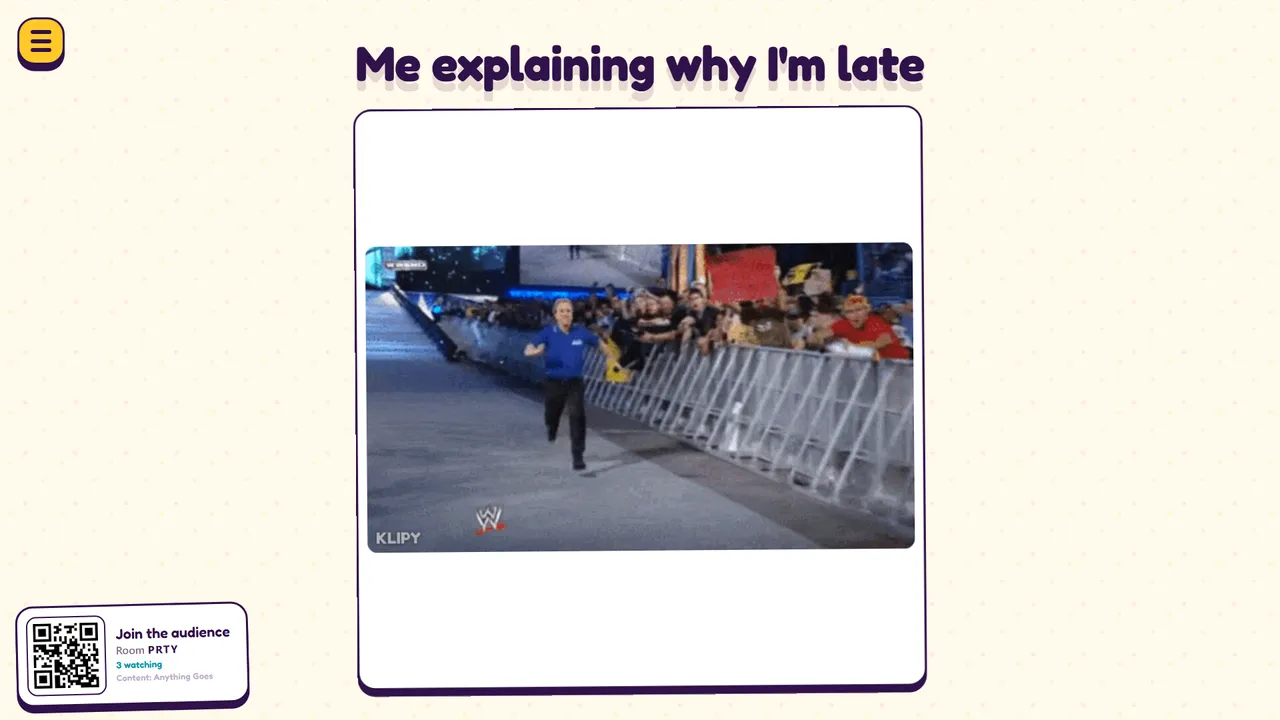
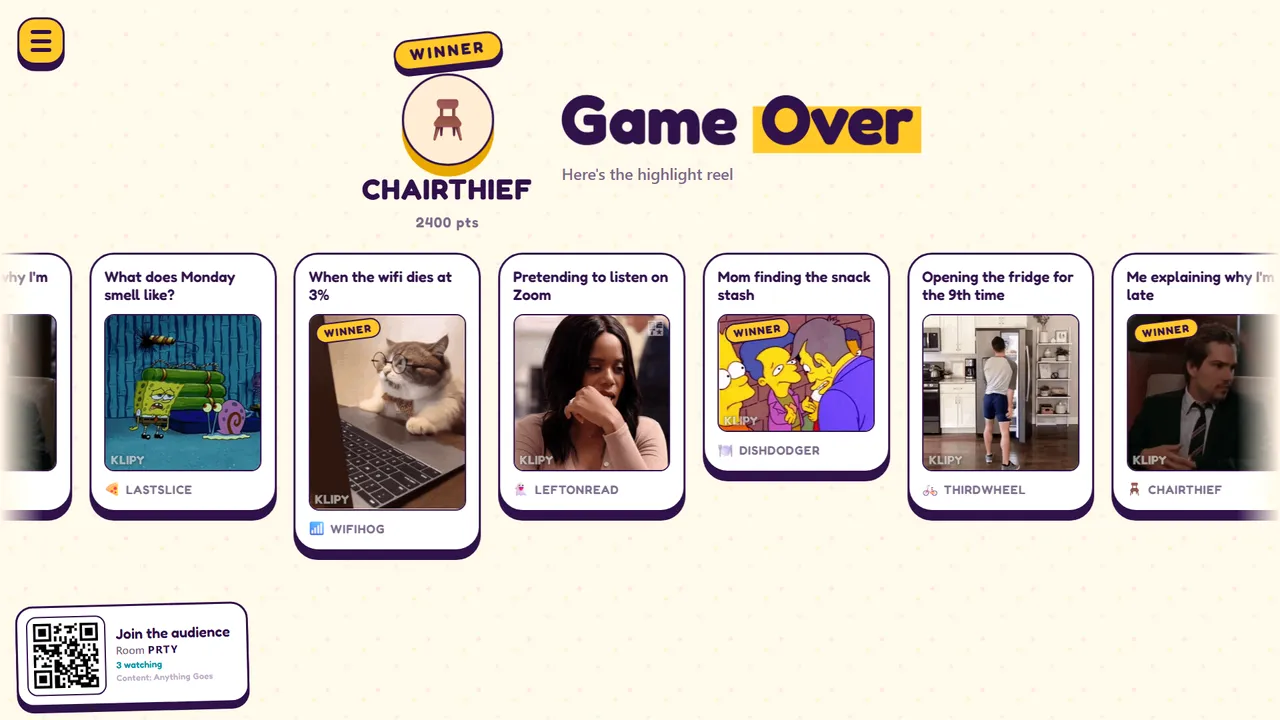
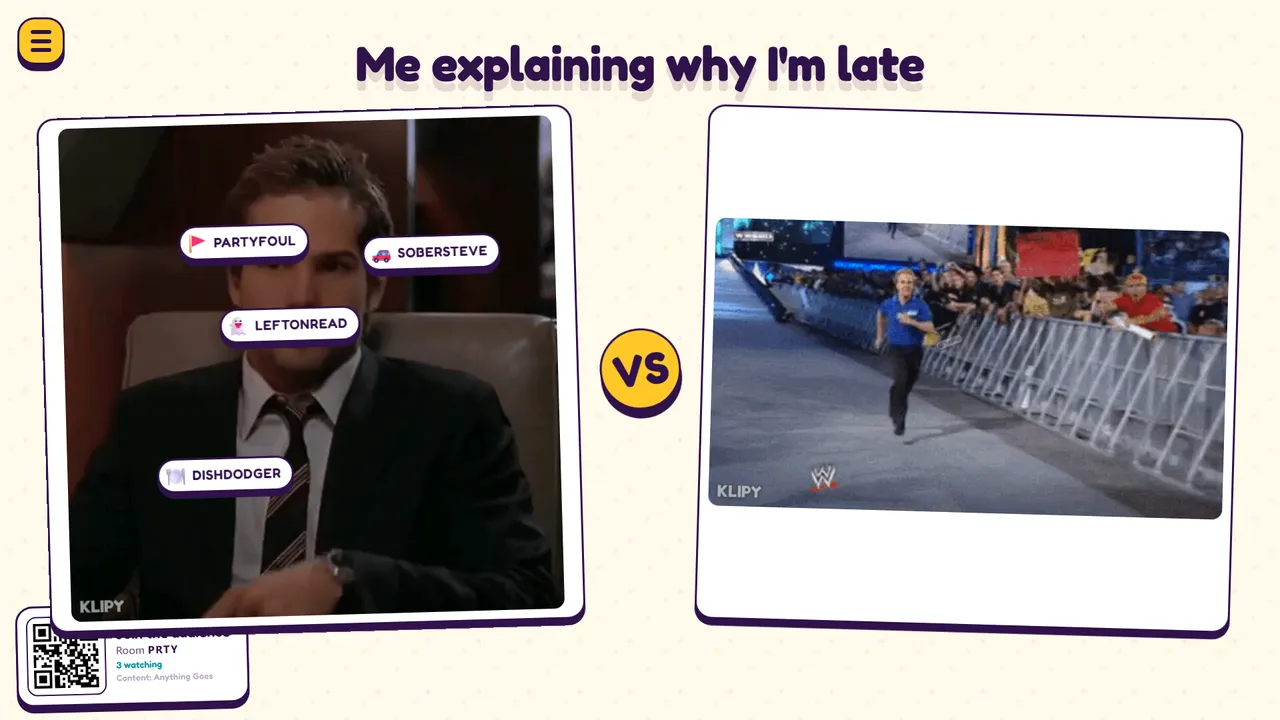
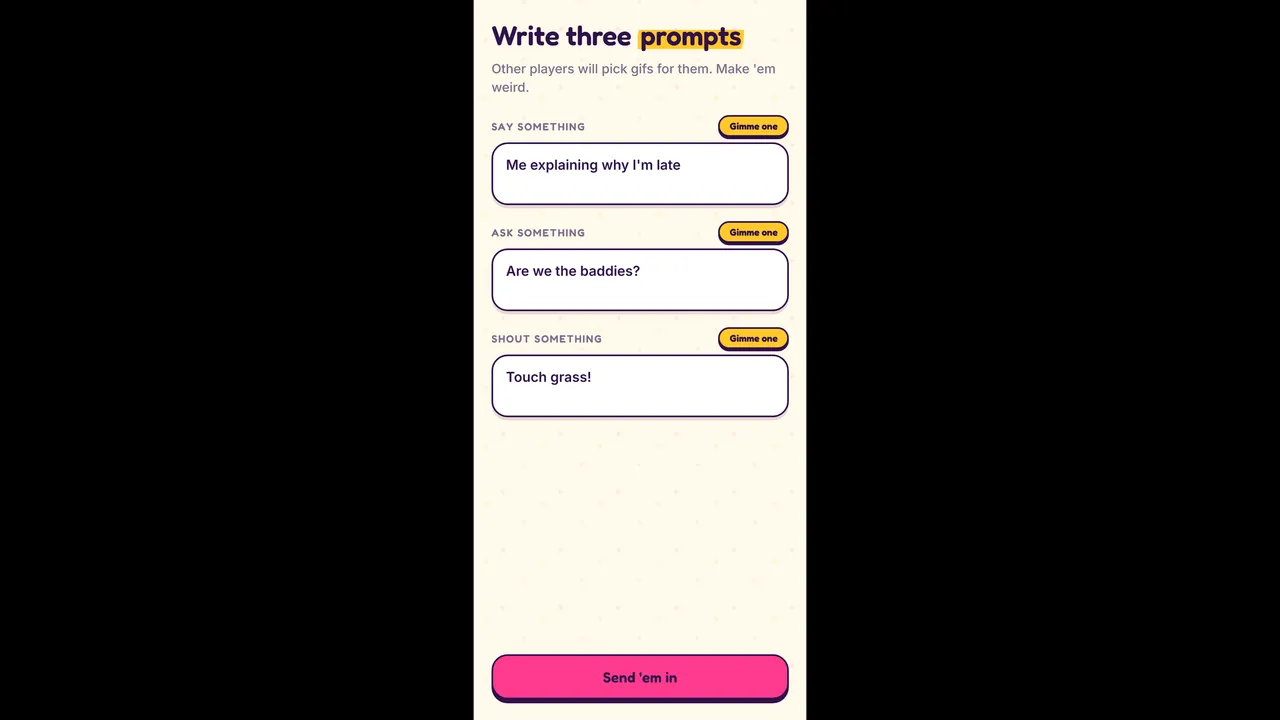
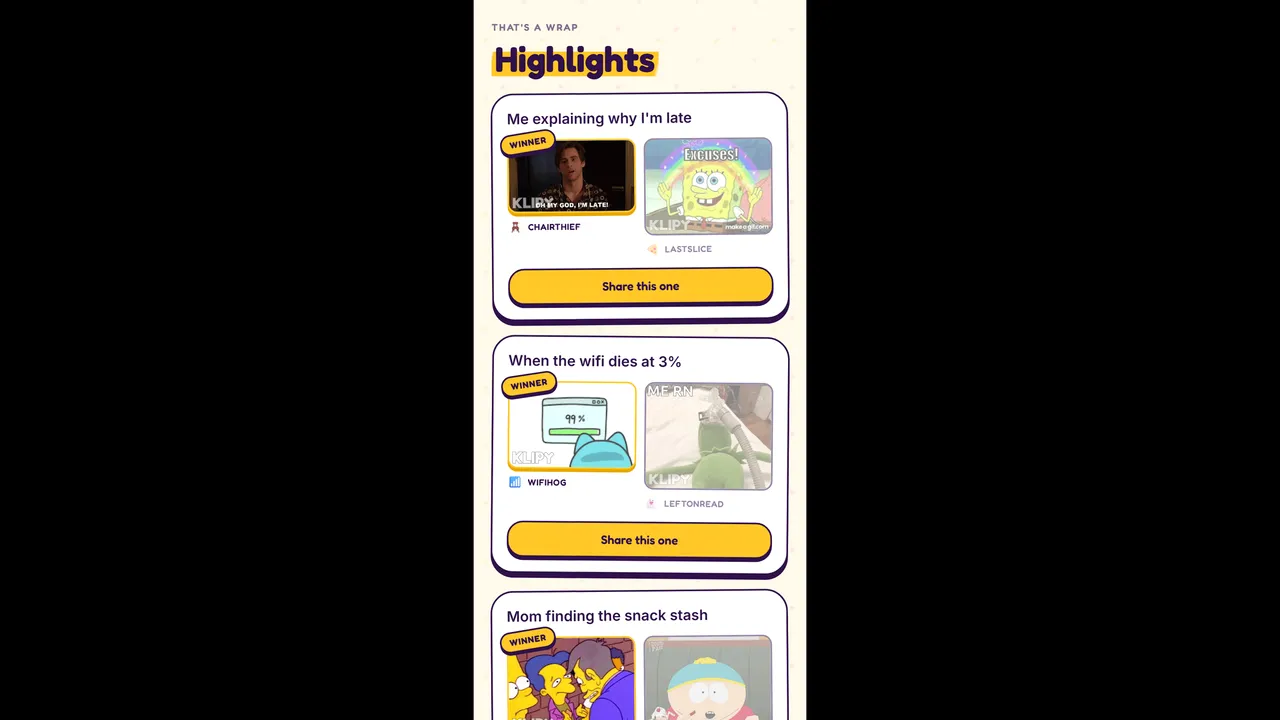
The core loop is simple enough that it barely needs explaining. One player's prompt goes on the TV. Everyone else has a window to find and submit a GIF response. The room votes head-to-head between options, and the winner gets a point. Three prompts, three rounds, one night. No app downloads for guests, no accounts to create—guests scan a QR code from their phone camera, pick a name, and they are live. The TV stays the command center. Phones handle input only. That separation is deliberate: it keeps friction low and lets the room stay focused on each other, not on screens.
How it plays in person and remote
The game works in person as intended, but the remote option reshapes what it can be. If you are hosting over video call, you share your host screen so everyone sees the same display, drop the join link in the chat, and players dial in from their own homes. That flexibility makes it a genuine option for groups scattered across time zones, though the stakes change—the energy of a room yelling at each other as one person scrambles through Giphy is not the same as a grid of video tiles. The game is designed for volume and immediate reaction, which plays to the strength of a crowded couch and is harder to sustain across a call.
The real design risk is whether the game can stay fresh when the humor depends entirely on prompt writing and GIF knowledge. If your group exhausts the novelty of finding the perfect reaction, or if prompts become stale or mean-spirited, the structure offers nothing underneath—no progression, no unlockables, no hidden mechanics to discover. It is built to be a social tool, not a game you return to alone or grind. That works if your friends are witty and show up reliably. It collapses if the group fragments or if the prompting gets thin.
Anyone who has spent an evening in a group chat knows the appeal. This just puts it on a TV with a scoreboard and forces real-time voting instead of letting threads drift. The trade-off is that it demands your people, your prompts, and your bandwidth for humor. Without that, it is a scoreboard with a GIF browser attached.
Skip this if you expect a game to entertain you without a room full of quick-witted players who show up ready to perform. Buy it if you host regularly, or if you want a reliable way to make sure a couch party stays focused on the people instead of the screen.
Features
System requirements
Minimum
- OS
- Windows 10 (64-bit)
- Processor
- Any 64-bit dual-core
- Memory
- 4096 MB RAM
- Graphics
- Integrated graphics
- Network
- Broadband Internet connection
- Storage
- 500 MB available space
- Sound Card
- Any
- Additional Notes
- Always-online. Each player needs their own smartphone or tablet as a controller (joins via web browser at partyhat.games. No app install). One shared screen for everyone.
Recommended
- OS
- Windows 11 (64-bit)
- Processor
- Any modern dual/quad-core
- Memory
- 4096 MB RAM
- Graphics
- Integrated graphics
- Network
- Broadband Internet connection
- Storage
- 500 MB available space
- Sound Card
- Any
- Additional Notes
- Always-online. Each player needs their own smartphone or tablet as a controller (joins via web browser at partyhat.games. No app install). One shared screen for everyone.



No comments yet. Be the first to share your thoughts.