
About SHARKS
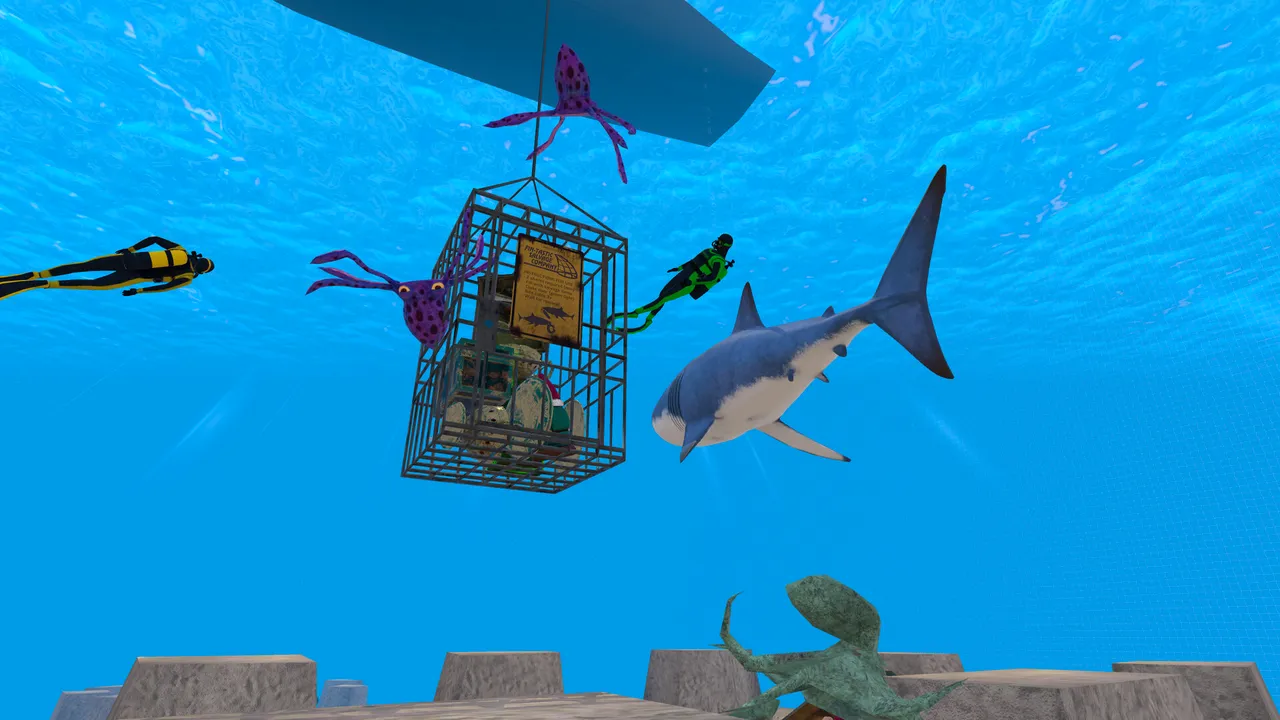
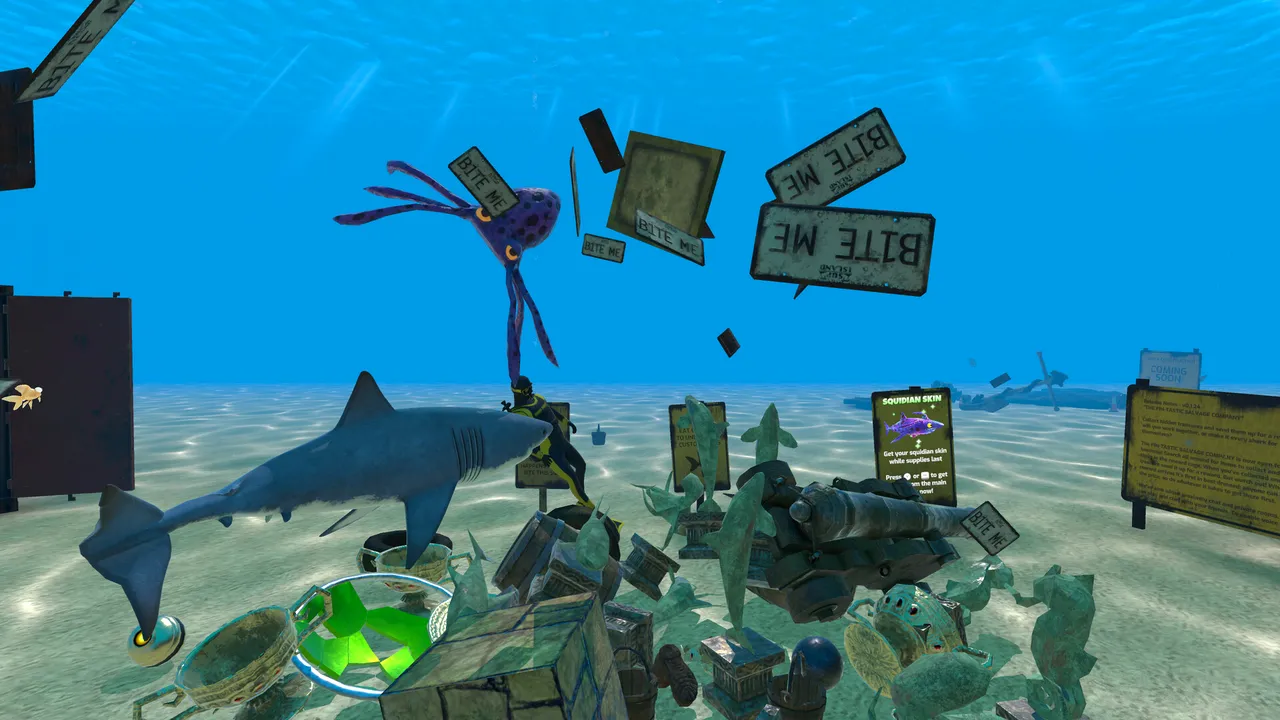
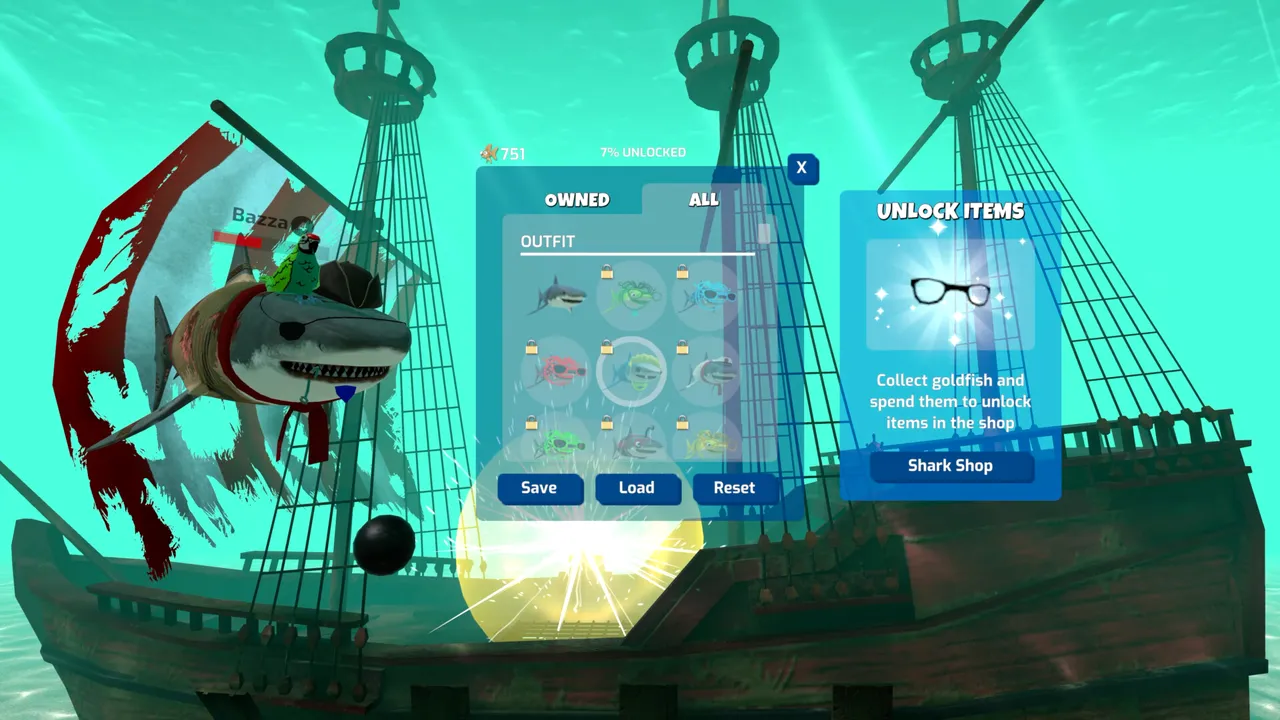
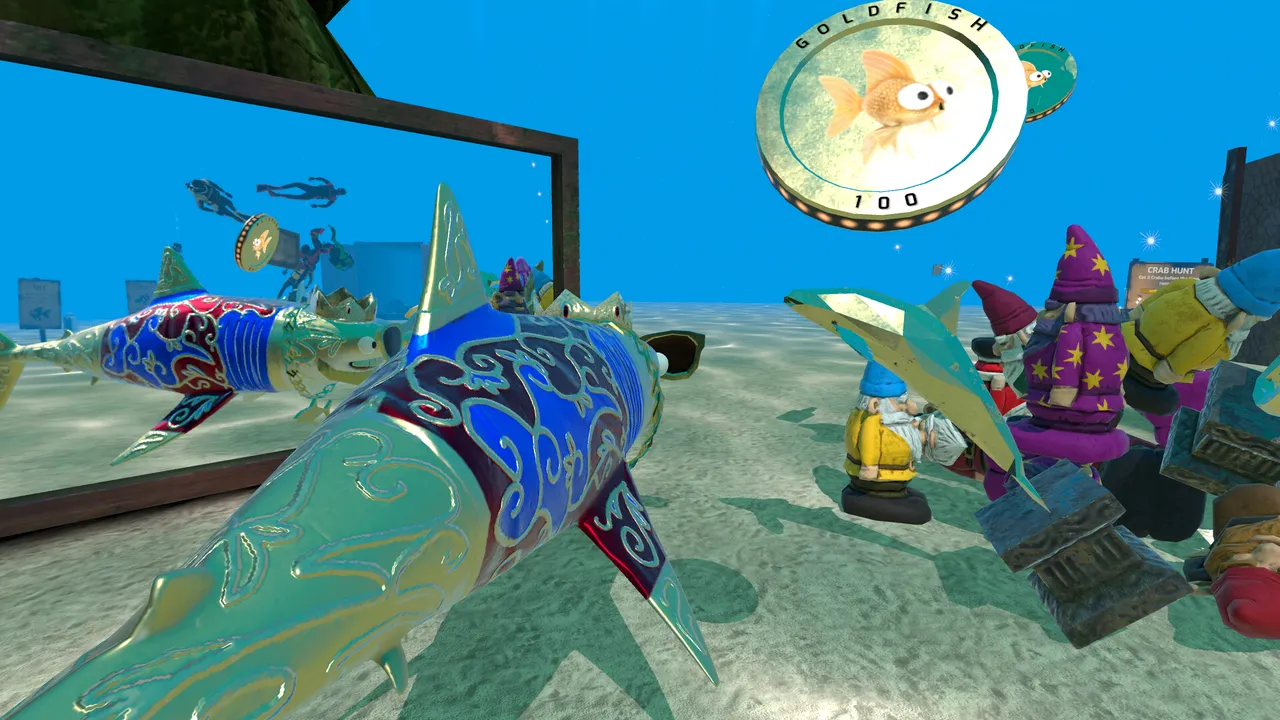
SHARKS is a multiplayer action game built around a single, immediate premise: you are a shark in a physics-reactive ocean, and everything you do ripples outward. Bite an explosive near another shark or a mine, and the ocean responds in real time. This is not a narrative-driven adventure or a survival grind, but a physics sandbox where the core loop is straightforward—swim, hunt, team up, take down objectives—and the appeal rests entirely on whether the moment-to-moment physics interactions stay engaging across repeated play.
The release date for SHARKS has not yet been confirmed beyond "coming soon" for PC, though the game will support both flat-screen and VR play, as well as cross-platform sessions with Meta Quest headsets. This multi-platform approach is the game's most significant technical bet: the same physics interactions must feel fluid whether you're using a mouse and keyboard, a controller in VR, or a Quest device, and whether you're matching your input method against players on different hardware.
Physics as the Core System
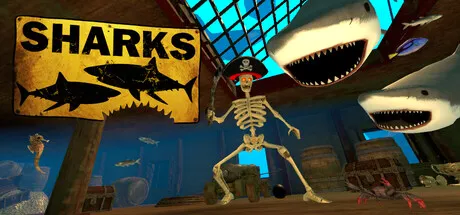
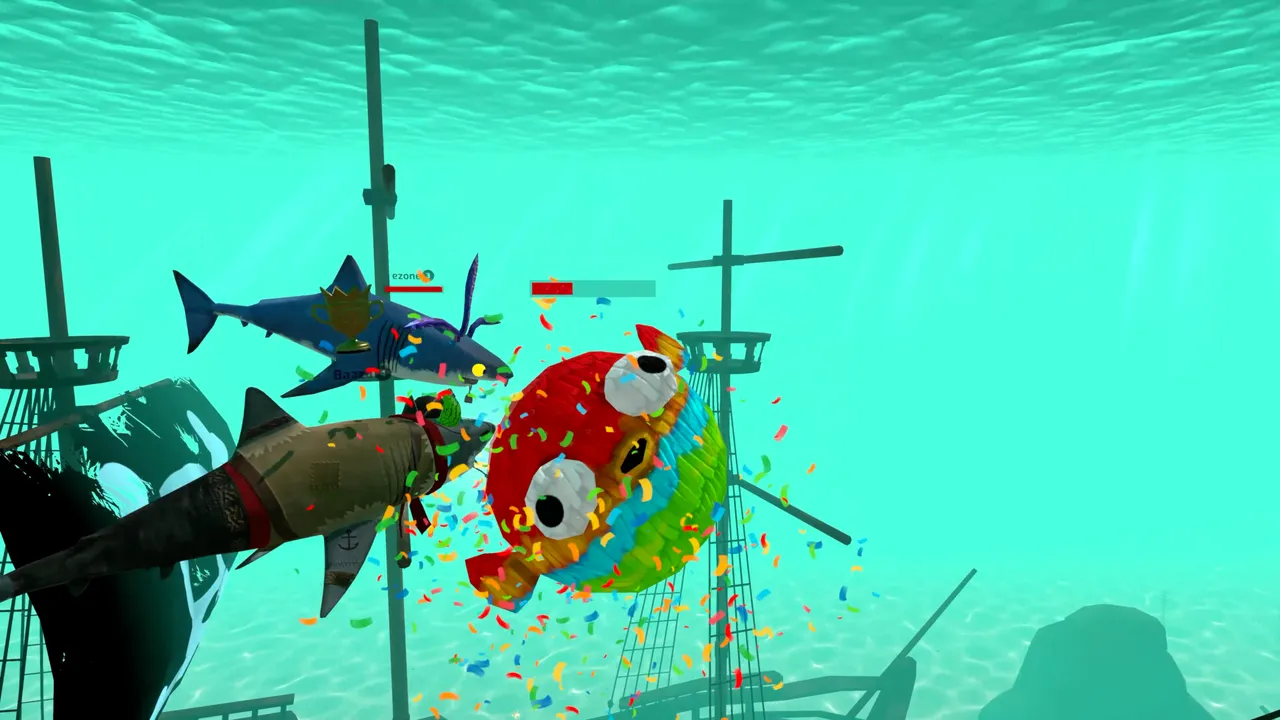
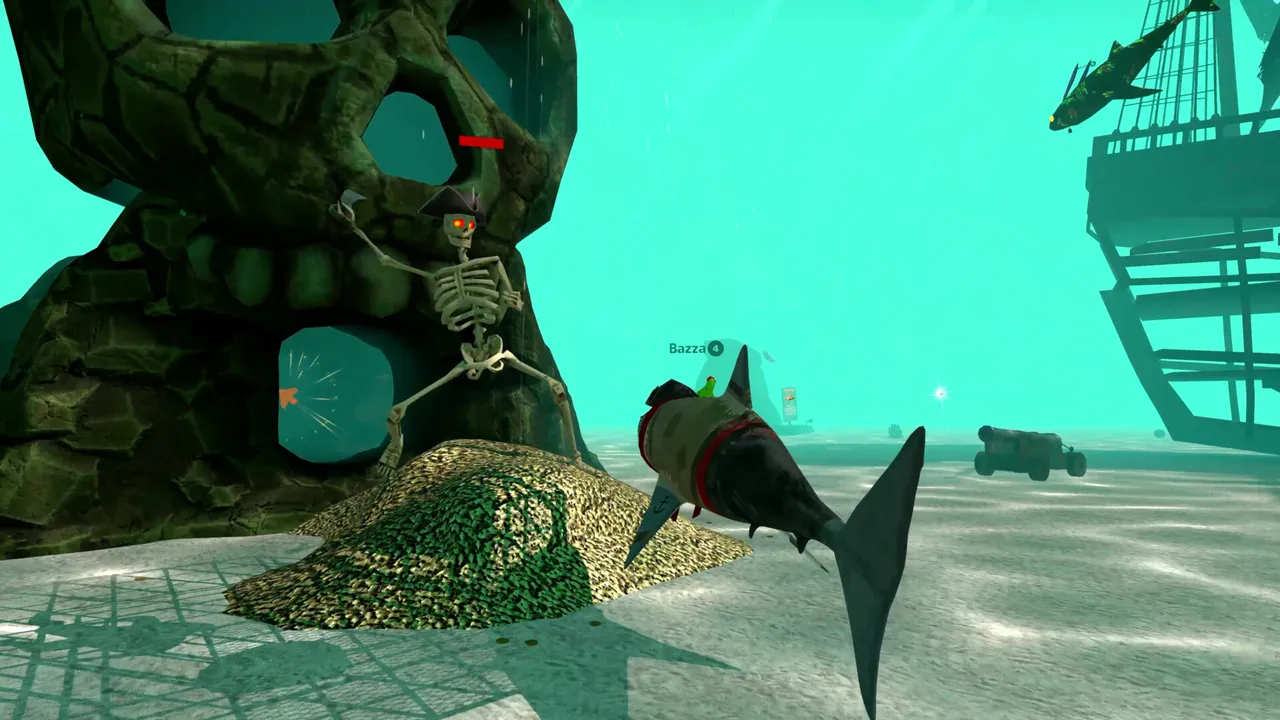
A physics-driven ocean is not a common foundation for multiplayer games, and it is where SHARKS either finds its identity or stumbles. The reference promises that biting, throwing objects, and triggering explosions all feed back into the environment, which suggests a system closer to physics sandboxes like Garry's Mod or Half-Life 2's destructible props than to traditional action games where combat resolves on a grid or with preset animations. If the physics feel responsive and unpredictable—a mine's blast radius pushing you and teammates in different directions, an explosive barrel detonating mid-chase—then four players experimenting with cause and effect could sustain engagement. If interactions feel predictable or repetitive after a few matches, the lack of progression systems or narrative spine becomes a liability. The game includes boss encounters (the Skull Rock skeleton, a piñata minigame) that suggest structured objectives exist, but their role in keeping play fresh is unclear.
Accessibility and Control Simplicity
The control scheme is unapologetically minimal: look, swim, bite. No arm flapping, no complex button combos, no setup friction. On flat-screen, it collapses further to left-click move, right-click bite. This is a strong design signal. It lowers the barrier for players unfamiliar with VR and keeps cognitive load light, which in a chaotic four-player physics sandbox can be a virtue. The trade-off is that combat and tactical depth must come from environmental manipulation and emergent moments, not from mastery of a complex moveset. Whether that trades satisfying combat depth for accessibility or simply prioritises fun over mechanical depth depends entirely on execution.
SHARKS is in early development with no confirmed release date. If you are drawn to physics-driven multiplayer chaos and comfortable with cross-platform play that bridges VR and flat-screen, add it to your wishlist and watch for reviews once it launches. If you need progression systems, a campaign arc, or depth that emerges from character builds rather than environmental chaos, wait for fuller previews to see whether the physics loop sustains for more than a few hours. Solo players should skip it entirely; the game is built around teaming up with friends.
Themes
Features
System requirements
Minimum
- OS
- Windows 10
- Processor
- Intel Core i5-4590 / AMD FX 8350
- Memory
- 4 GB RAM
- Graphics
- NVIDIA GTX 970 / AMD Radeon R9 290
- Network
- Broadband Internet connection
- Storage
- 1 GB available space
- VR Support
- OpenXR on Meta with Meta Quest
- Additional Notes
- Virtual Reality supported (but not required)
Recommended
- OS
- Windows 10
- Processor
- Intel Core i5-4590 / AMD FX 8350
- Memory
- 4 GB RAM
- Graphics
- NVIDIA GTX 970 / AMD Radeon R9 290
- Network
- Broadband Internet connection
- Storage
- 1 GB available space
- VR Support
- OpenXR on Meta with Meta Quest
- Additional Notes
- Virtual Reality supported (but not required)

No comments yet. Be the first to share your thoughts.