
About Rail Estate
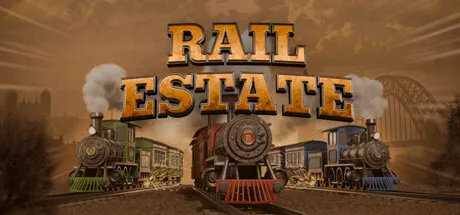
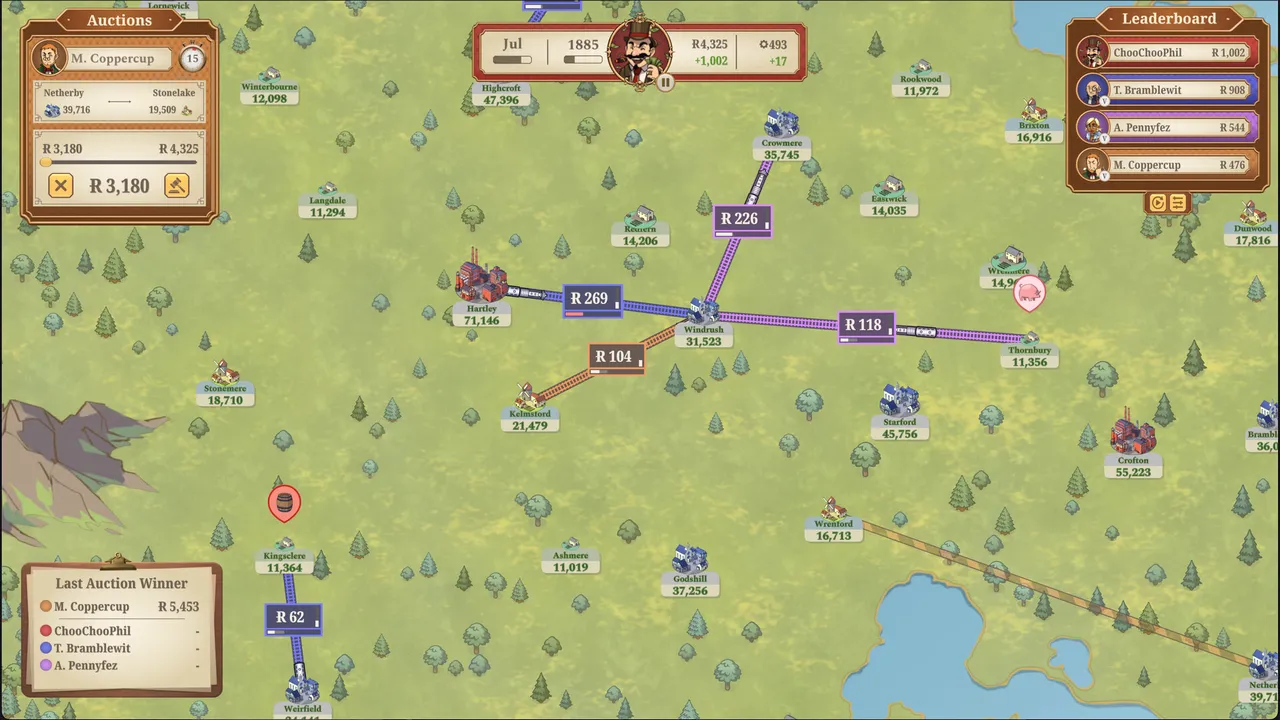
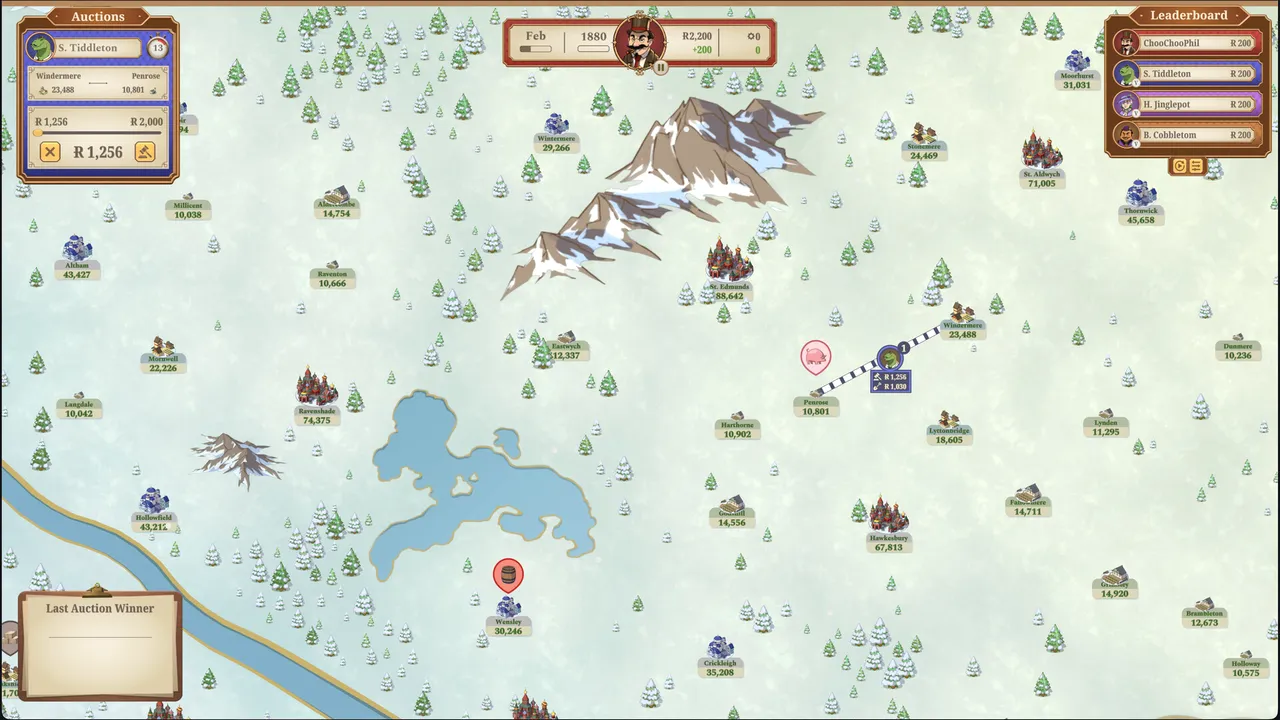
Rail Estate arrives on PC on July 16, 2026, built on a core mechanic that flips traditional economic strategy games on their head: you do not know what your opponents will bid until you have already committed your own money. This blind auction system sits at the heart of everything, forcing you to read the board state, guess your rivals' intent, and make irreversible financial gambles multiple times per session. It is the pivot that transforms a standard railway-building simulation into something closer to live poker than Ticket to Ride.
Blind Auctions and Real-Time Economics
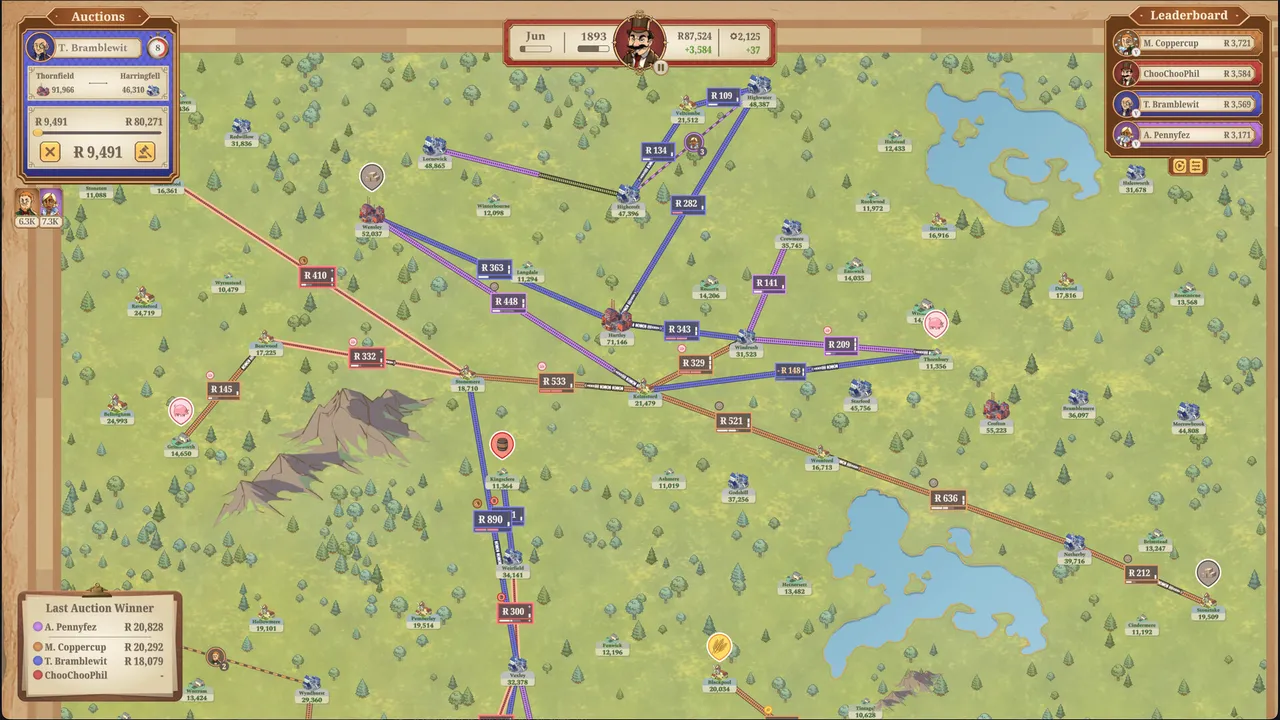
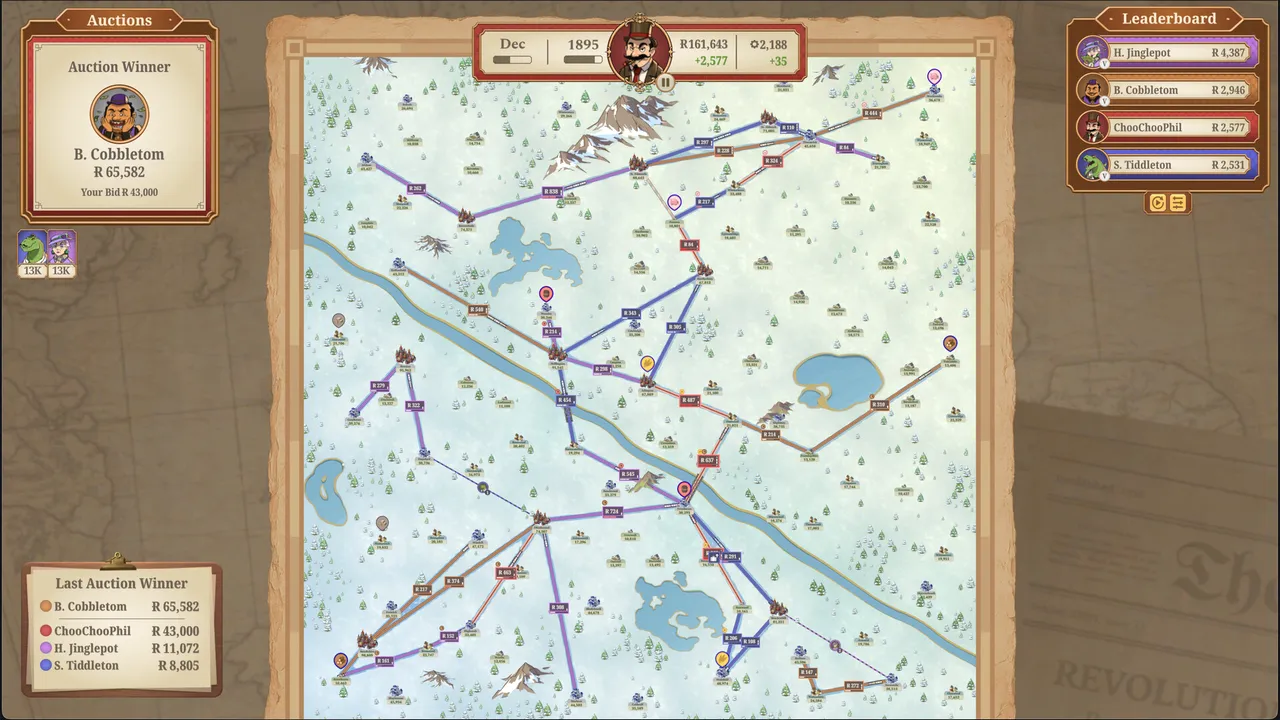
The blind auction system is not window dressing. Every profitable route must be won at an unknown price, which means you are constantly trading incomplete information against the risk of overpaying or losing a critical connection to a rival who wagered less. Once a route is yours, the game shifts to management: you upgrade tracks to increase capacity and speed, manipulate income streams, and drain your opponents' resources through calculated competition. The result is a game where a single bad bid early can cascade into a cascade of bad decisions later, and where reading the economic rhythm of your opponents becomes as important as the routes themselves. Whether the studio can maintain this tension across a full campaign without auction moments becoming rote or predictable is the central question the game must answer.
Campaign and Multiplayer
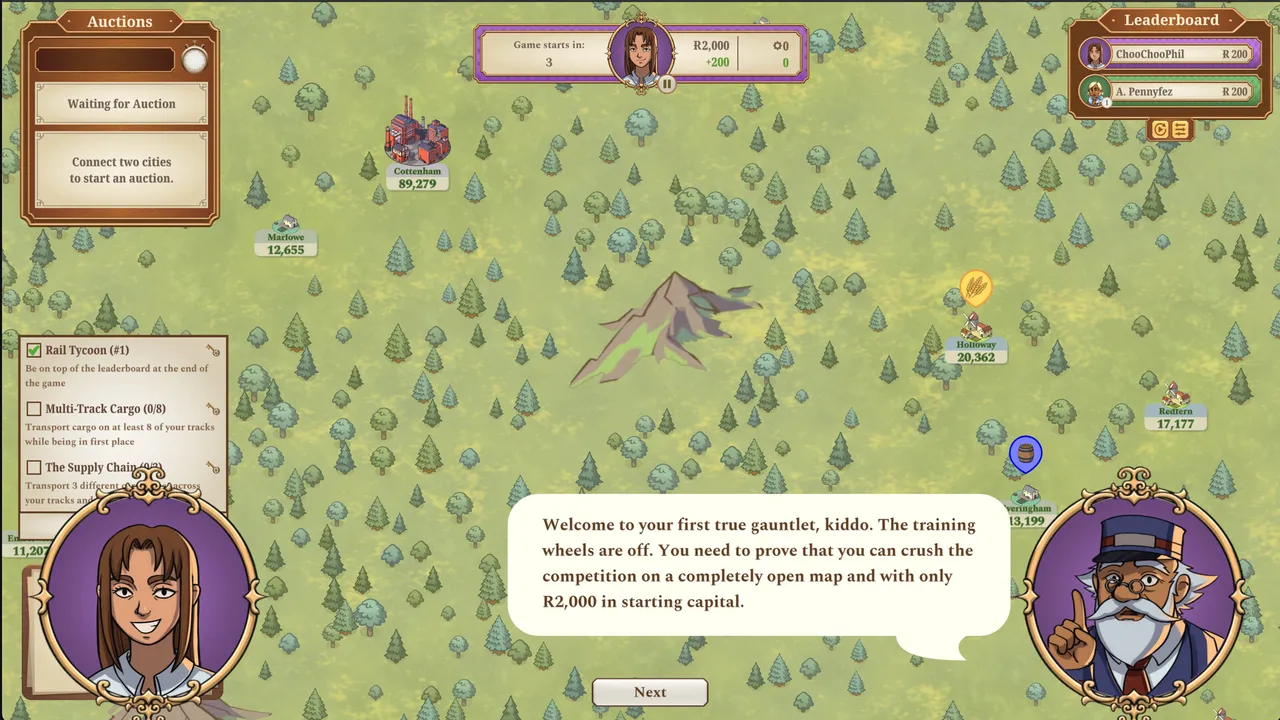
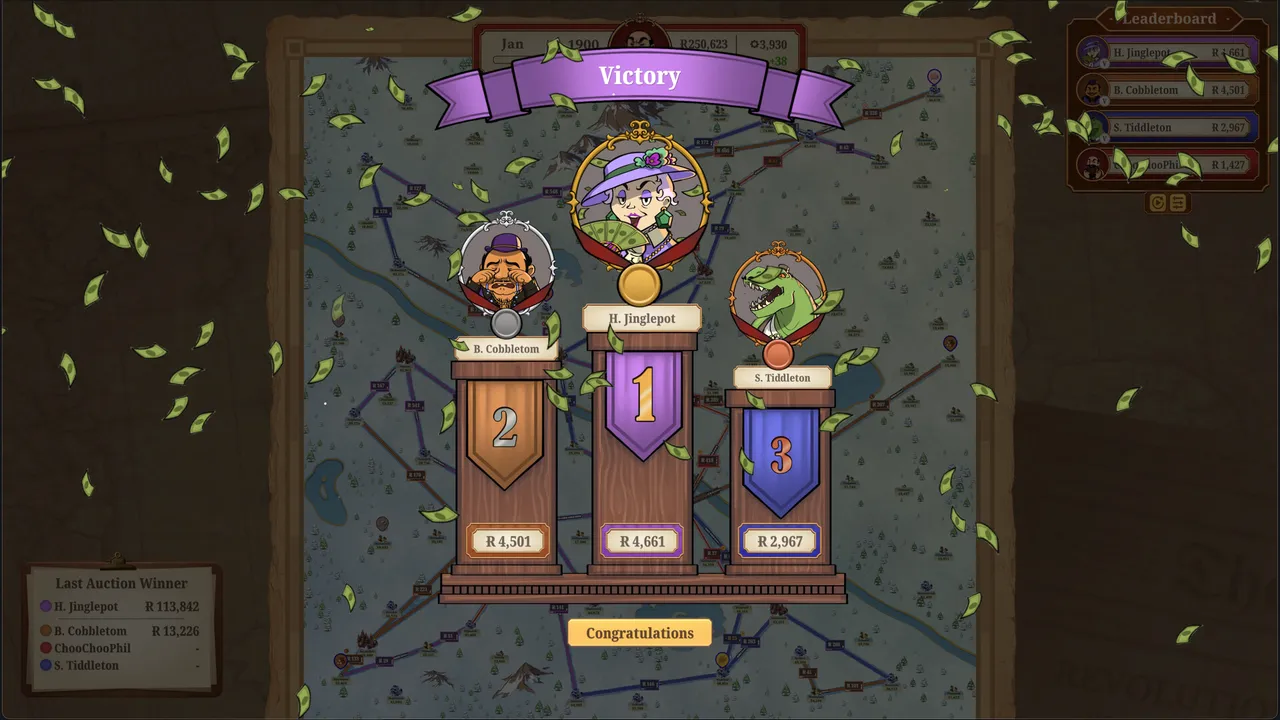
A single-player campaign lets you test tactics against a cast of AI rivals across changing maps before you face human opponents. Procedurally generated layouts ensure no two sessions follow the same strategic playbook, though this also means memorising specific counters or optimal builds will not work. Multiplayer, free-form or team-based, is where the blind auction system reaches its teeth: you can read live reactions, spot patterns in how players behave under pressure, and exploit weakness in real time. The comparison to Power Grid holds weight—both games create moment-by-moment tension through incomplete information and resource scarcity—but Rail Estate adds the speed and unpredictability of real-time multiplayer, whereas Power Grid unfolds at a deliberate pace with perfect information.
Rail Estate is built for players who prize economic decision-making under uncertainty and do not need a strong narrative or single-player spectacle to feel invested. If you loved the negotiation and risk assessment in Power Grid, or the territorial warfare in Ticket to Ride but wished it moved faster and rewarded reading your opponents, this is the release date and platform worth marking. Skip it if you want a relaxing sim or a game where perfect play guarantees victory.
Features
System requirements
Minimum
- OS
- Windows 10 (64-bit)
- Processor
- Intel Core i7-4510U @ 2.00GHz
- Memory
- 8 GB RAM
- Graphics
- NVIDIA GeForce GTX 750 Ti (2 GB), Intel(R) HD Graphics Family (113 MB)
- DirectX
- Version 12
- Storage
- 500 MB available space
- Sound Card
- DirectX Compatible
Recommended
- OS
- Windows 10/11 (64-bit)
- Processor
- Intel Core i7-9700K / AMD Ryzen 5 3600X
- Memory
- 16 GB RAM
- Graphics
- NVIDIA GeForce RTX 2060 / AMD Radeon RX 5700 (6GB+ VRAM)
- DirectX
- Version 12
- Storage
- 500 MB available space
- Sound Card
- DirectX Compatible


No comments yet. Be the first to share your thoughts.