
About Grim Reach
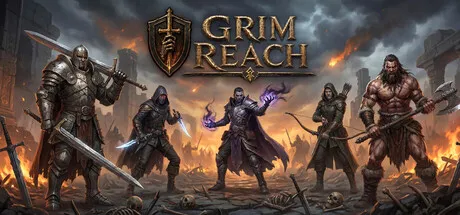
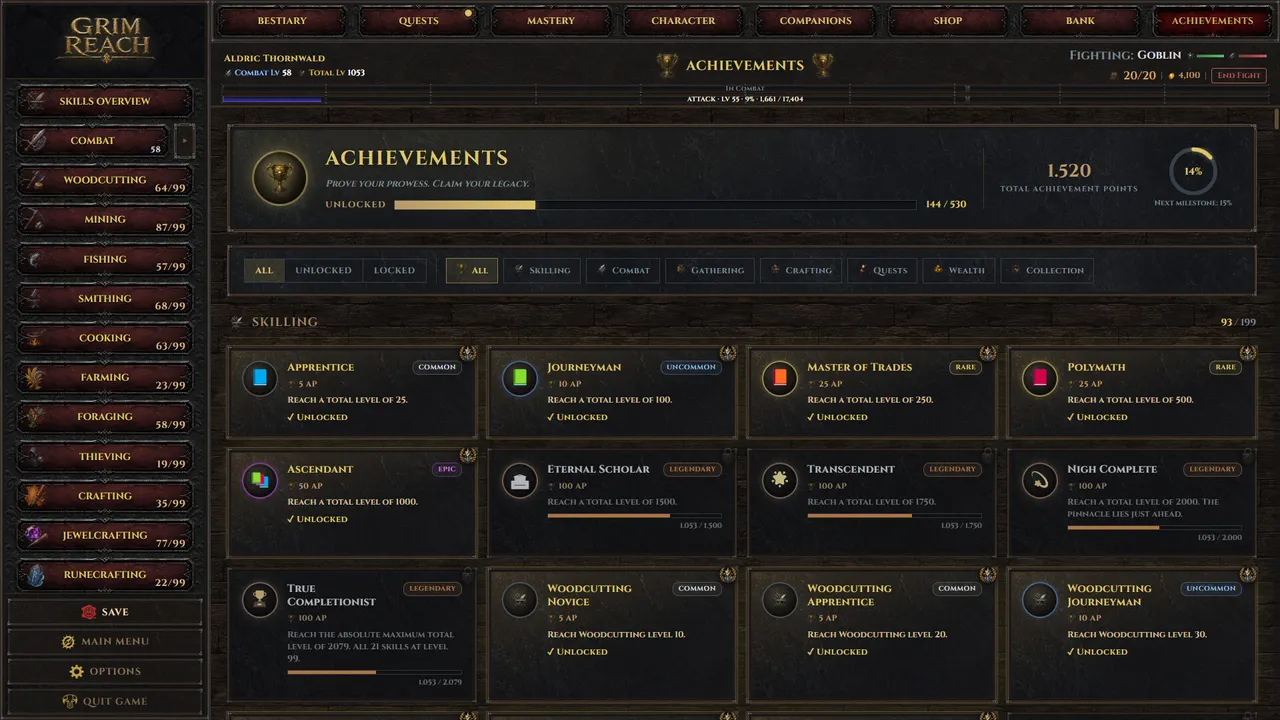
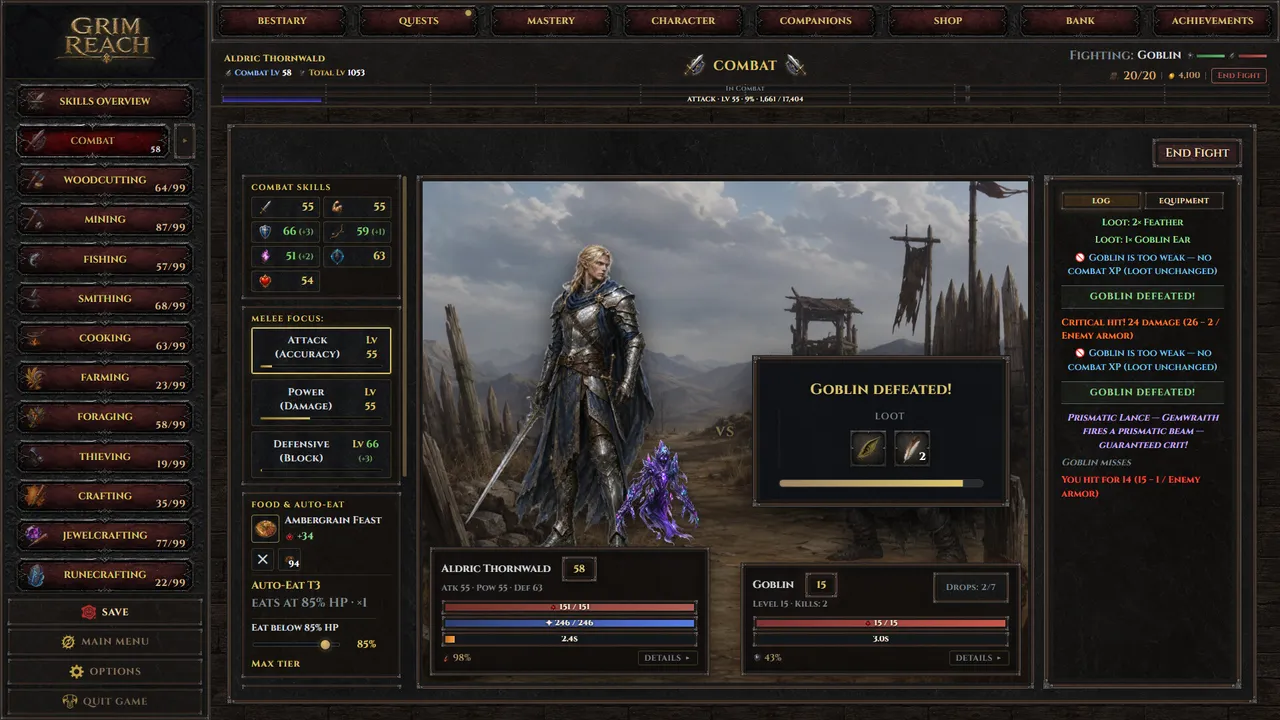
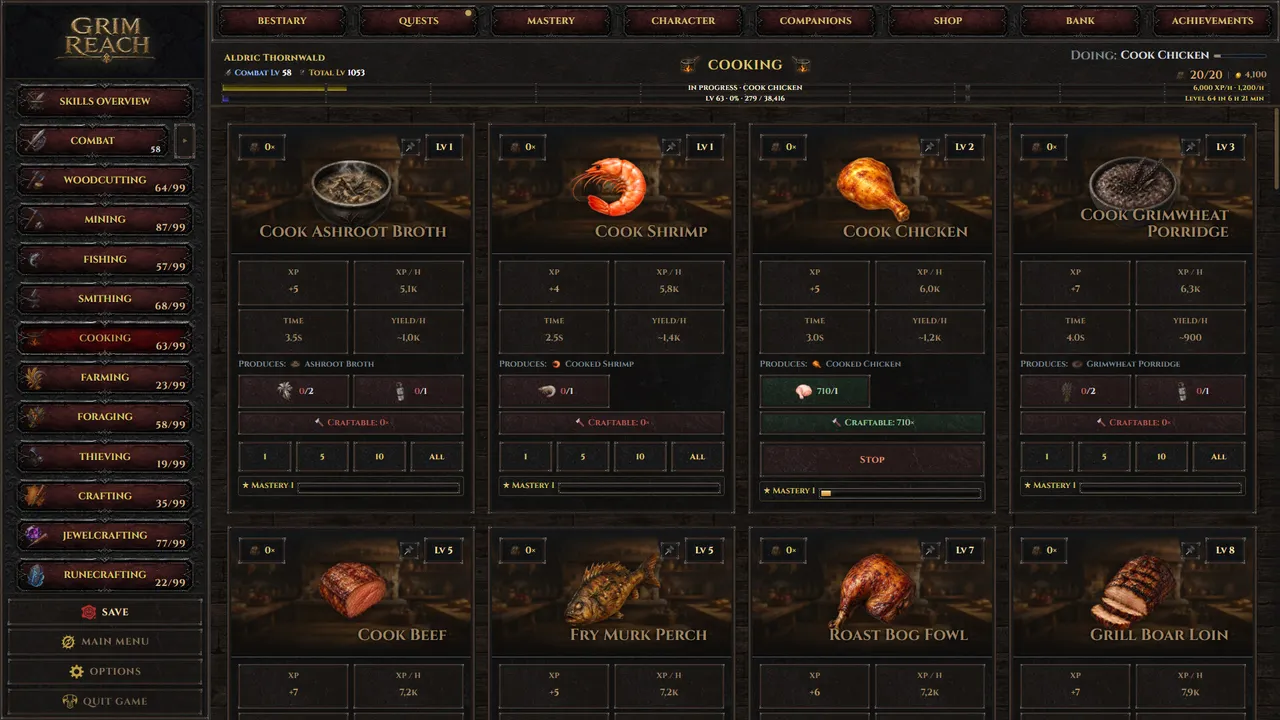
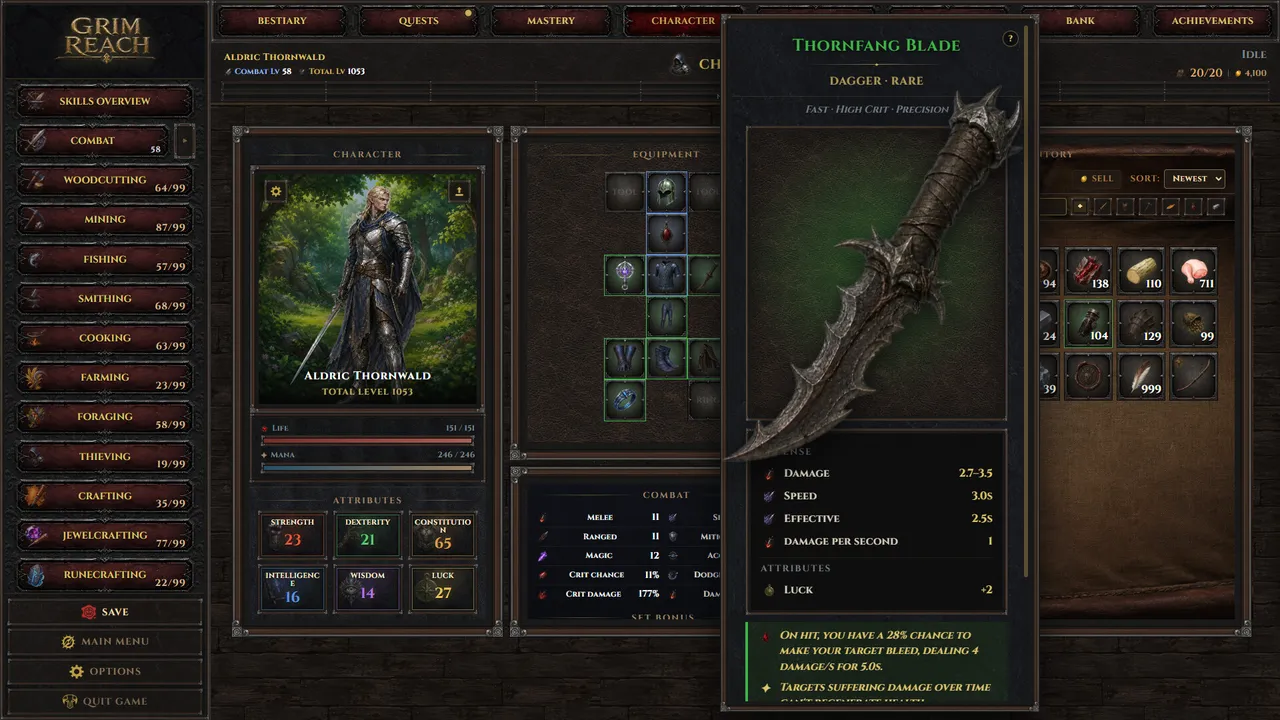
Grim Reach is a dark-fantasy idle RPG built around a single, elegant trade-off: the world demands preparation before combat, then rewards you while you are away from it. Released July 21, 2026 on PC, it chains production loops—felling trees, mining ore, smelting, cooking, brewing, stitching—into a web where each craft unlocks the next, until you have enough armor, food and enchanted gear to walk into combat. The moment you engage a foe, auto-combat takes over. You do not control individual actions; instead, the quality of your preparation determines survival. Melee, ranged and magic each operate on their own rhythm, the Reach hits back hard, and undergeared means dead. When you log off, the idle systems keep grinding: resources accumulate, combat continues offline, and your character grows while you sleep.
The Build Loop and the Grind Hierarchy
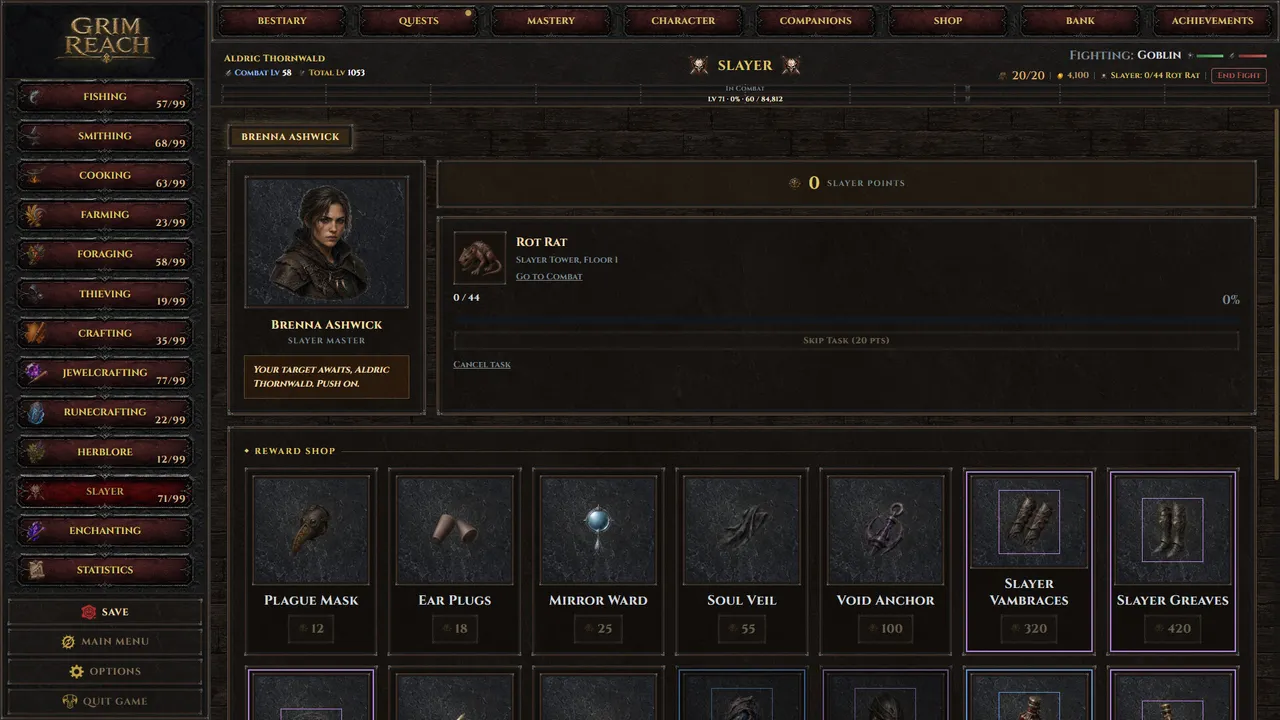
The core tension sits between active crafting and passive combat. While playing, you juggle 20+ skills and dozens of craftable items, each with dependencies—you cannot smith without ore, cannot wear plate without smelting, cannot enchant without runes. This creates a natural pacing: short bursts of active decision-making (what to craft next, which route to farm) bookend longer periods of auto-grinding and offline gains. The real loop, though, is the rare-drop chase. Every combat yield can roll a random suffix; Slayer contracts offer loot ordinary kills do not; enchanted runes tier up your gear. This reroll economy is what keeps the climb compelling beyond the initial gearcheck. The release date for Grim Reach falls in mid-summer 2026, giving it space away from the autumn blockbuster rush, a sensible position for a game designed for long-term play rather than launch-window intensity.
Where the Design Gamble Sits
Idle mechanics have grown sophisticated enough that the genre is no longer novelty; the real question is whether Grim Reach's crafting hierarchy and gear-dependency survival system stay interesting across dozens of hours. Plenty of idle games lose momentum once the player has seen the full tech tree and accepts that the grind is rote. Here, the bestiary and contract system hint at persistent discovery—new foes unlock new contracts, rare drops unlock new builds—but whether that loop renews itself often enough is unproven. For the player comfortable with session-based crafting interrupted by long idle stretches, this is native. For anyone expecting moment-to-moment combat control or rapid decision cycles, the auto-combat and offline focus will feel deliberately hands-off.
Heartforge Studios is self-publishing, which often signals a smaller scope and tighter vision, but also fewer resources to patch or expand post-launch. Buy in knowing this is the game as shipped, with all the rough edges that might entail. Add to a wishlist now if idle progression and prep-before-combat survival appeal; wait for early-access feedback if you need proof the rare-drop economy and contract system stay rewarding past week one.
Features
System requirements
Minimum
- OS
- Windows 10 (64-bit)
- Processor
- Dual-core 2.0 GHz (Intel Core i3 or equivalent)
- Memory
- 4 GB RAM
- Graphics
- Integrated graphics (Intel HD 4000 or equivalent)
- Storage
- 2 GB available space
- Sound Card
- Any
- Additional Notes
- Best played in fullscreen at 1920×1080
Recommended
- OS
- Windows 11 (64-bit)
- Processor
- Quad-core 2.5 GHz (Intel Core i5 or equivalent)
- Memory
- 8 GB RAM
- Graphics
- Any dedicated or modern integrated GPU
- Storage
- 2 GB available space
- Sound Card
- Any
- Additional Notes
- Best played in fullscreen at 1920×1080



No comments yet. Be the first to share your thoughts.