
About Bunker Buster
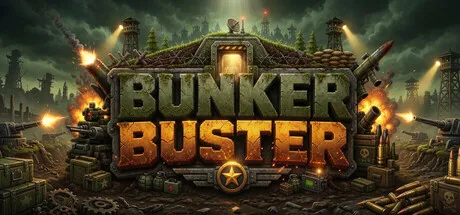
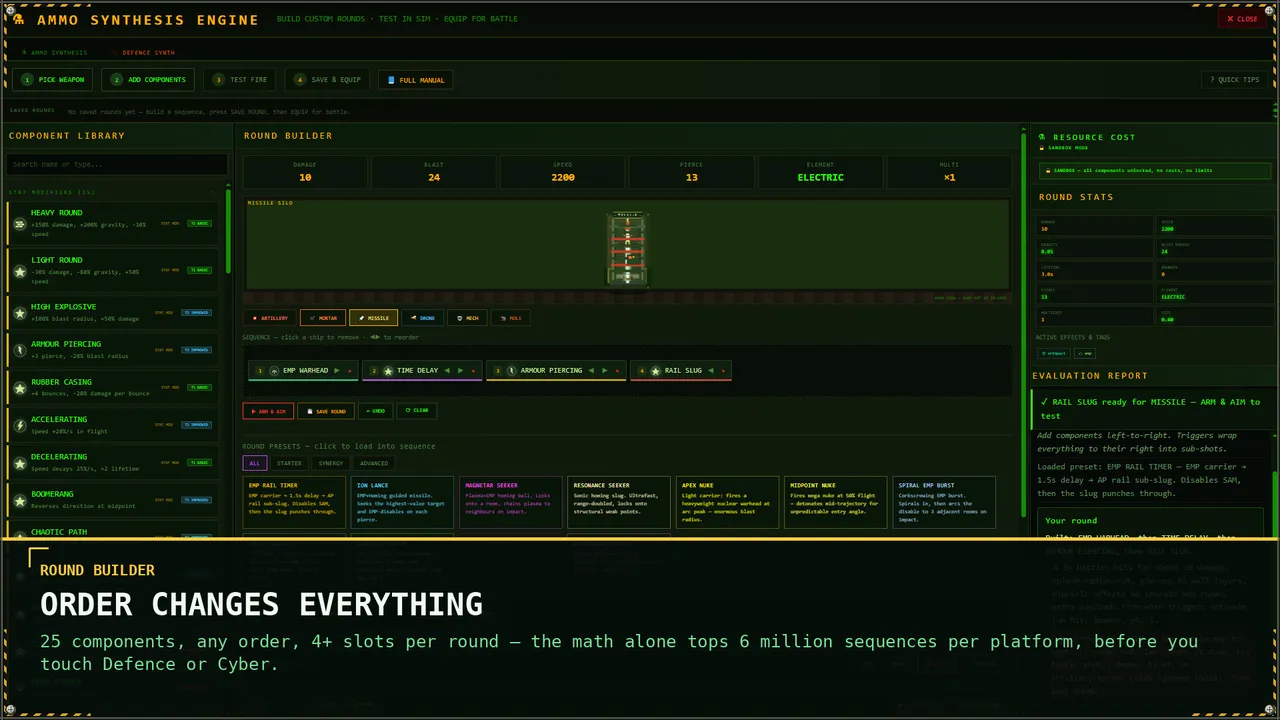
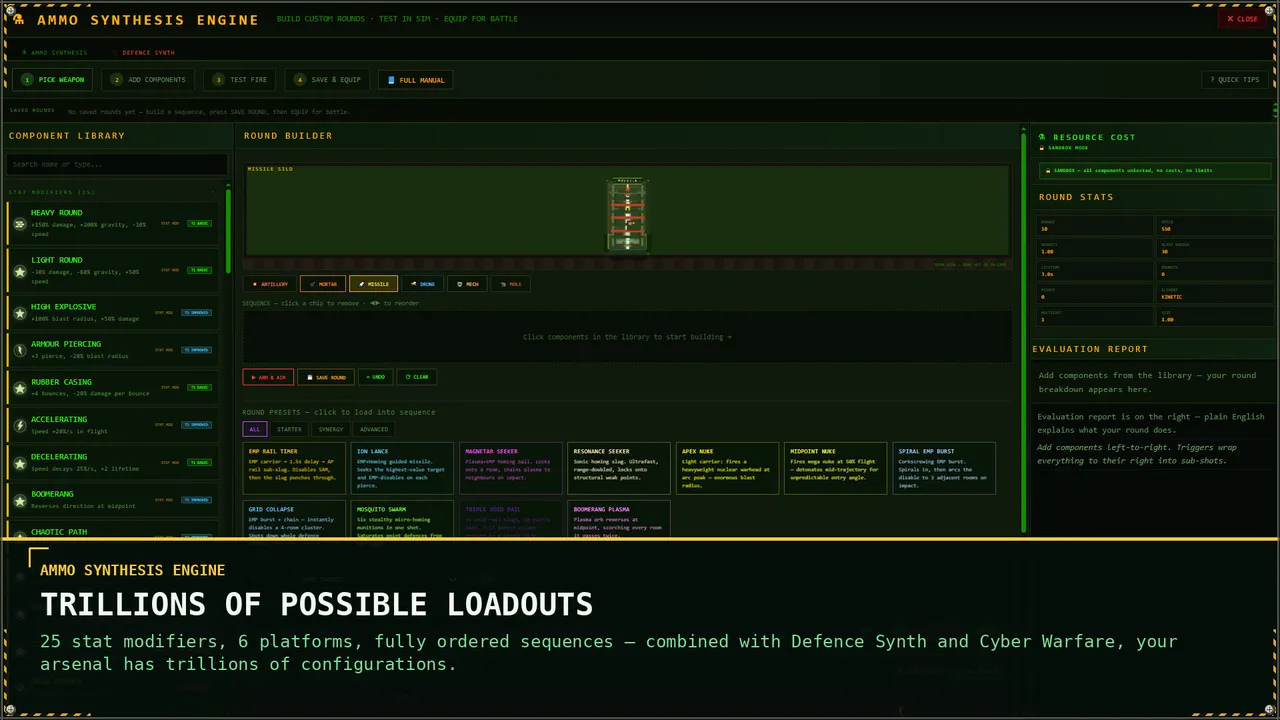
Bunker Buster is a real-time tactical base-builder where the core tension sits not between what weapons exist but in what you can build from modular components stacked in sequence. The release date for Bunker Buster is July 17, 2026, on PC. The game's defining system is synthesis: every weapon, defence module, and cyber-warfare tool is constructed by layering modifiers in a specific order, and that order changes the outcome. It is not about collecting prefabs from a menu; it is about discovering which combinations of parts, arranged in which sequence, solve your current survival problem.
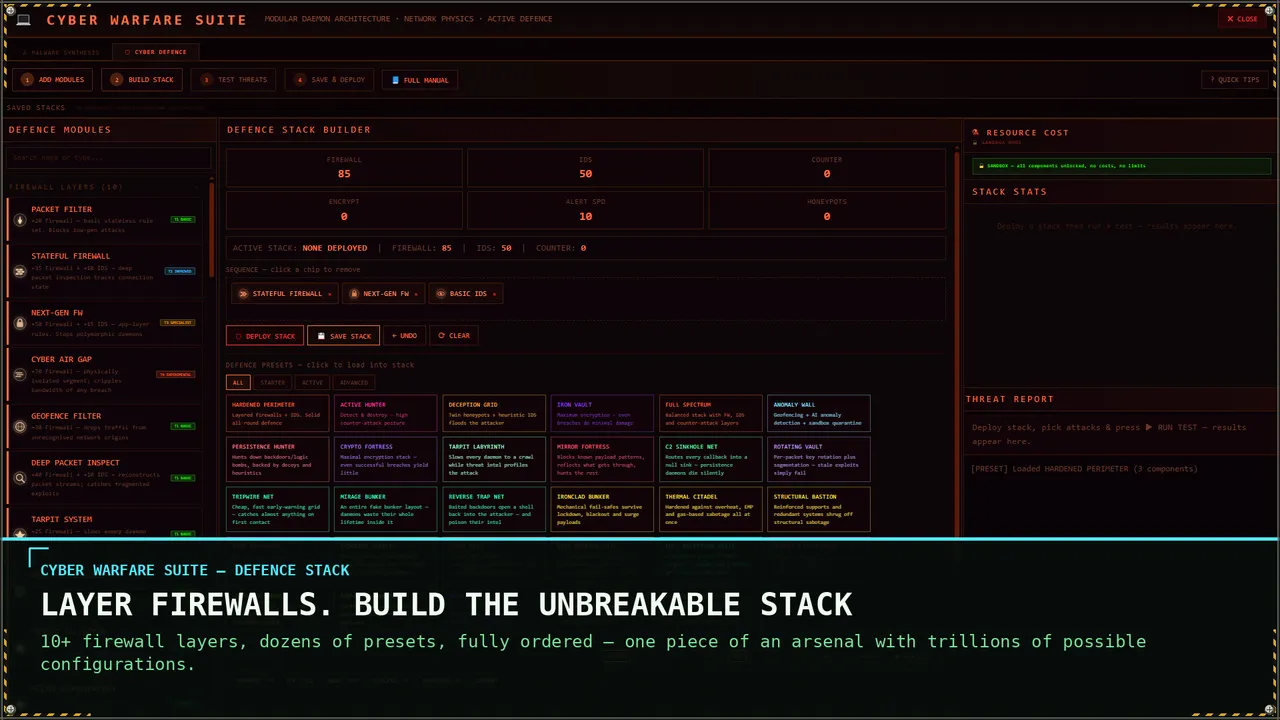
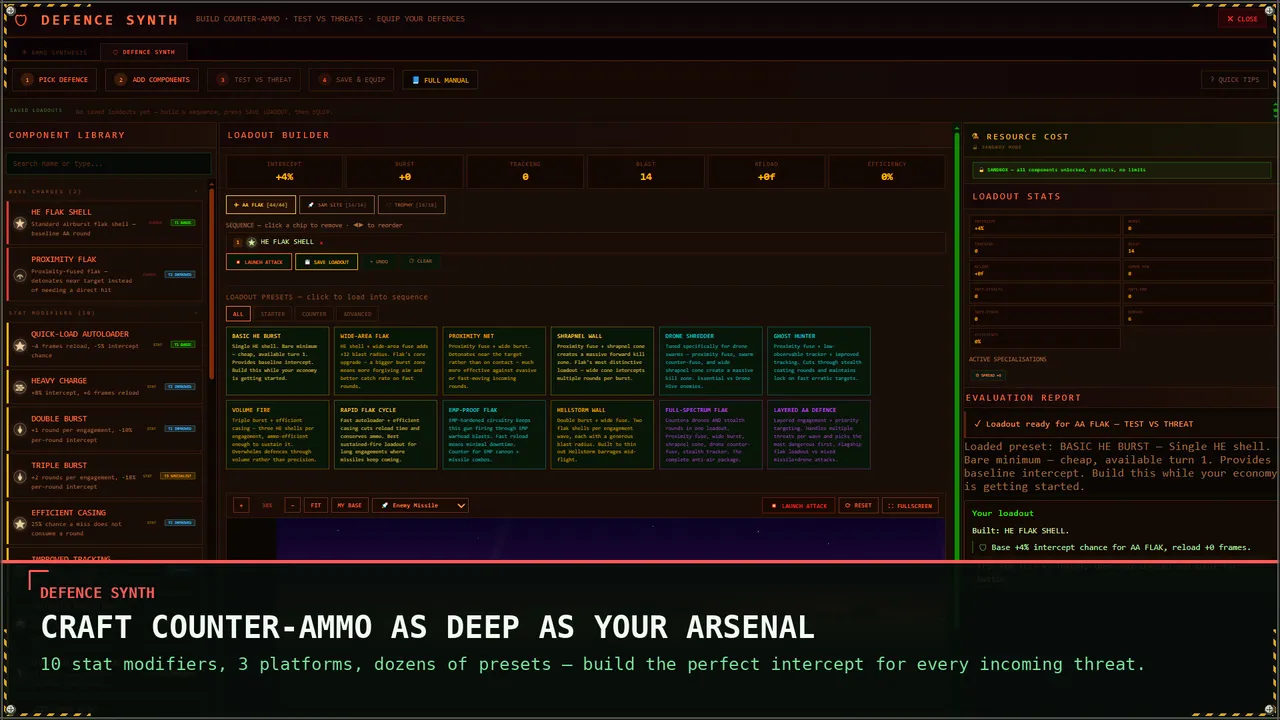
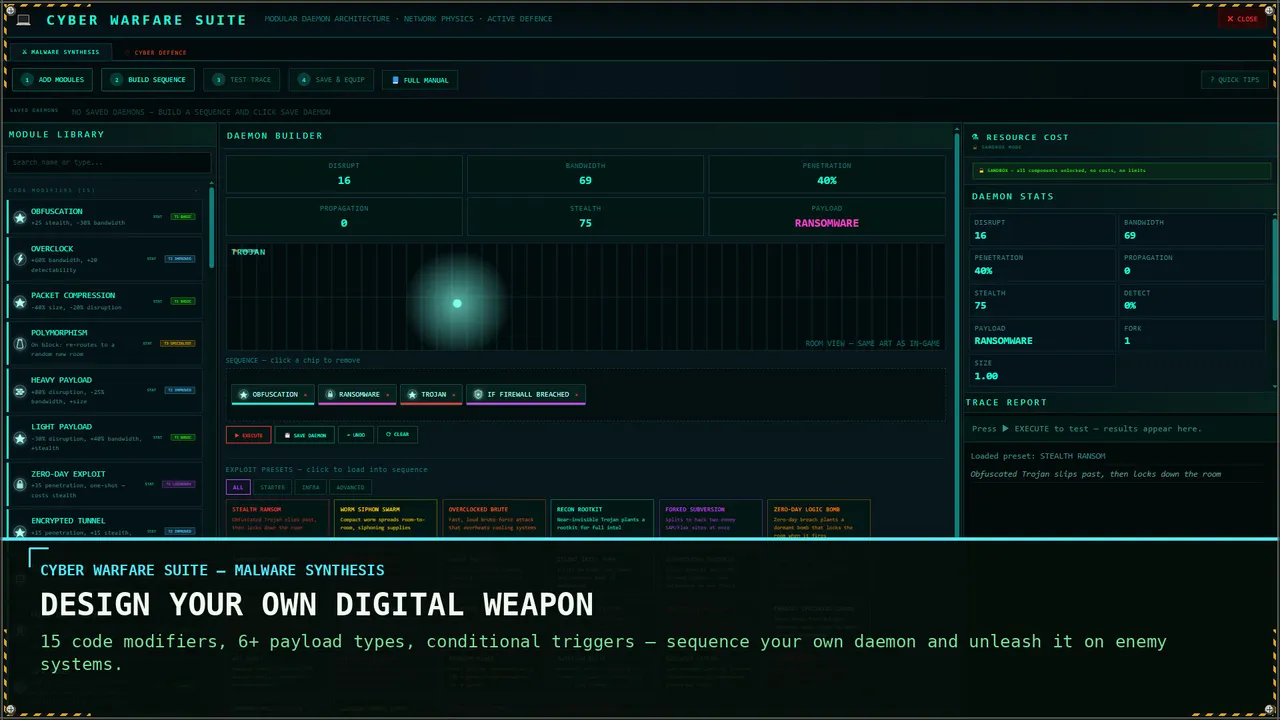
This modular-order architecture reaches across the entire arsenal. Weapons stack up to twenty-five stat modifiers across six platforms, so the same five components arranged differently produce functionally different munitions. Defence systems layer ten intercept modifiers to counter incoming fire before it lands. Even cyber-warfare appears to operate under the same principle: build, layer, order, test. The constraint is not a narrow tech tree or a limited roster; it is the combinatorial depth of arrangement itself. A player optimising for raw damage might discover that reordering components for faster reload breaks their total output, forcing a genuine trade-off rather than a linear upgrade path.
Life support and the pressure to expand
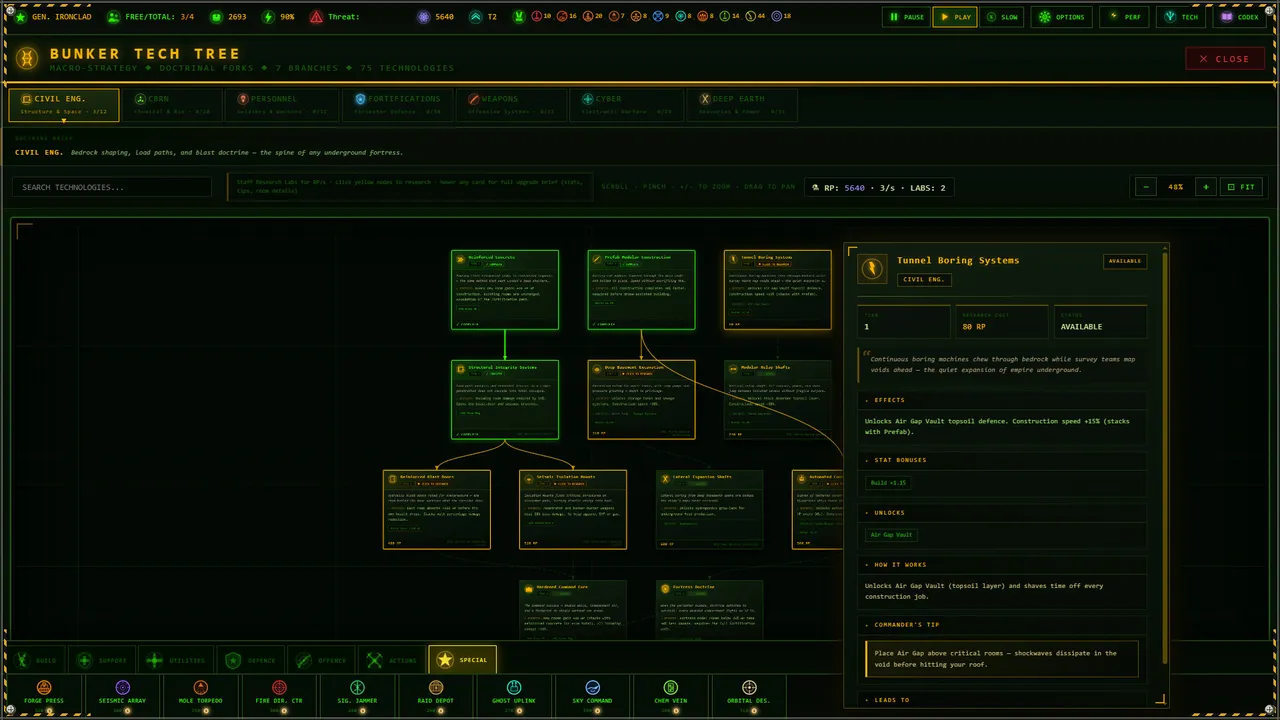
Beneath the synthesis system sits a traditional base-builder's infrastructure loop: generators power rooms, air intakes feed scrubbers, water pumps feed kitchens and med bays, sanitation drains morale problems, and morale affects efficiency. The system appears to mirror games like Dwarf Fortress or Oxygen Not Included in skeleton, but the strategic weight is inverted. In those games, infrastructure becomes predictable after the first hours; here, infrastructure exists to unlock the next layer of weapon synth or defences, and since those combinations are theoretically infinite, the pressure to expand and reconfigure never flattens. Whether that pressure stays compelling across a full playthrough, or whether the novelty of synthesis wears away and leaves only routine resource management, is the unresolved question.
Combat is real-time, not turn-based, which means bunker layout matters physically: missile silos positioned for line-of-sight, artillery with falloff, EMP cannons requiring clear fire arcs. The synthesis system feeds this too. A player might synthesize an EMP cannon with range boosters and stacking modifiers that render it tactically useless against moving targets but devastating to static defences, then base their entire bunker layout on that constraint. Layout becomes a consequence of loadout, not a neutral backdrop.
Release date July 17, 2026, and the scope question
Bunker Buster arrives as an indie title from ALPHALOTA, which means the scope is almost certainly tighter than a simulation like Dwarf Fortress or a roguelike with procedural generation. The reference mentions factions as enemies and the ability to strike first or defend, implying campaign modes or at least multiple strategic postures. The true test is whether the base-building loop and synthesis depth can carry a full campaign or whether they work better as a one-off puzzle to solve and set down. The game lands on PC on July 17, 2026.
Bunker Buster is built for players who want their strategy decisions to ripple outward: who enjoy systems where the order of placement or the sequence of components matters as much as the components themselves. Anyone seeking a relaxed building game should look elsewhere. Anyone after a tight, modular, order-sensitive puzzle of base-building and synthesis deserves to add this to their wishlist.
Themes
Features
System requirements
Minimum
- OS
- Windows 10 64-bit
- Processor
- Dual-core 2.0 GHz (Intel Core i3 / AMD equivalent)
- Memory
- 4 GB RAM
- Graphics
- Integrated graphics, Intel HD 4000 or equivalent
- DirectX
- Version 11
- Storage
- 500 MB available space
- Sound Card
- DirectX compatible
- VR Support
- Not supported
Recommended
- OS
- Windows 10/11 64-bit
- Processor
- Quad-core 2.5 GHz+ (Intel Core i5 / AMD Ryzen 5)
- Memory
- 8 GB RAM
- Graphics
- Integrated graphics, Intel UHD 620 or equivalent
- DirectX
- Version 11
- Storage
- 1 GB available space
- Sound Card
- DirectX compatible
- VR Support
- Not supported






No comments yet. Be the first to share your thoughts.