
About Bitloop
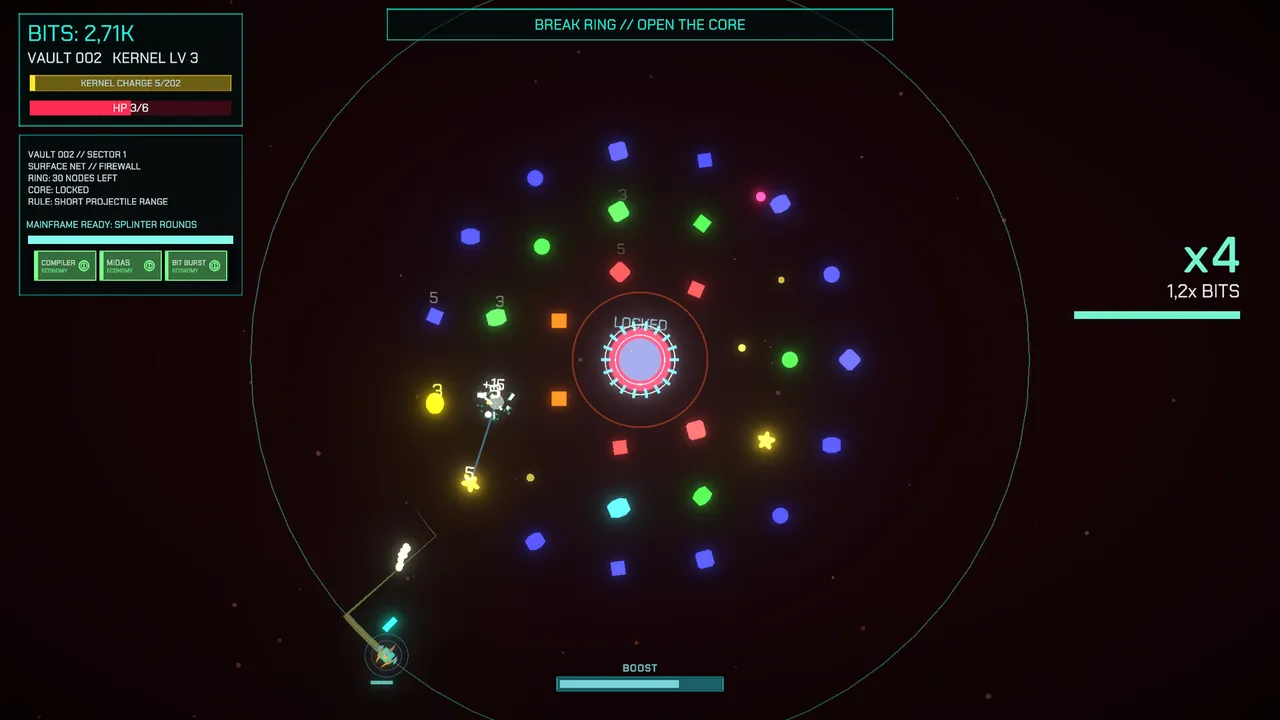
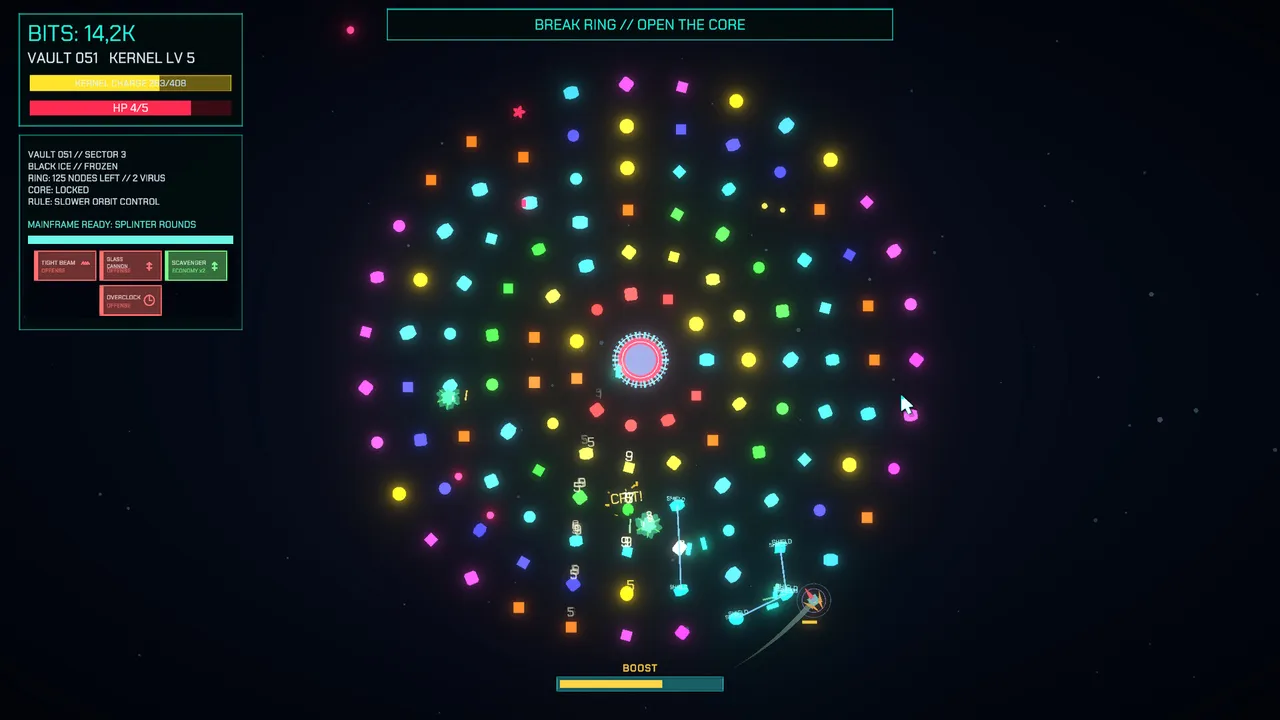
Bitloop distils roguelite mining into a single, brutal dial: how close to ride. Your drone orbits a vault core on rails you control, firing automatically while you decide whether to cut tight and strip the ring in seconds at the cost of taking hits, or spiral wide and survive longer at the cost of time. The release date for Bitloop is July 16, 2026 on PC.
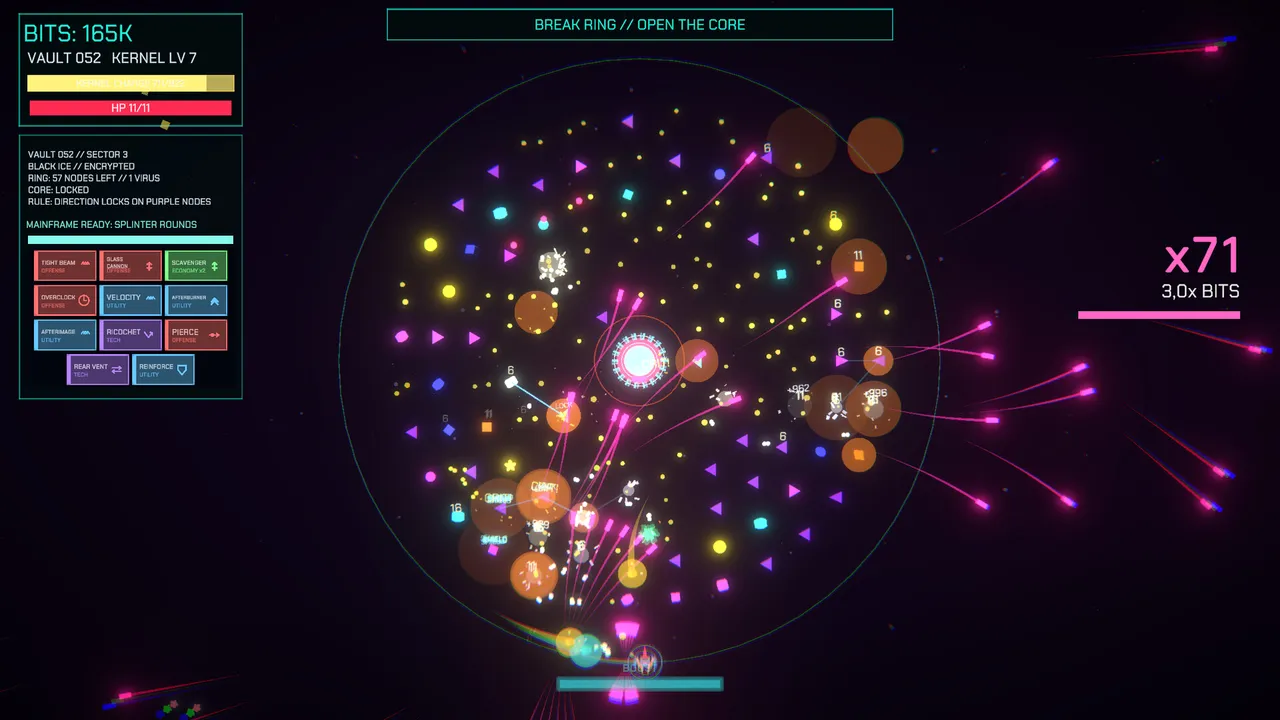
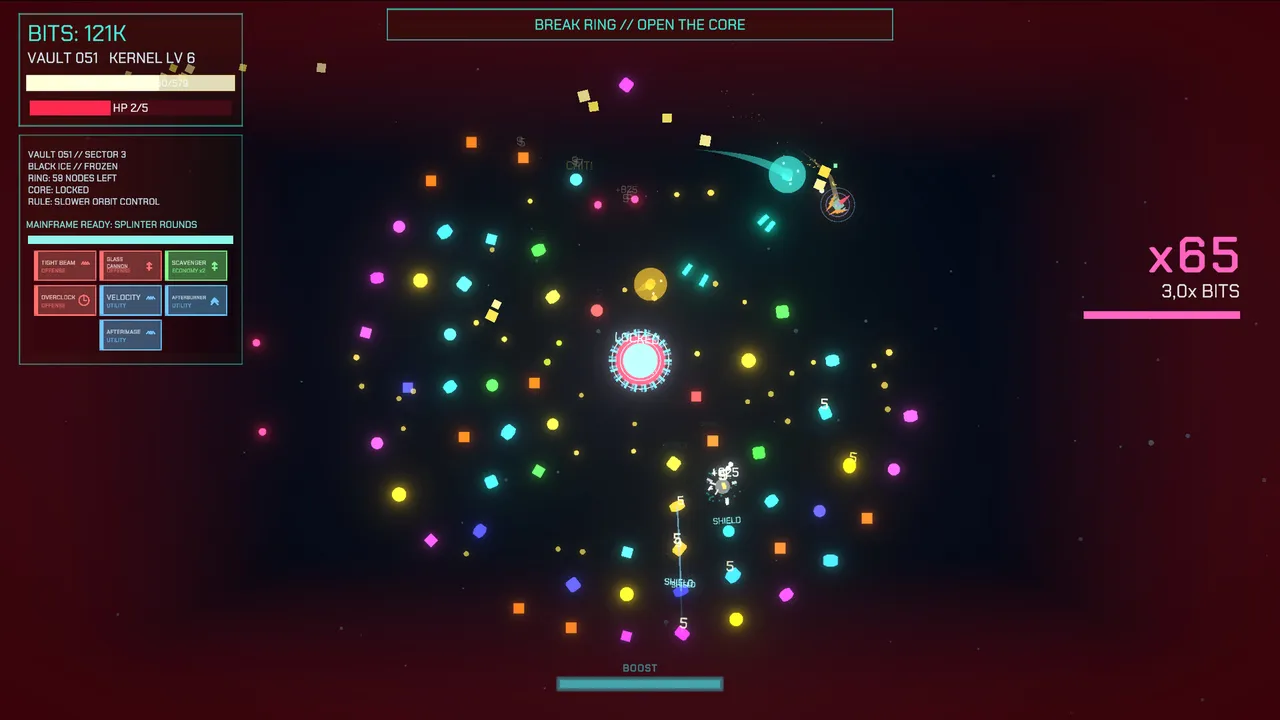
The core tension sits in that one input, orbit radius, and what it forces you to choose. Tight orbits make short work of the outer ring and its defenders, but the slightest misjudgement, a stray projectile or a shape you misread, chips your hull. Wide orbits turn you into a tank—nothing touches you—but you're grinding through waves of enemies and cracking cores takes an age. Every vault poses the same question differently: how much risk can you afford right now? It is a clean design that lets a single mechanical decision carry the weight of the whole run.
Descent and the spiral of upgrades
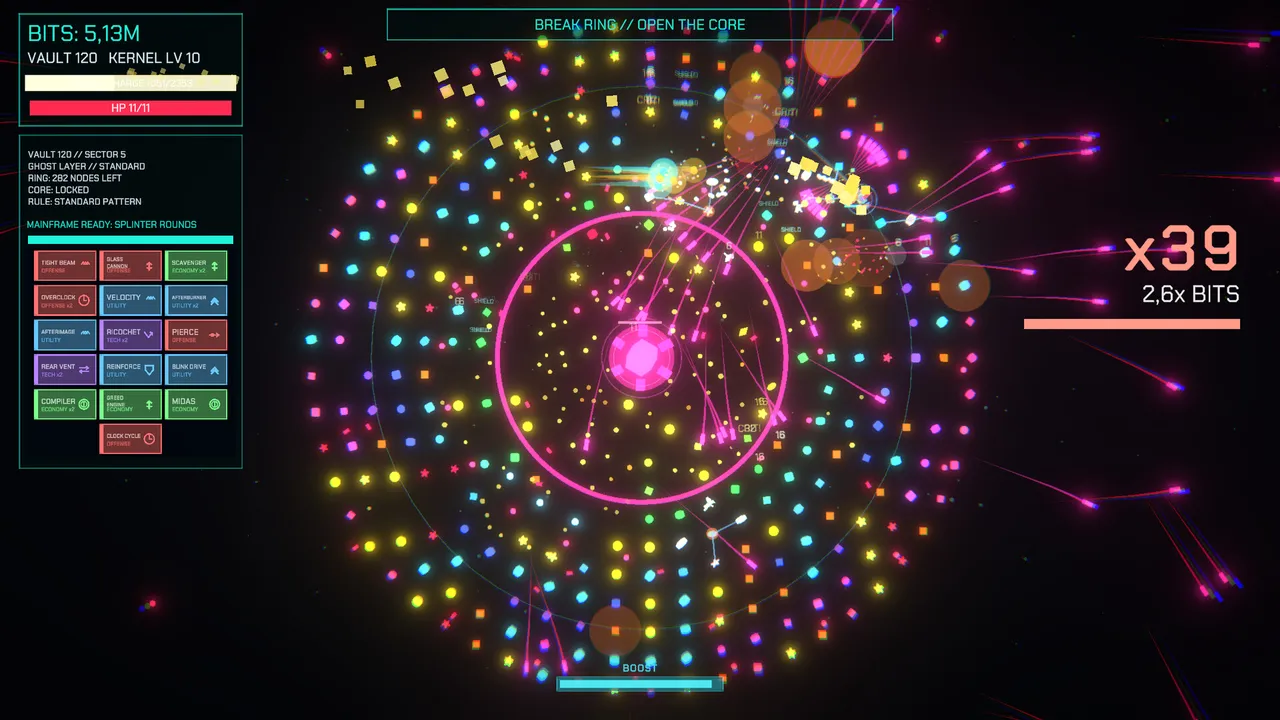
Once you crack a vault's core, the floor opens and you fall to the next one, denser and more hostile than the last. New core types, new break patterns, new biomes with their own hazards pile on as you go deeper. The deeper you descend, the better the haul, but the meaner the floor fights back. This escalation is standard roguelite scaffolding, but it serves the tight mechanical loop well: each run teaches you a new vault type, and each descent tests whether you can adapt your orbit strategy on the fly.
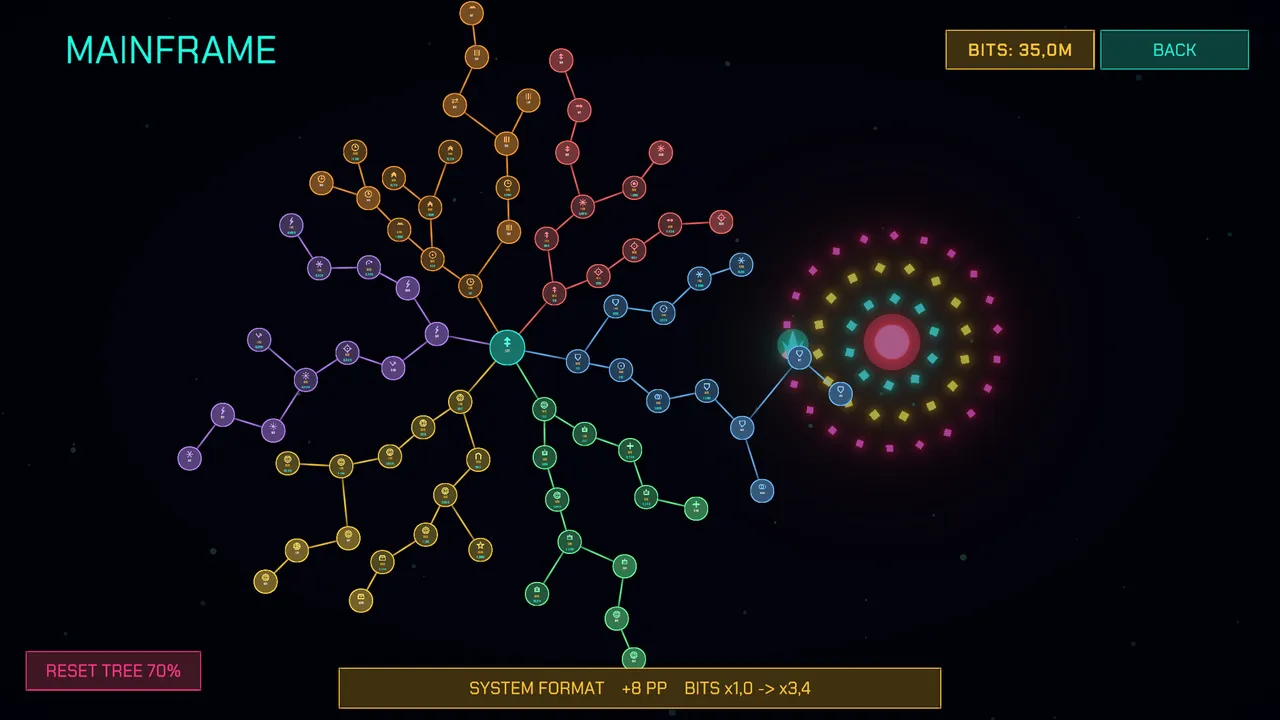
The progression system reaches across runs. Every scrap you tear loose comes back up with you and converts into upgrade cards between runs: fire rate, hull durability, orbit precision, magnet strength, crit chance, and a full skill tree that rewrites how future runs play. Nothing is wasted. Every run, even a failed one early, pushes the floor down and unlocks new hostile types, making the next run harder and richer. This structure means playtime compounds; short runs in week one set up longer, deeper, more rewarding runs later.
The unproven rhythm
Whether the studio can keep the single-dial mechanic tense across a full run is the game's open question. A roguelite lives or dies on pacing, and one input can either feel like a hypnotic, decision-rich constraint or a cramped, repetitive cage. Early indications—the way the reference frames depth progression and upgrade unlocks—suggest the design intends to layer complexity: new core types and biome hazards should force new orbital reads, and the skill tree should let players chase wildly different strategies on subsequent runs. But a single knob, no matter how smart, can only carry tension so far before routine sets in.
Bitloop is for players who love the clarity of a tight mechanical rule and the long grind of a roguelite where every run is currency. If you thrive on games like Hades or Spelunky where one or two systems carry the whole loop, or if you're after something shorter and less dense than a full campaign roguelite, the release date of July 16, 2026 is worth marking. Skip it if you need variety in your moment-to-moment inputs or if you're hunting a story-driven roguelite. For everyone else: wishlist it now and watch early gameplay to see if that single dial stays sharp across a full descent.
Features
System requirements
Minimum
- OS
- Windows 10 64-bit
- Processor
- Intel Core i3 / AMD equivalent (2.0 GHz dual-core)
- Memory
- 4096 MB RAM
- Graphics
- DirectX 11 capable (Intel HD Graphics 4000 / equivalent)
- DirectX
- Version 11
- Storage
- 500 MB available space
- Sound Card
- DirectX compatible
Recommended
- OS
- Windows 10/11 64-bit
- Processor
- Intel Core i5 / AMD Ryzen 5 (quad-core)
- Memory
- 8192 MB RAM
- Graphics
- Dedicated GPU with 2 GB (GTX 750 / RX 560 or better)
- DirectX
- Version 11
- Storage
- 1024 MB available space
- Sound Card
- DirectX compatible



No comments yet. Be the first to share your thoughts.