
About Untangle
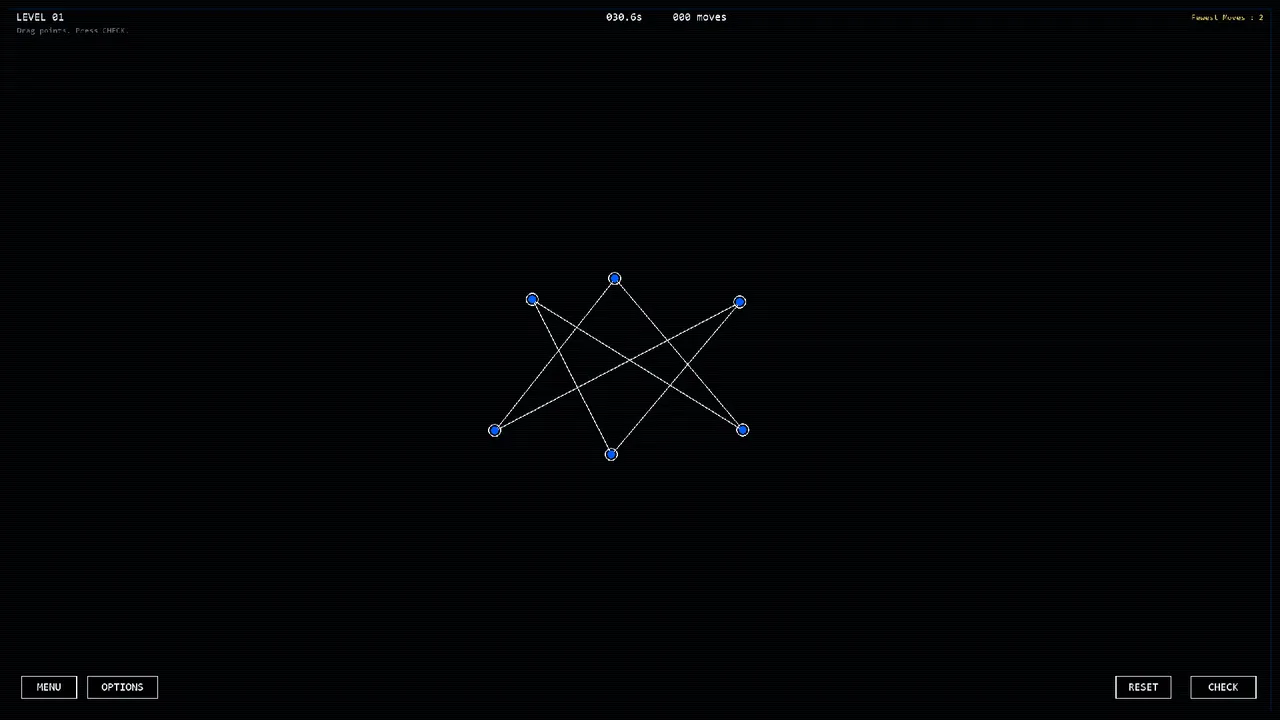
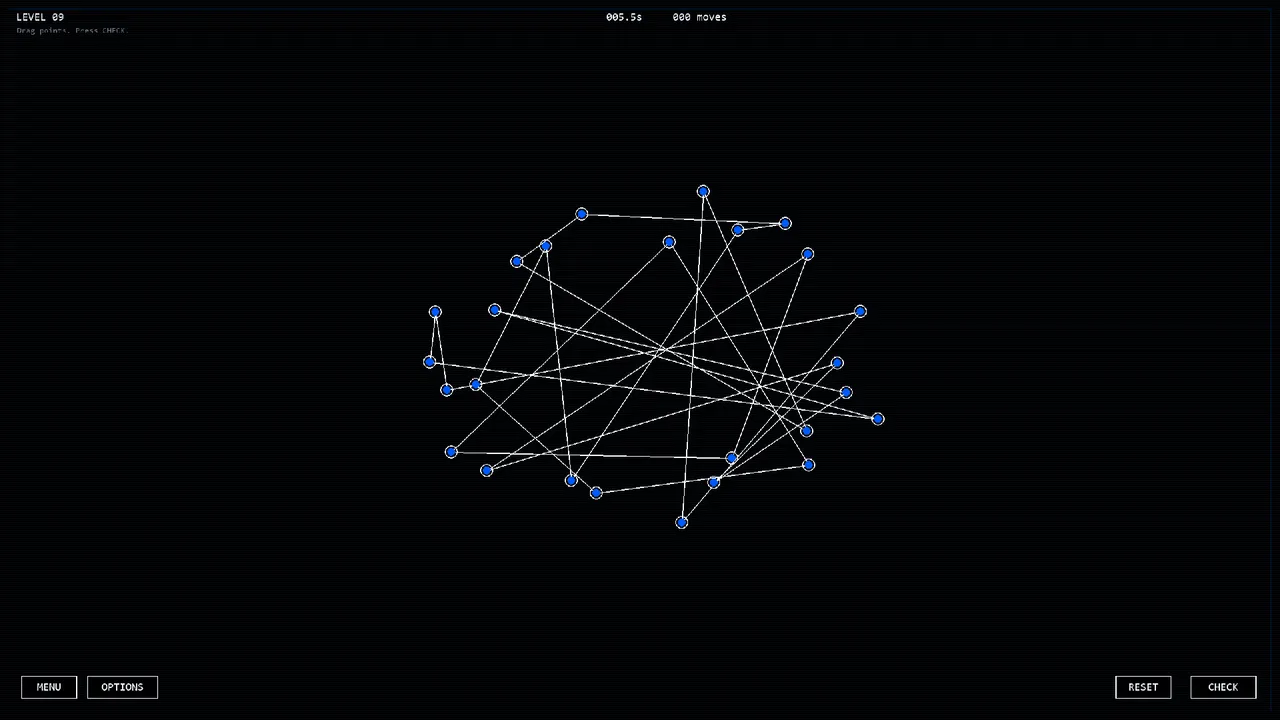
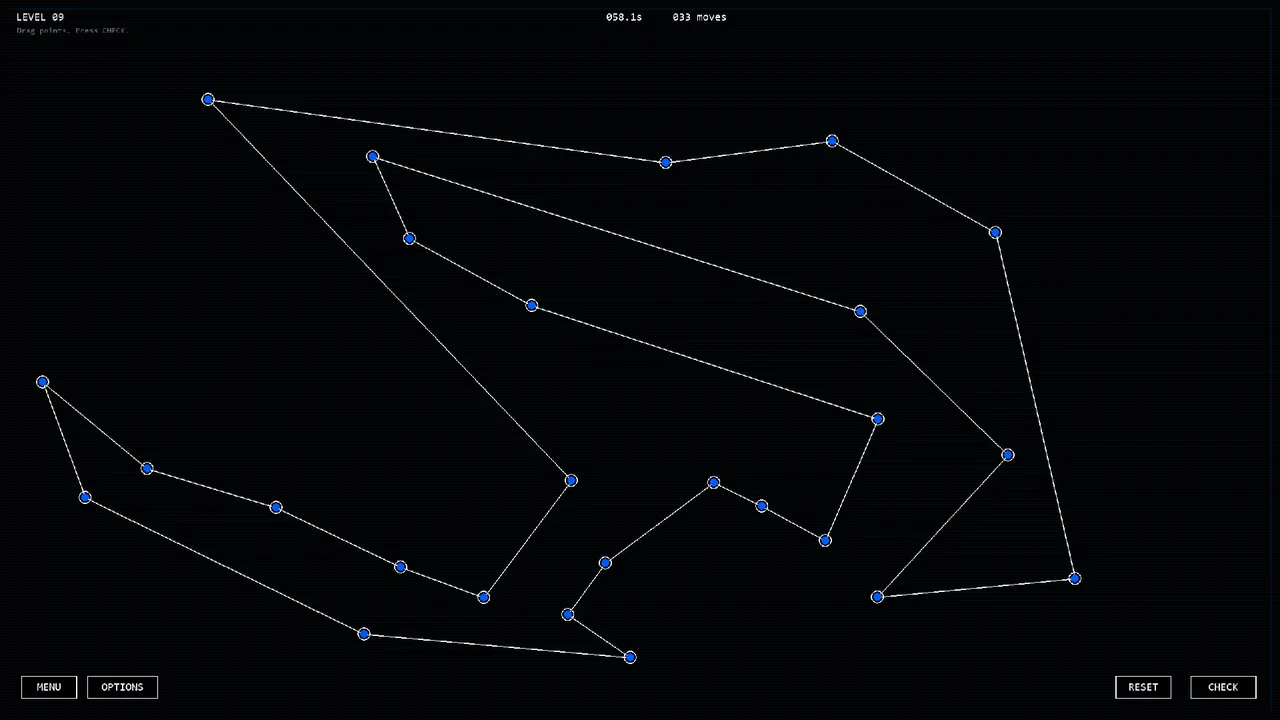
Untangle strips puzzle games down to a single constraint: drag points on a screen until the lines connecting them no longer overlap. It arrives on PC July 16, 2026, and its entire appeal rests on the tension between that simple rule and the visual complexity it generates.
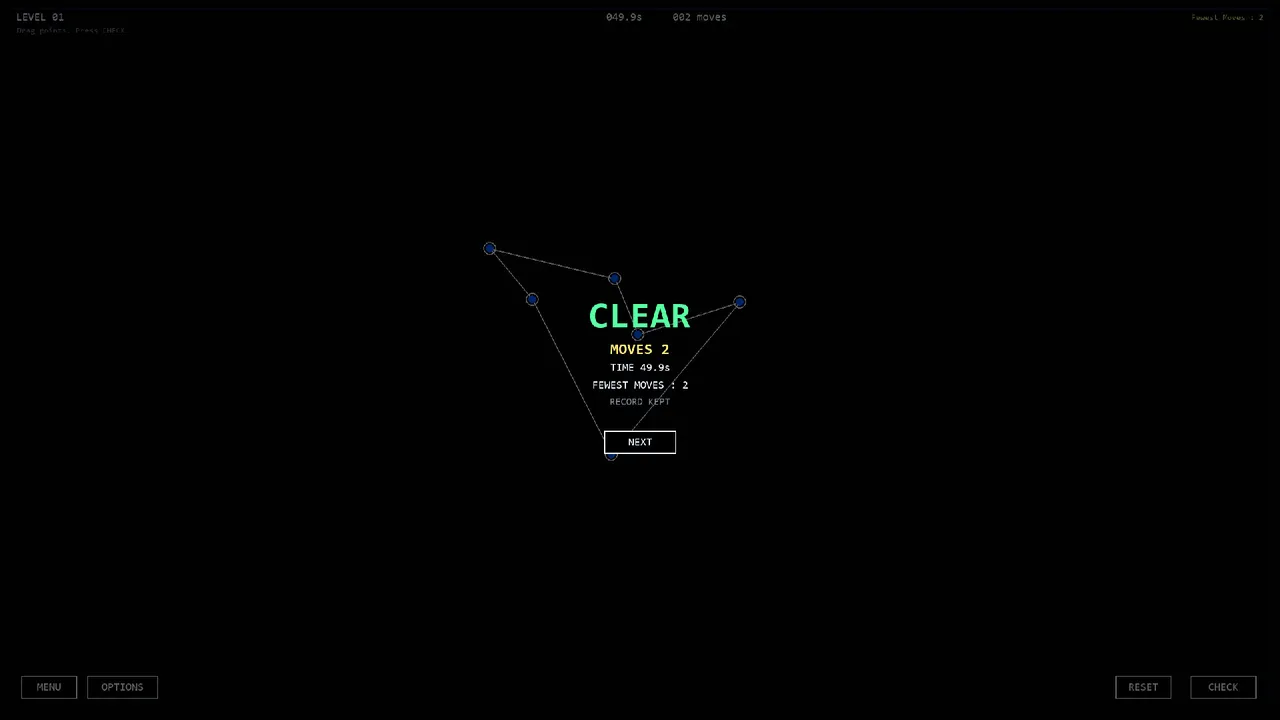
The core loop is immediate. Each level presents a tangle of points and lines, and you move the points by dragging them across the screen until every connection runs clean, with no crossings. Solve it, press CHECK, and the game logs your move count toward a Fewest Moves record. No timer pushes you, no combo meter rewards speed, no narrative wraps around the mechanic. The release date for Untangle marks the arrival of what amounts to a digital version of a pen-and-paper puzzle that has existed in print for decades, stripped of everything except the solving.
Why minimalism matters here
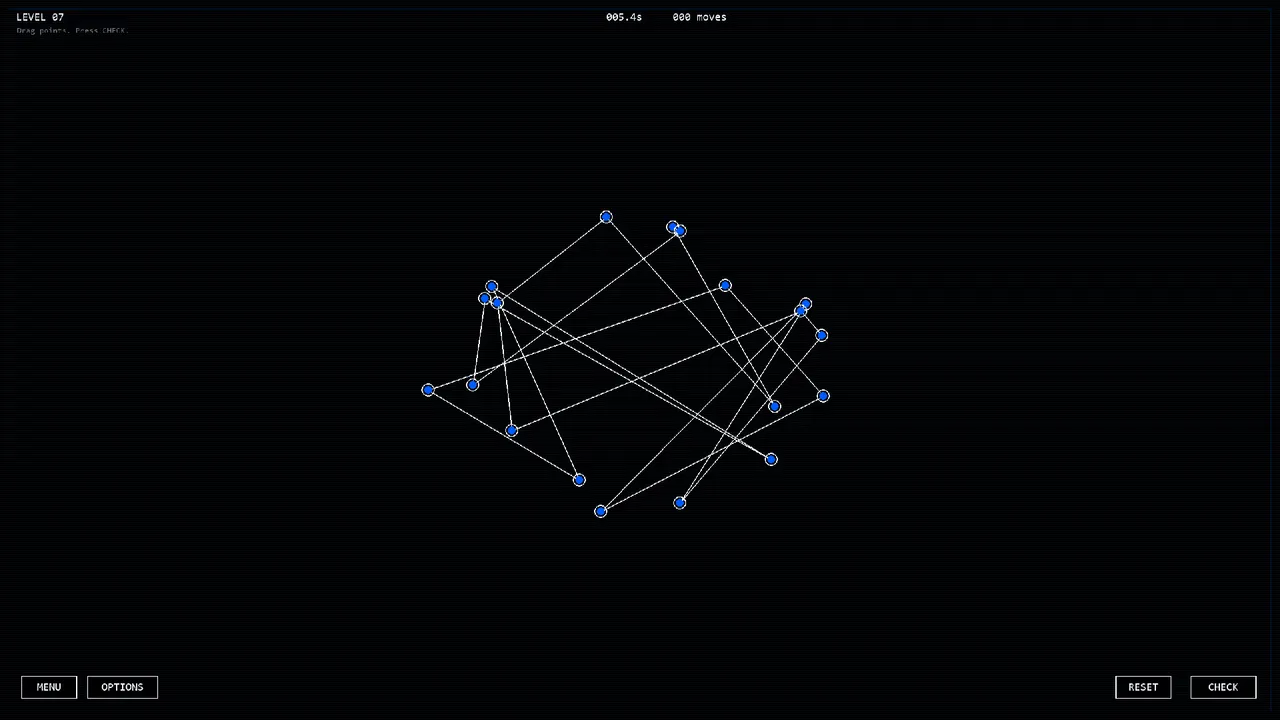
Most modern puzzle games layer progression systems, cosmetics, daily challenges, or narrative framing around their core mechanic. Untangle discards all of it. That restraint is both its strength and its only real risk. Without time pressure or external reward structure beyond your own move-count improvement, the game lives or dies on whether the puzzle itself is engaging enough to hold attention for fifty levels. The reference confirms fifty handcrafted levels with progressive complexity, moving from simple line patterns toward denser networks that demand careful observation and planning.
The visual design supports this focus. A black background, no distractions, no sound design pumping dopamine hits. You are alone with the pattern. Whether that quietness feels meditative or tedious will split players cleanly. Those who enjoy contemplative puzzle work and the specific satisfaction of finding an elegant, move-efficient solution will find the experience absorbing. Players accustomed to narrative-driven or time-attack design will likely drift away quickly.
The one honest uncertainty
Whether fifty levels maintain novelty and difficulty curve in a game where the mechanic does not evolve is the central question. Untangle makes no promises of new line types, special rules, or gimmicks. It trusts that arranging points in harder patterns is enough. If the progression from level one to level fifty feels like incremental density without meaningful new challenge, the game could collapse into routine before you finish. Alternatively, if the difficulty scaling is precise and each new level expands your spatial reasoning in a new way, fifty could be the exact right length.
For anyone who found desktop versions of the Untangle puzzle satisfying, or who gravitates toward games like Thinkrolls or classic tangram solvers, this is worth adding to a wishlist now. For everyone else, wait for player feedback after July 16, 2026 to confirm whether the puzzle design sustains momentum through the campaign.
Themes
Features
System requirements
Minimum
- OS
- Windows 10
- Processor
- Any modern 64-bit processor
- Memory
- 256 MB RAM
- Graphics
- Integrated graphics
- Storage
- 100 MB available space
- Sound Card
- Any
- VR Support
- None
- Additional Notes
- No additional requirements




No comments yet. Be the first to share your thoughts.