
Sprart
About Sprart
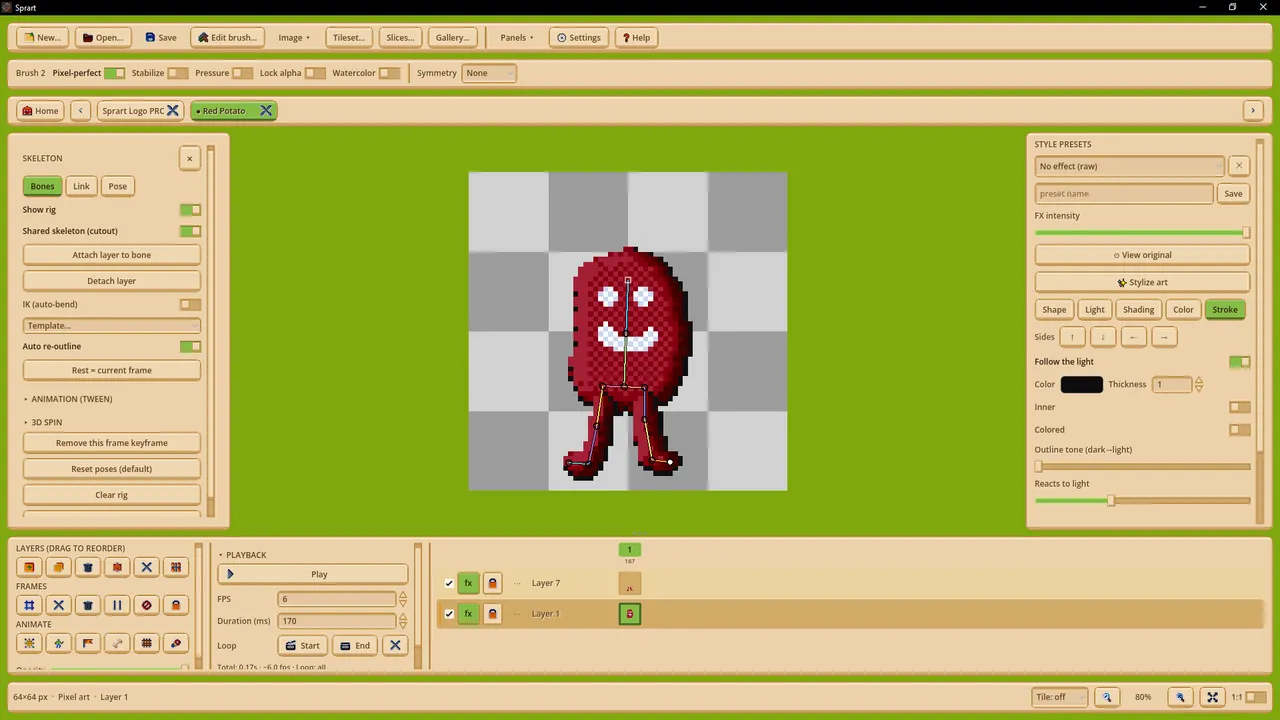
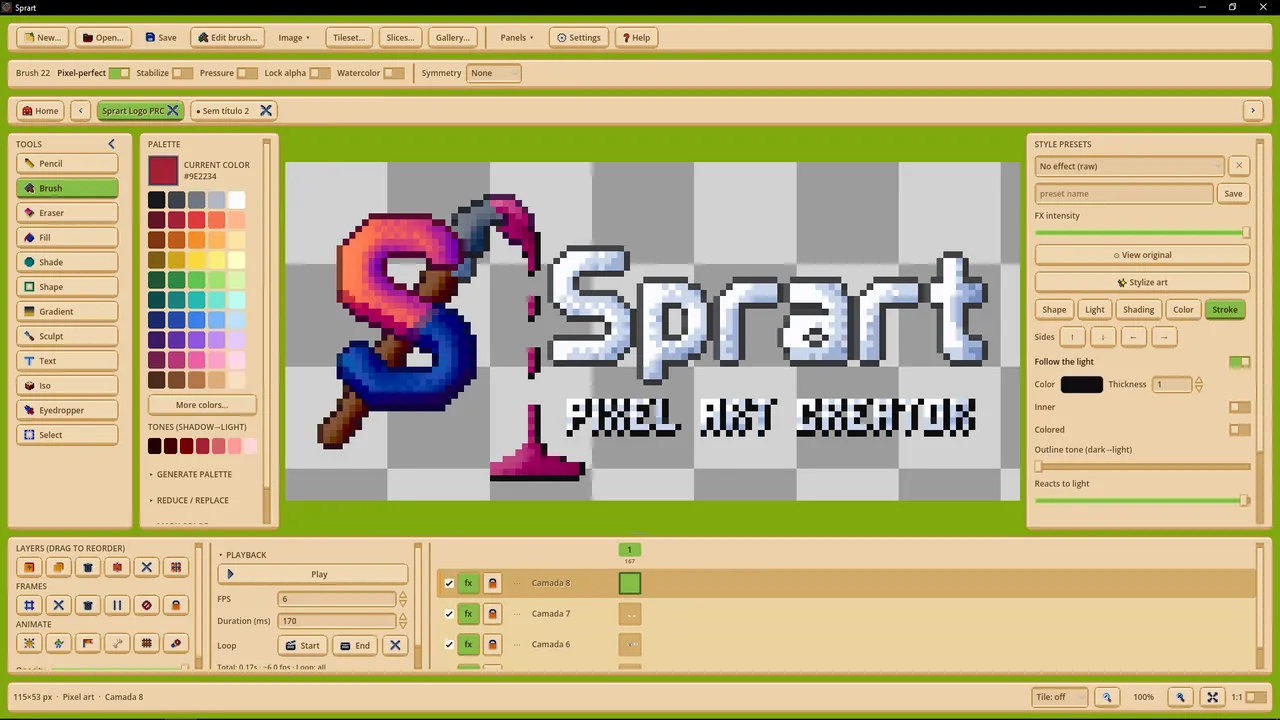
Sprart is a professional pixel art editor releasing July 20, 2026 on PC, built by developer Marcos Homero and published by Sprart itself. Rather than a game, this is production software: a tool designed to let pixel artists and game developers create sprites, animations, tilesets, and isometric environments without abandoning the traditional pixel art workflow for the sake of convenience.
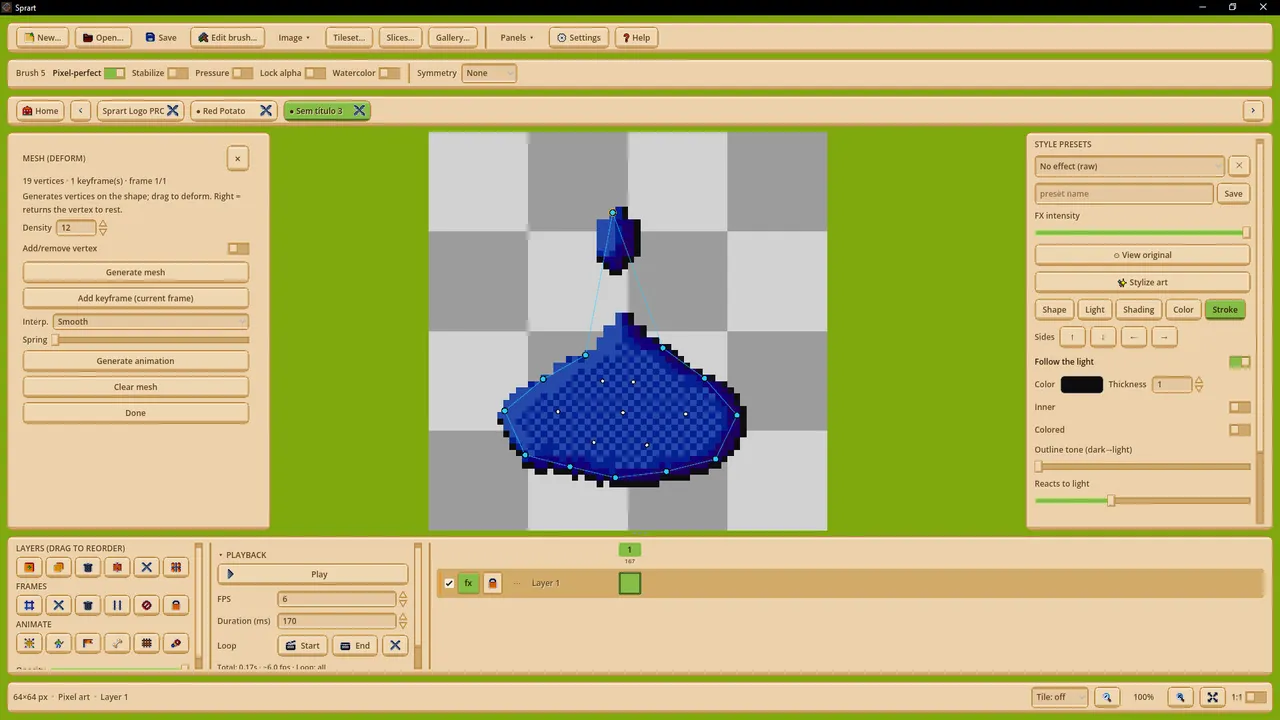
The core offer is a hybrid between old and new. The interface stacks classical pixel art capabilities—pixel-perfect drawing, layers, selection and transform tools, filled contours and outline brushes—alongside modern productivity features that compress repetitive work. The release date for Sprart positions it as a peer to established editors like Aseprite and Pyxel Edit, but the perspective system is the feature that separates it from routine tools.
Smart Perspective and Professional Guides
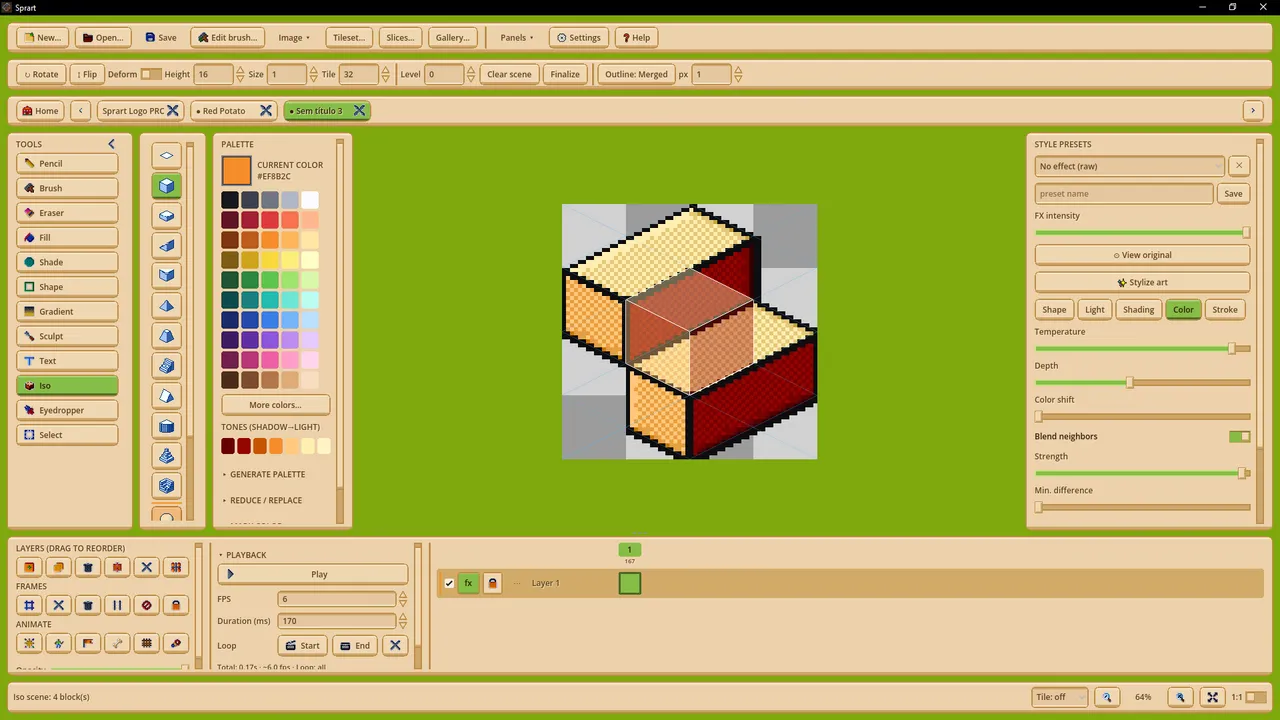
Sprart includes a perspective system that lets artists define 1-point, 2-point, 3-point, and 4-point perspective grids directly in the canvas. The guides are fully editable, vanishing points can be moved and adjusted in real time, and strokes snap to the active perspective when you hold Ctrl. This matters because isometric environments, building interiors, and vehicle details are otherwise time-consuming to construct pixel-by-pixel without guides. The perspective system is designed to cut that friction without locking the artist into an automated or restrictive approach.
Animation and Export Workflow
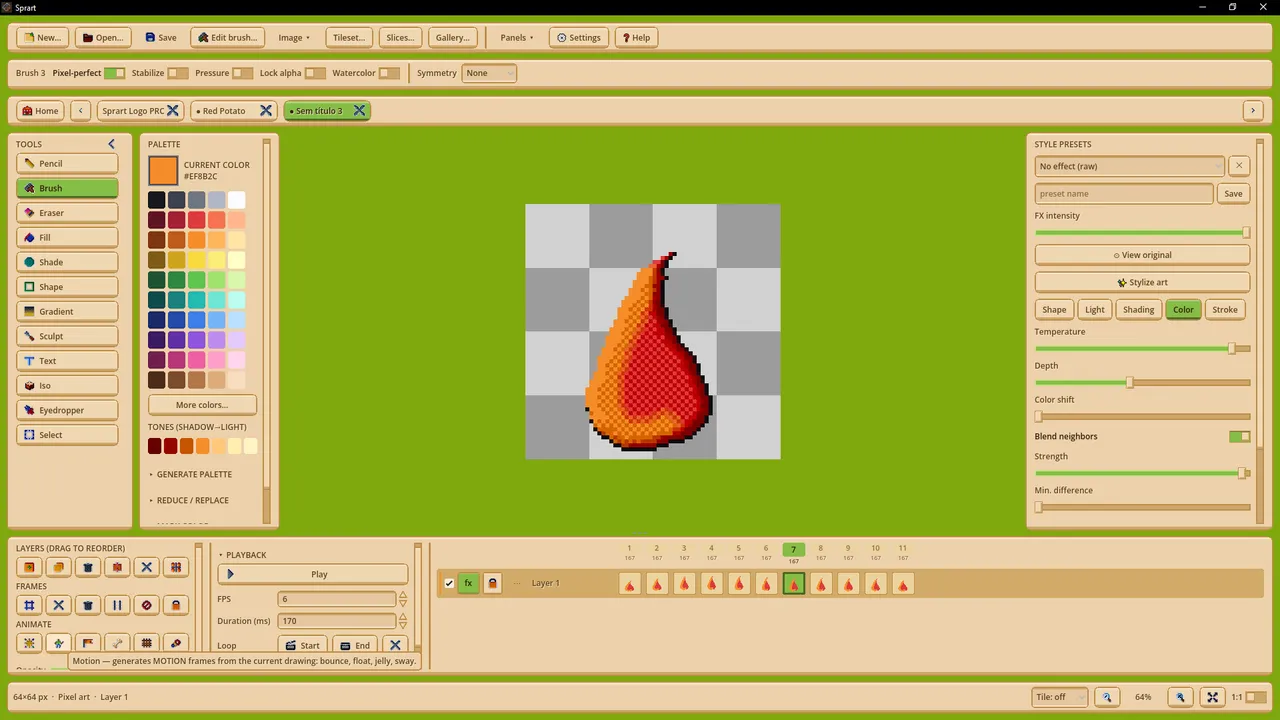
Frame-by-frame animation is handled through a timeline interface with onion skinning, animation tags, and real-time preview. Export covers sprite sheets, GIF, PNG sequences, and game-ready formats. The feature set assumes creators are building assets destined for actual games, not just illustration.
The software is software, not art, so the value depends entirely on execution: whether the tools feel responsive, whether the perspective system stays useful without becoming cumbersome, and whether the learning curve suits both newcomers and artists moving from other editors. For pixel artists and game developers on PC hunting for an alternative to established editors, or anyone already invested in isometric or perspective-heavy pixel work, wishlist this and check reviews at launch to confirm the interface and performance live up to the feature list.
System requirements
Minimum
- OS
- Windows 10, 11
- Memory
- 2 GB RAM
- Storage
- 120 MB available space
Recommended
- OS
- Windows 10, 11
- Memory
- 8 GB RAM
- Storage
- 120 MB available space
No comments yet. Be the first to share your thoughts.