

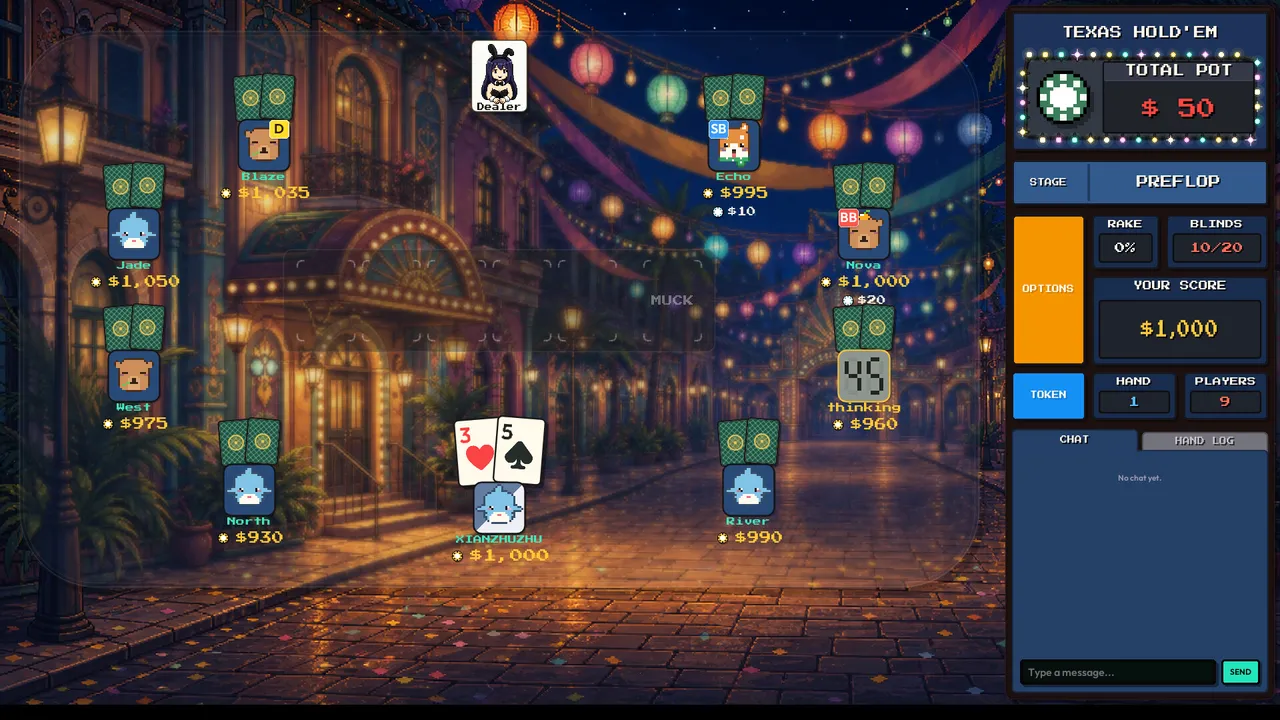
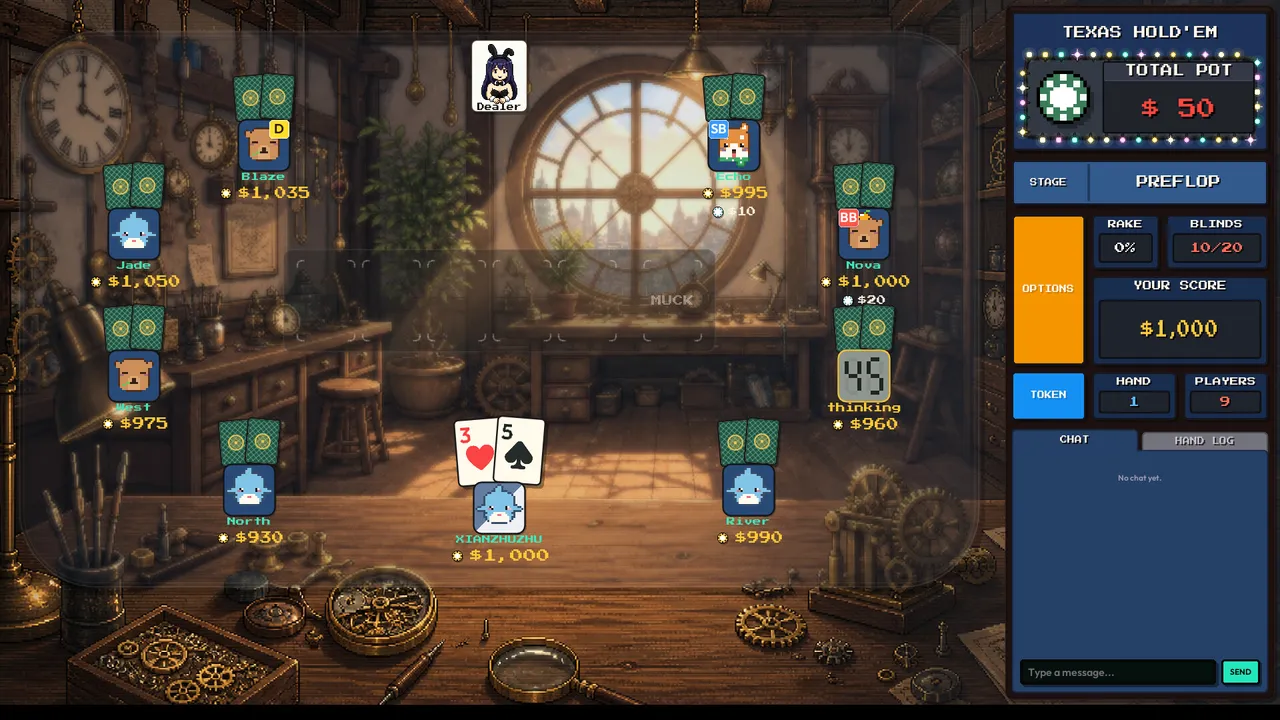
About Pixel Texas Hold'em
Pixel Texas Hold'em launches on PC on July 16, 2026 as a multiplayer poker game built around a single structural commitment: every hand is decided by player skill and decision-making, never by hidden algorithms designed to extract money. That promise sits at the heart of what makes this release worth attention in a genre historically poisoned by rigged dealing and designed bad beats.
The core mechanic is straightforward Texas Hold'em—blinds, betting rounds, community cards, showdown. But the game wraps that core in a verifiable dealing system where commitment data locks before a hand begins and verification materials become available after play ends, letting players audit the result. This is not a marketing flourish; it directly addresses the trust problem that has haunted online poker since Black Friday, the fear that the house tilts outcomes to drive spending. A game that lets you check the math changes the psychological texture of every hand.
Room-based play and the social layer
The release date for Pixel Texas Hold'em marks entry into a space where most competitors rely on algorithmic matchmaking and opaque RNG. This game instead offers traditional room-based play—you create a table or join public or password-protected rooms, invite friends directly, and sit down against known opponents or strangers you choose. That structure trades some convenience for control and clarity, and it leans into a slower, more deliberate poker experience where you read the same people across multiple hands rather than churn through anonymous tables.
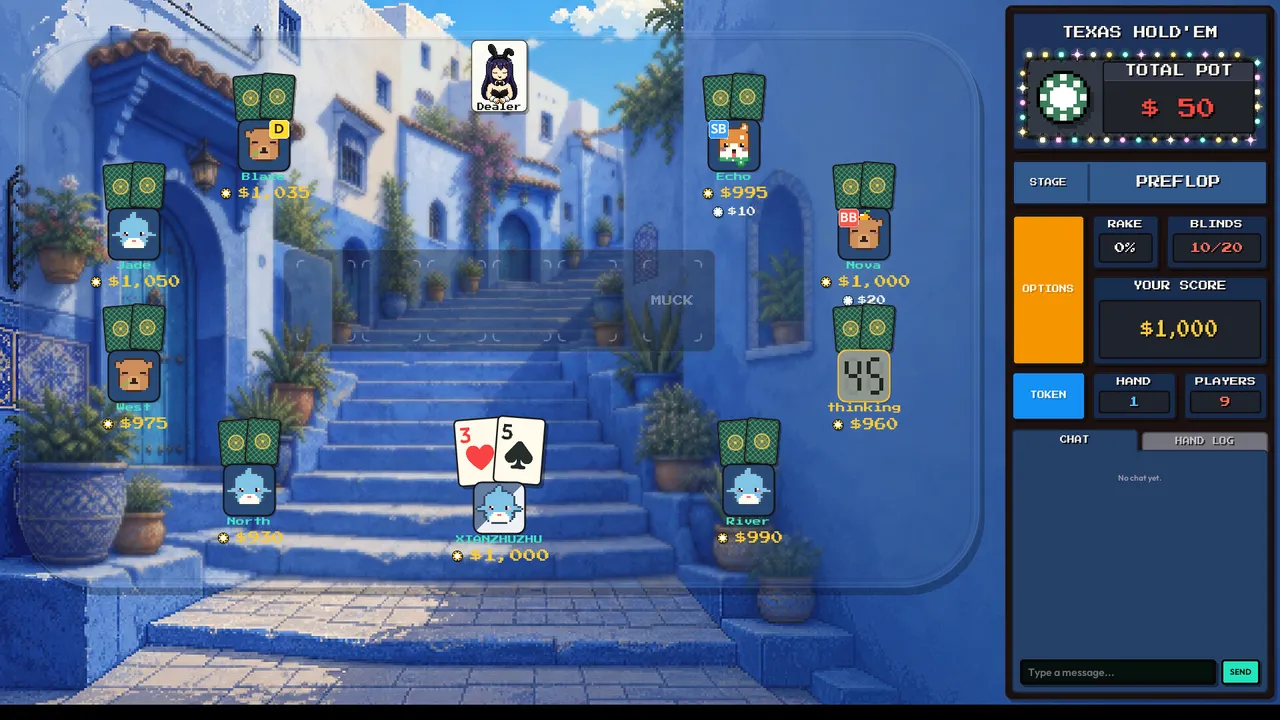
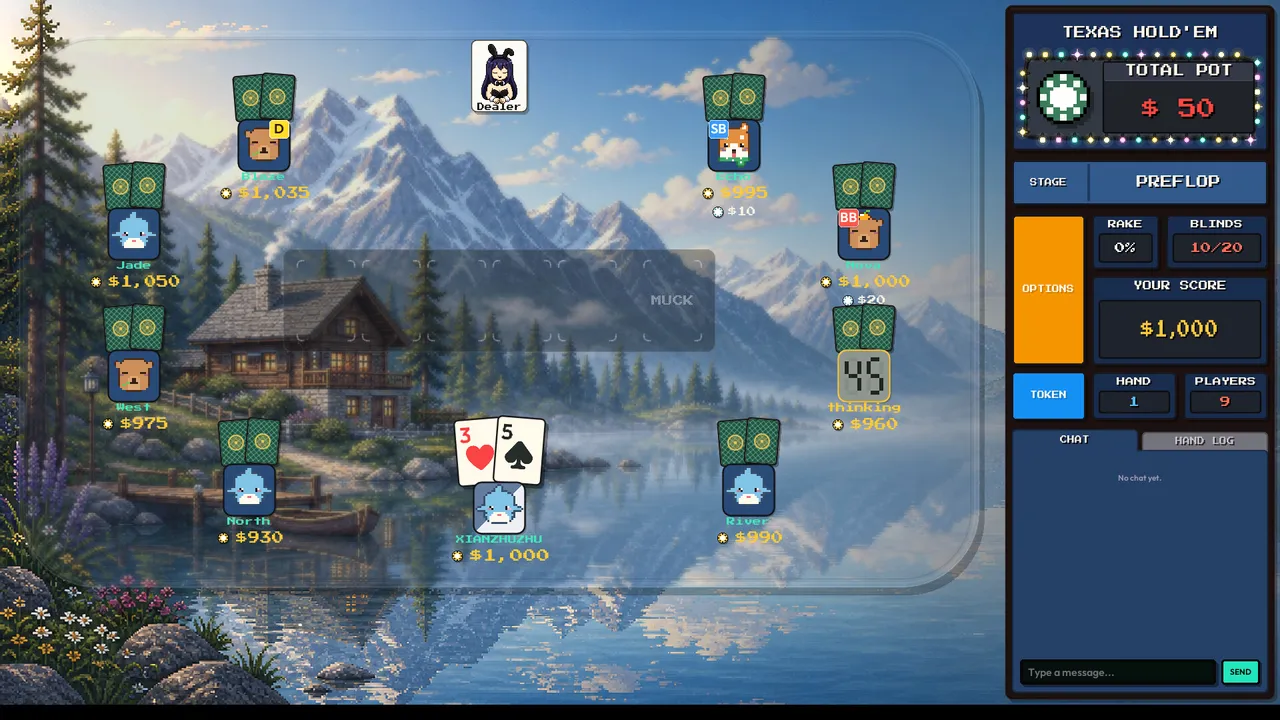
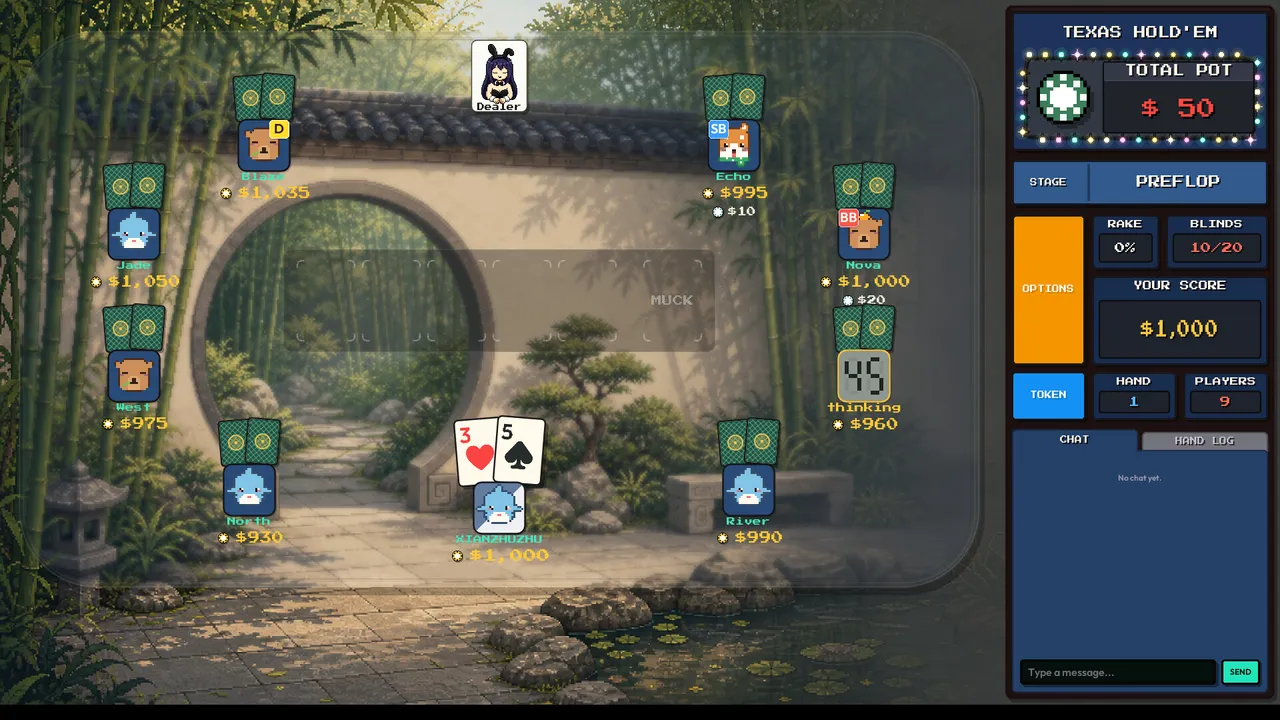
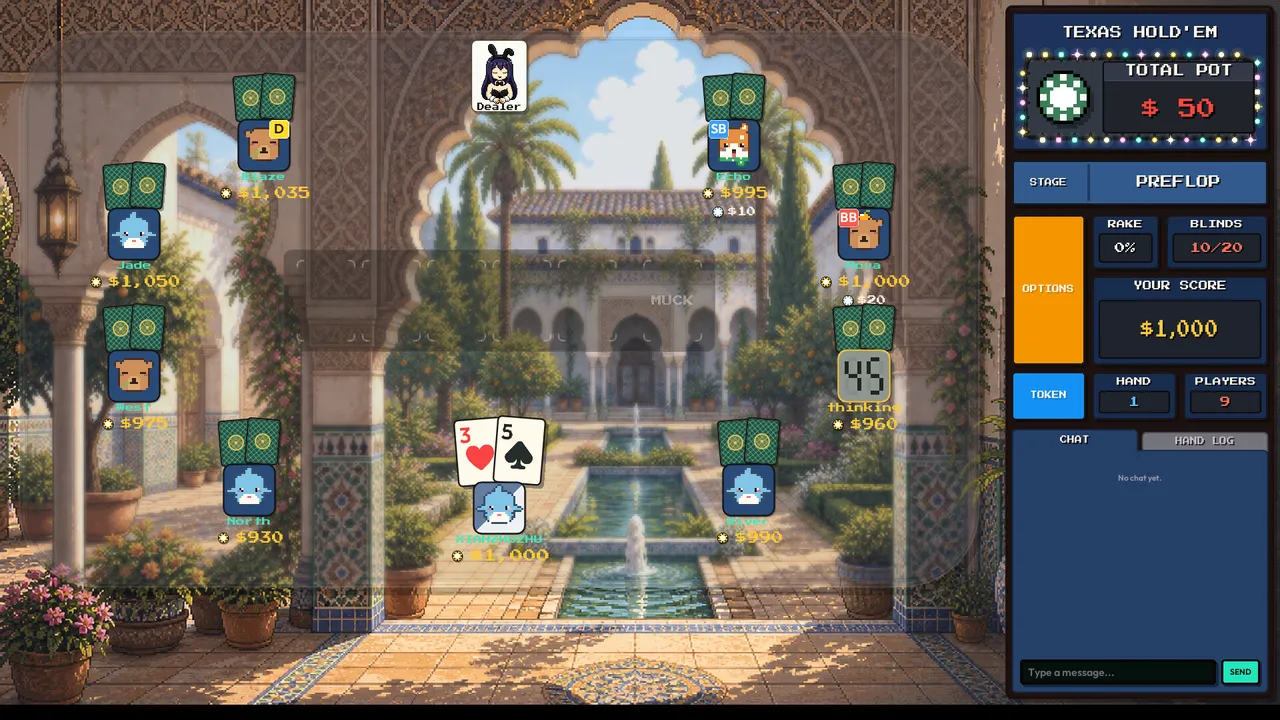
Customisation extends to table themes and card backs, the kind of surface personalisation that does not reshape play but anchors a sense of ownership. AI bots fill tables while waiting for live players, keeping downtime minimal without forcing you into dead money games. In-match chat supplies the table talk that separates poker from slot machines, the social friction that makes bluffing and hand-reading possible.
The open question
Whether a pixel-art poker room can sustain a player base large enough to make room creation and friend tables viable is the open question. The verifiable dealing system is a genuine differentiator, but it only matters if people show up to play. Solitaire-strength bots are not poker. The studio has no track record in this space, and player retention in online poker hinges almost entirely on liquidity and the presence of beatable competition. The release date of July 16, 2026 will reveal whether the promise of fair dealing alone pulls players away from entrenched competitors.
This is for players burned by rigged poker apps who want to know the deck is honest, or for poker enthusiasts who value direct control over matchmaking and table composition. Anyone seeking fast, frictionless anonymous poker should look elsewhere. Anyone sceptical that transparency can matter more than convenience should wait to see if the thing actually works.
Features
System requirements
Minimum
- OS
- Windows 10 64-bit
- Processor
- Intel Core i3-2100 / AMD FX-4300 or equivalent
- Memory
- 4 GB RAM
- Graphics
- OpenGL 3.3 compatible integrated graphics (Intel HD 4000 or equivalent)
- Network
- Broadband Internet connection
- Storage
- 500 MB available space
- Sound Card
- Compatible sound card
- Additional Notes
- Minimum resolution of 1280x720. Stable internet connection required.
Recommended
- OS
- Windows 10/11 64-bit
- Processor
- Intel Core i5-4590 / AMD Ryzen 3 1200 or equivalent
- Memory
- 8 GB RAM
- Graphics
- Intel Iris Xe / NVIDIA GTX 750 Ti / AMD Radeon RX 560 or equivalent
- Network
- Broadband Internet connection
- Storage
- 1 GB available space
- Sound Card
- Compatible sound card
- Additional Notes
- Minimum resolution of 1280x720. Stable internet connection required.






No comments yet. Be the first to share your thoughts.