

Metro Architect
About Metro Architect
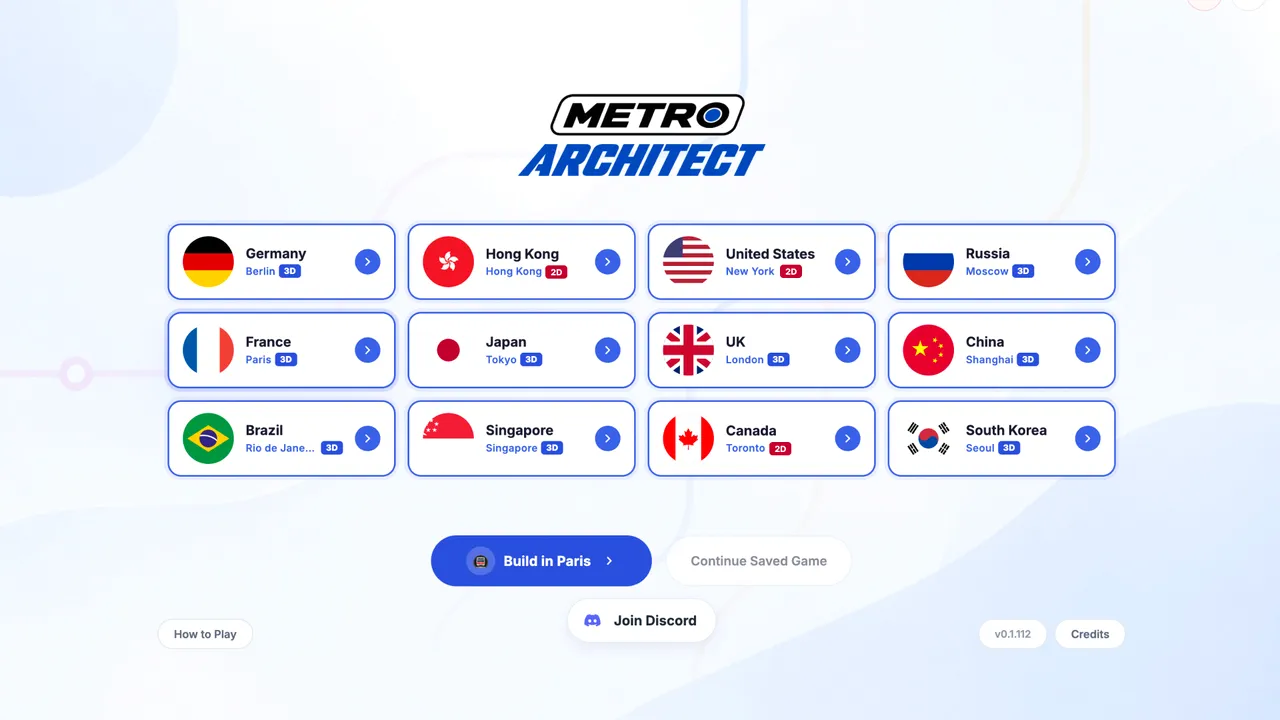
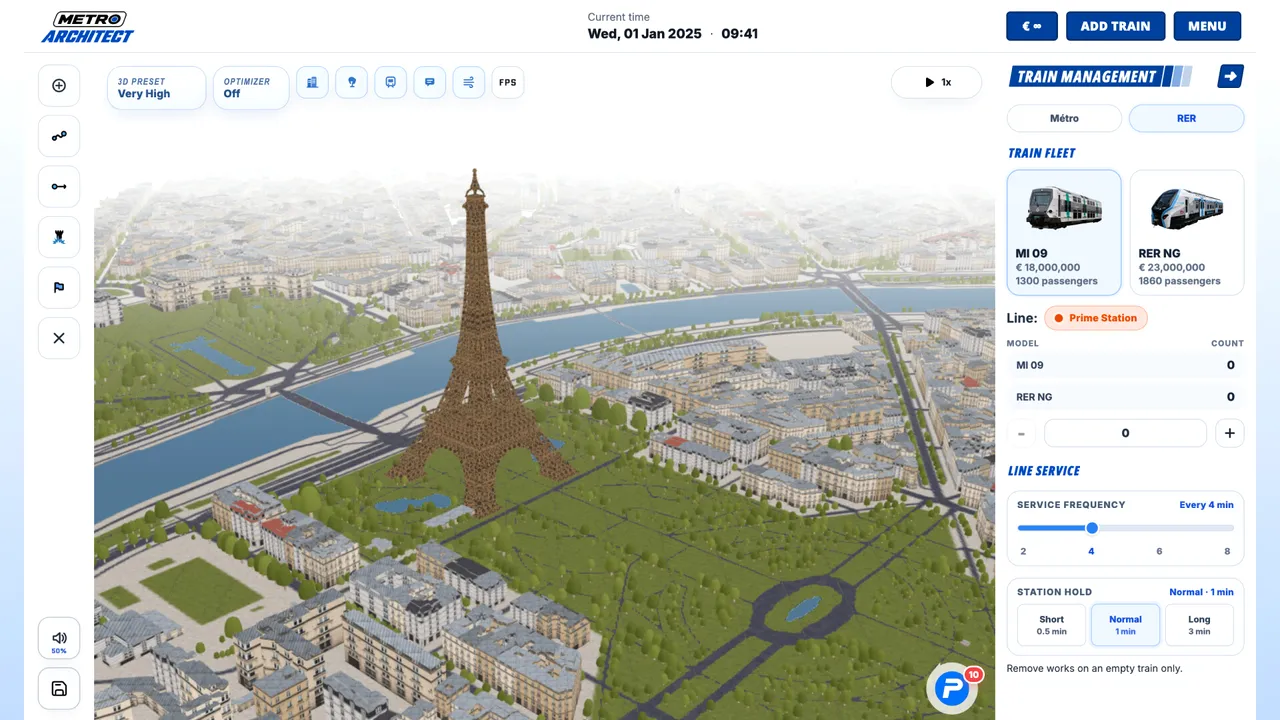
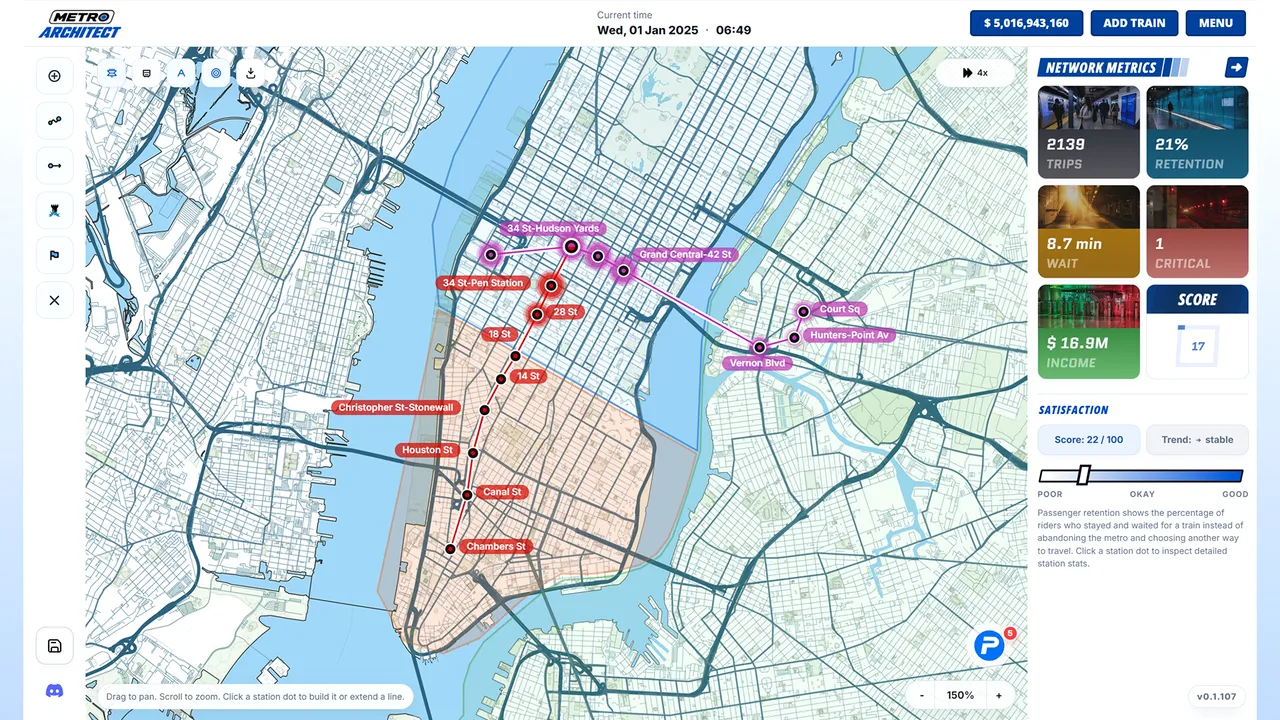
Metro Architect is a transit simulation where the central tension is not between building and budgets, but between your ambition to expand and the city's refusal to cooperate. You design metro networks across twelve cities—Berlin, Hong Kong, New York, Moscow, Paris, Tokyo, London, Shanghai, Rio de Janeiro, Singapore, Toronto, and Seoul—and the game's core loop is rooted in one simple constraint: every line you draw shapes passenger flow, and passenger flow either sustains your network or breaks it.
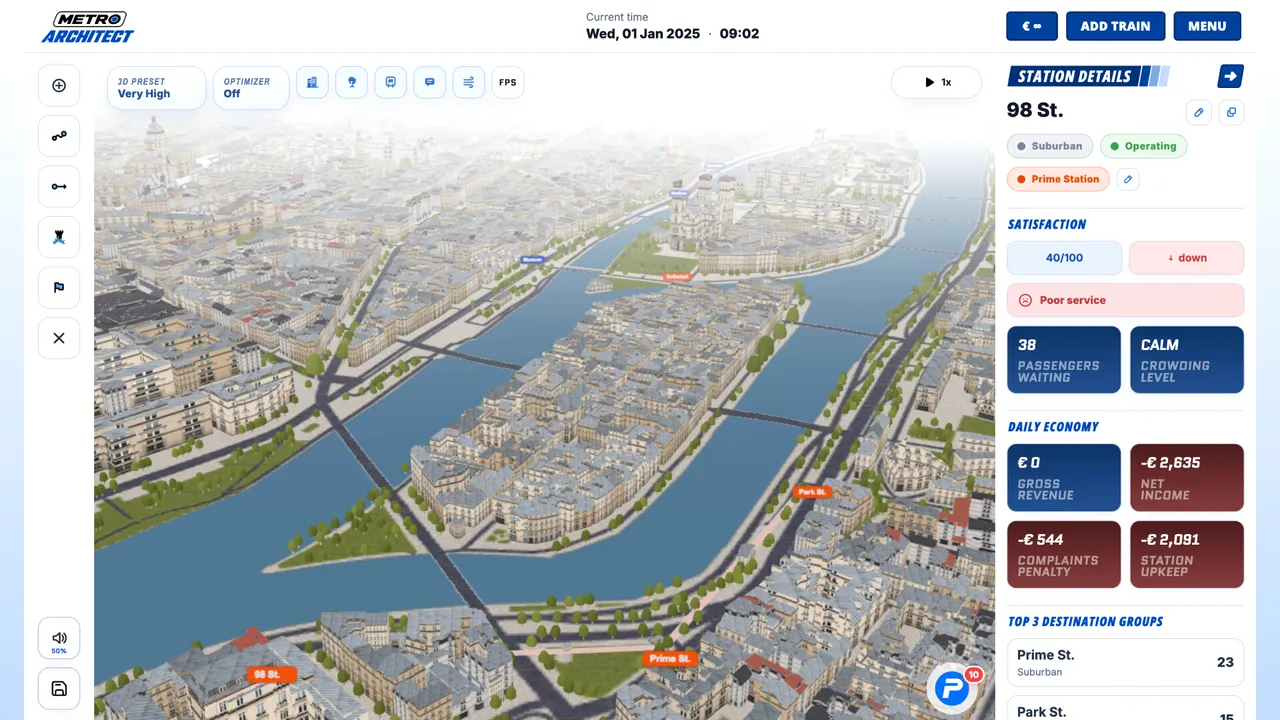
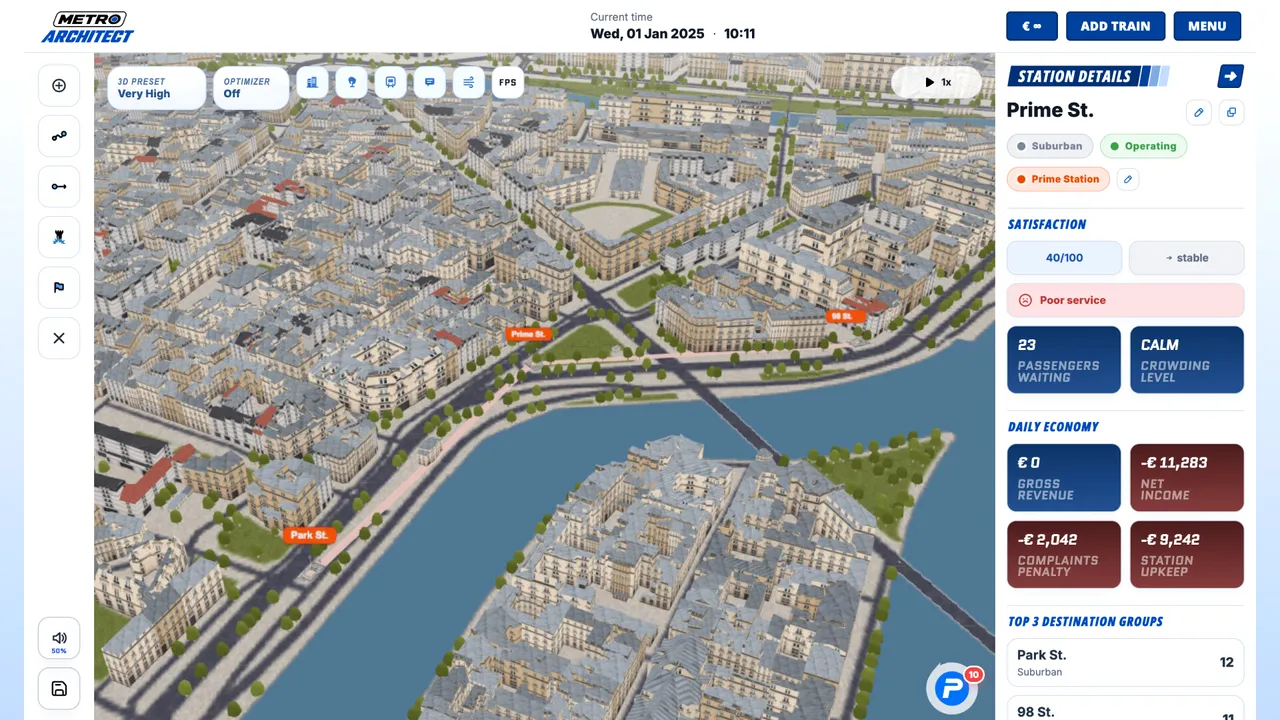
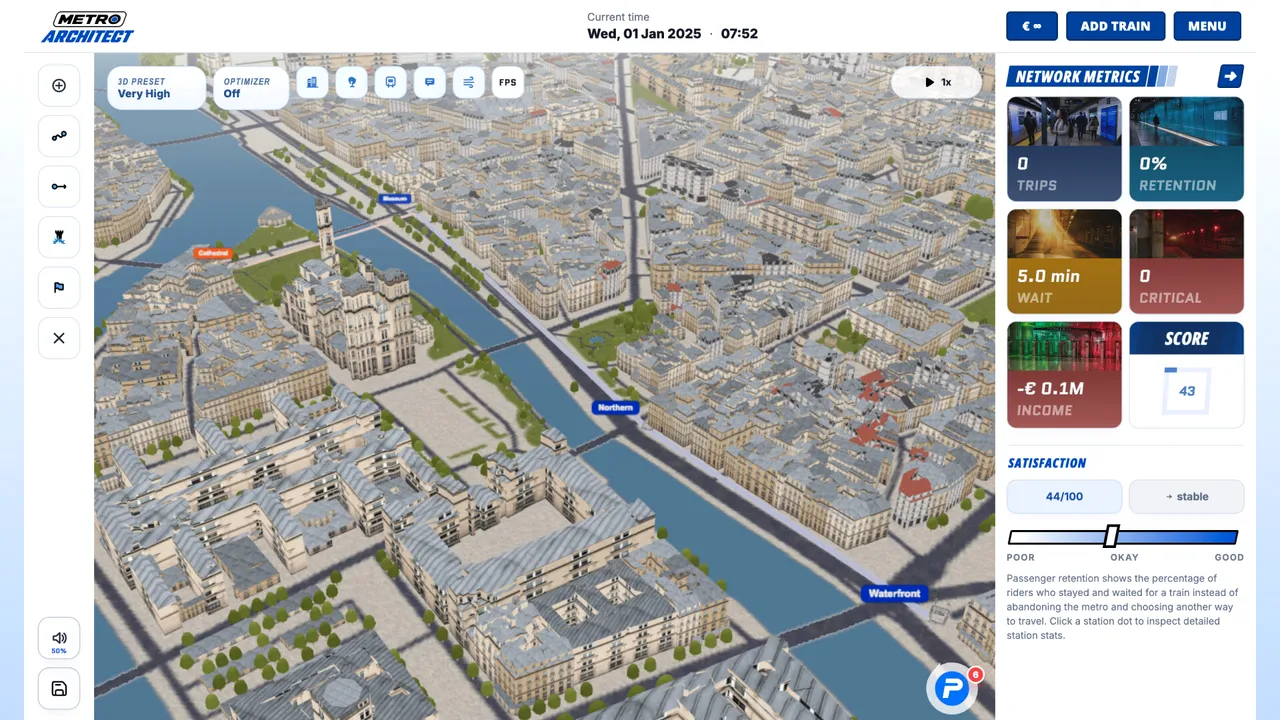
The release date for Metro Architect is July 17, 2026, launching on PC. Northern21 Studio is building this around the idea that a working metro is a living system, not a static puzzle. Demand rises, stations overflow, weak routes fail, and delays cascade through the network like water finding cracks. You do not just optimize once and move on; you redesign, patch, and fight to keep the city moving during rush hour. That cascading pressure—where a single poorly routed line can create bottlenecks that ripple across your entire system—is the throughline that separates Metro Architect from transit sims that let you build and leave.
Design, Expand, and Defend Against Chaos
The game offers three distinct ways to play. You can build casually, growing your dream network at your own pace and letting the city expand around it. You can optimize obsessively, tuning every line for maximum efficiency and passenger flow. Or you can play under constant pressure, pushing your system to its limit and watching it fight back. That last mode is where the design reveals its real risk: whether a single-city or even a campaign-wide transit puzzle stays engaging for ninety minutes once you grasp the underlying rules. Simulation depth lives and dies on whether failure feels like learning or like tedium.
The game does not invent new transit mechanics; it inherits from the lineage of games like OpenTTD and Two Point Hospital, where systems reward thoughtful iteration and punish neglect. The real question is how much emergent chaos the game actually generates. If demand is scripted and predictable, optimization becomes rote. If it is genuinely dynamic, the game becomes about reading signals and reacting faster than the city can break.
If you have ever played a transit or tycoon sim and felt the click of watching a struggling network suddenly run smooth, Metro Architect is designed to scratch that itch repeatedly. If you want a game where you build once and admire it, this will frustrate you. Wait for reviews to see whether the eleven other cities offer enough fresh challenges, or jump in on release day if chaotic optimisation is your baseline fun.
Features
System requirements
Minimum
- OS
- Windows 10 64-bit
- Processor
- Intel Core i5-8400 / AMD Ryzen 3 3300X
- Memory
- 4096 MB RAM
- Graphics
- Intel UHD 630 / NVIDIA GeForce GTX 750 / AMD Radeon RX 550
- Storage
- 1500 MB available space
- Sound Card
- Any compatible sound card
- VR Support
- N/A
Recommended
- OS
- Windows 11 64-bit
- Processor
- Intel Core i7-9700 / AMD Ryzen 5 3600
- Memory
- 8192 MB RAM
- Graphics
- NVIDIA GeForce GTX 1060 / AMD Radeon RX 580 or better
- Storage
- 2000 MB available space
- Sound Card
- Any compatible sound card
- VR Support
- N/A





No comments yet. Be the first to share your thoughts.