
About Hyperlane Rally
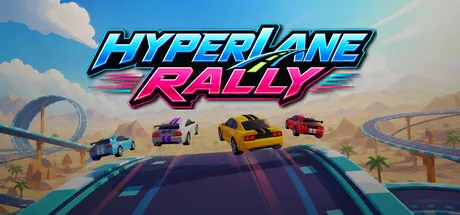
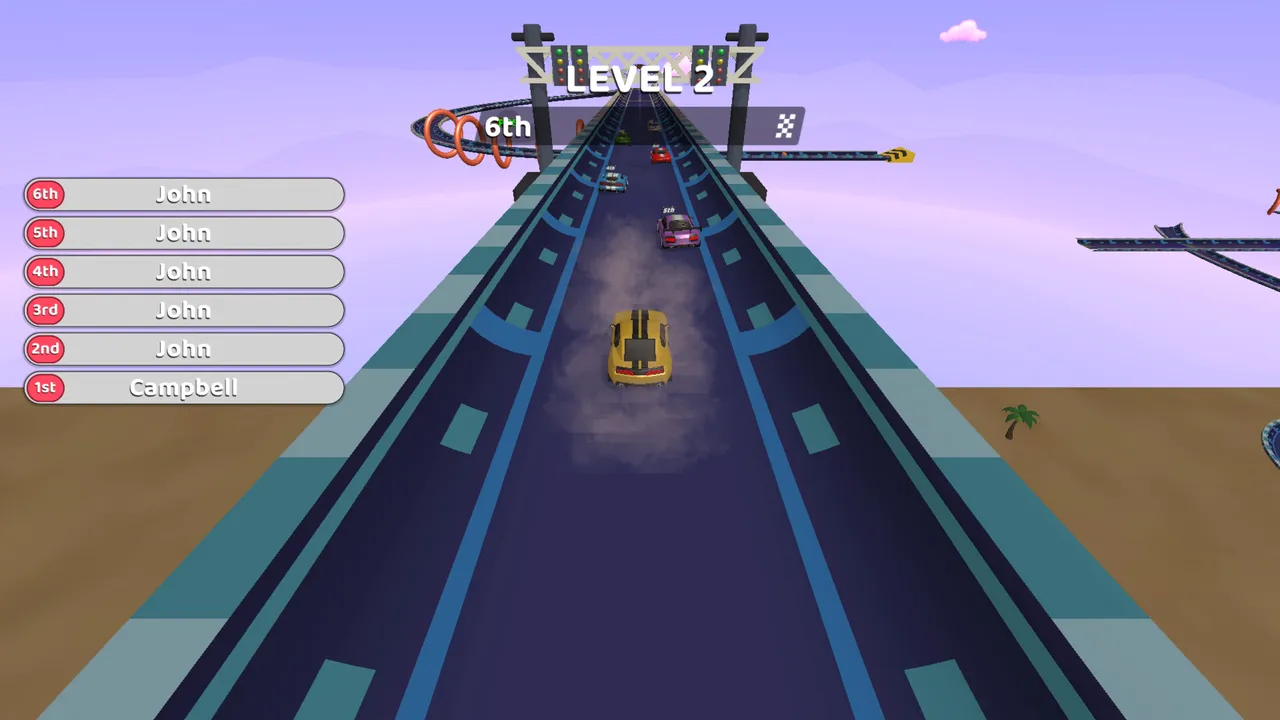
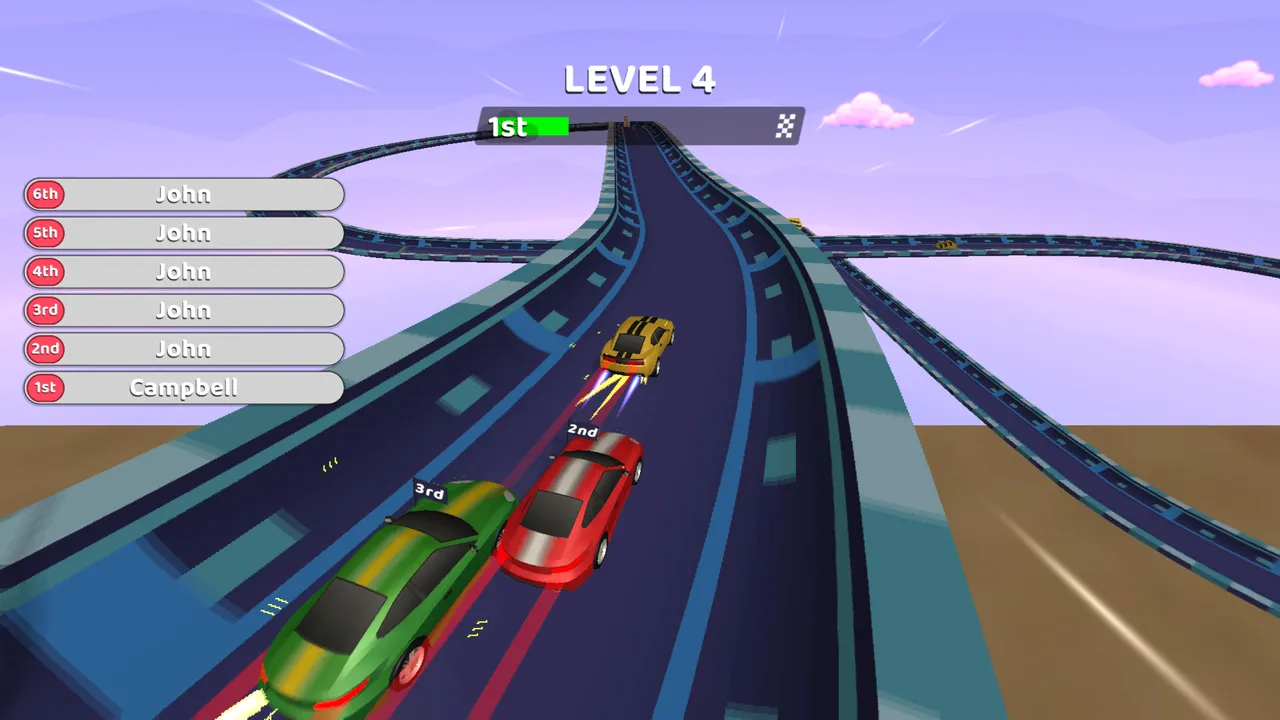
Hyperlane Rally is a reaction-driven arcade racer that strips racing down to a single mechanic: dodge rival cars by threading through tight lanes on elevated sci-fi tracks. The release date for Hyperlane Rally is July 16, 2026 on PC. The core loop is immediate and cyclical—steer left or right to avoid oncoming traffic, hold your line through loops and jumps, and maintain speed through sudden airborne sections where the track lifts into the sky. There are no damage models or fuel systems, no progression trees or vehicle tuning; every race asks the same thing of you: keep reacting faster than the car in front.
Arcade racing stripped to its skeleton
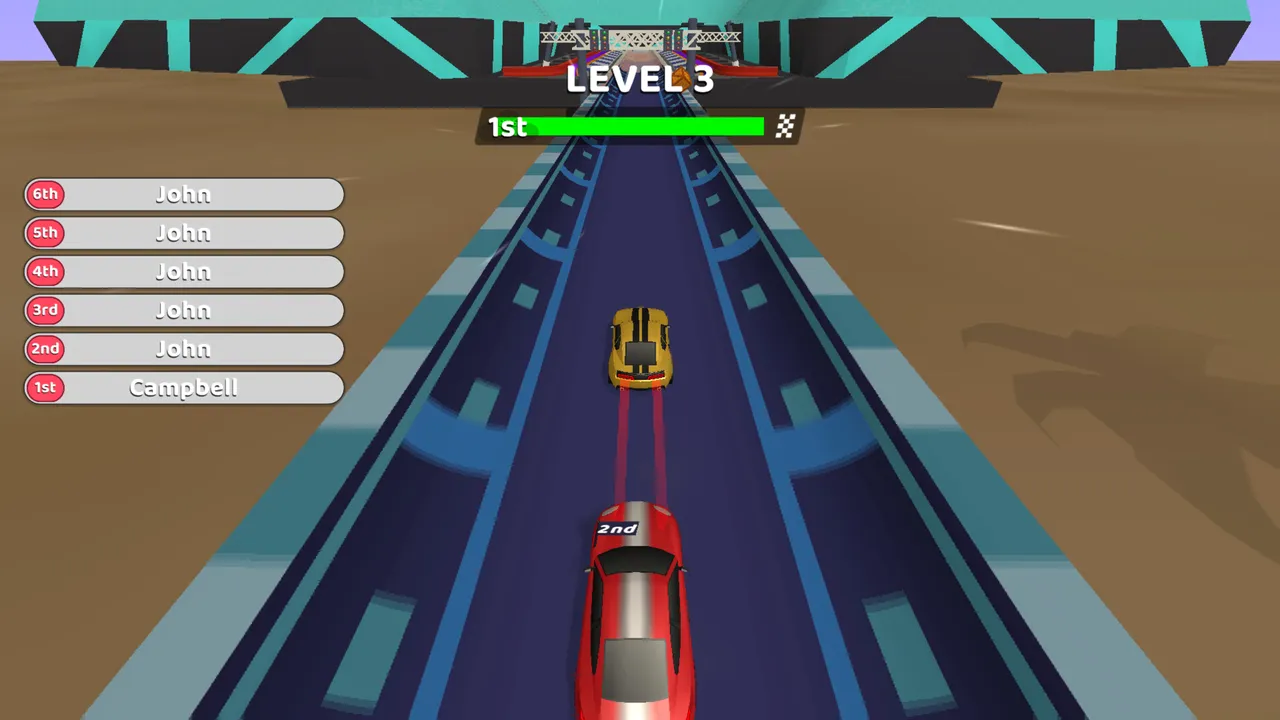
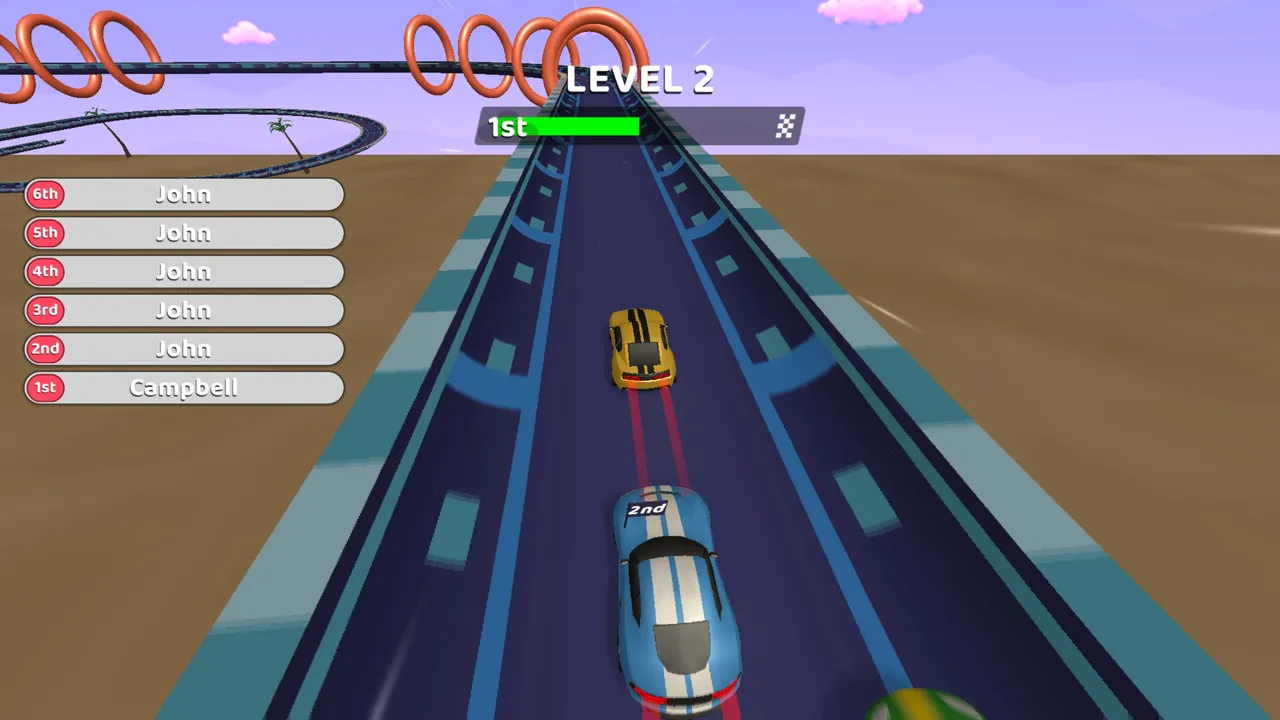
What makes Hyperlane Rally distinct is that it treats collision not as failure but as the primary obstacle to navigate. Rival racers are not AI opponents to outpace through strategy or consistency, they are moving hazards you must read and sidestep, moment by moment. This is the opposite of traditional racing games, where the track is predictable and other cars follow fixed paths. Here the track itself is predictable—elevated, geometric, designed for flow—but the rival cars force constant repositioning. You overtake not by being faster overall but by finding the gap, committing to the lane change, and reacting when that gap closes. The stage-based structure means each race is compact, a series of short sprints rather than long circuits, which keeps the pressure constant and the margin for error minimal.
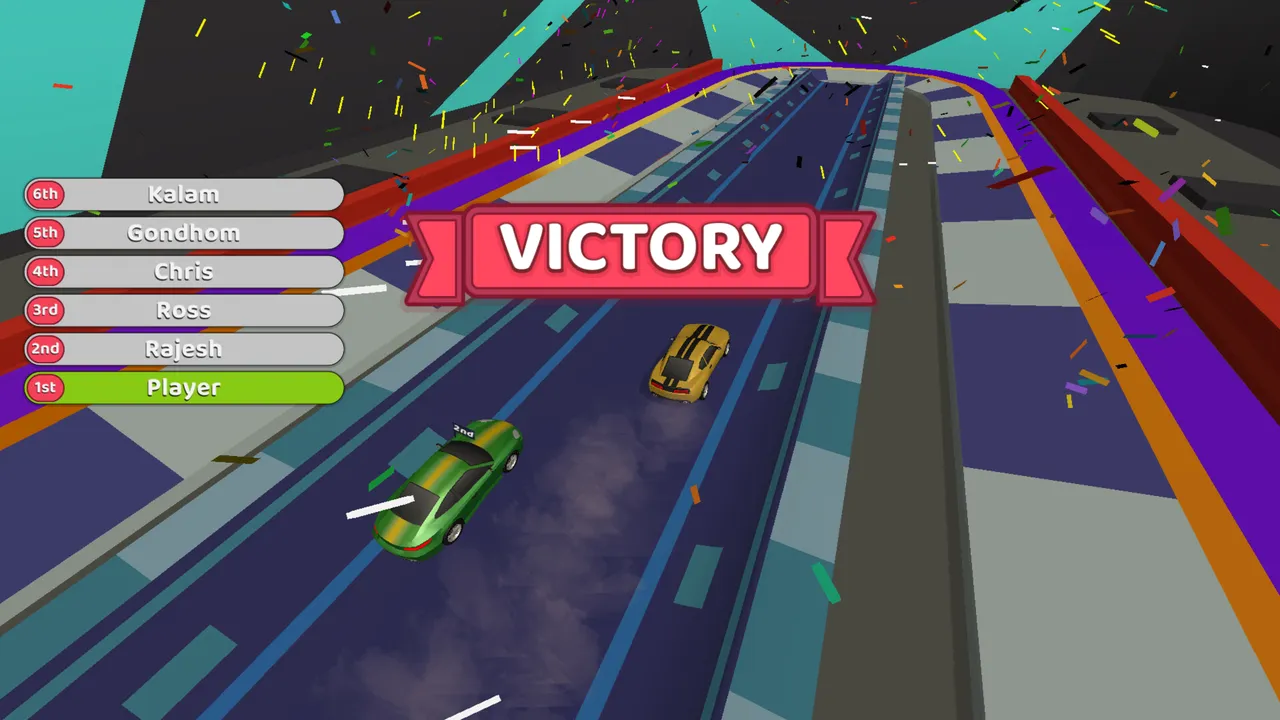
The visual language supports this: low-poly geometry, clear colour separation, and a simple presentation built for PC screens. The track is legible at speed, rivals are distinct shapes in motion, and there is no visual clutter between you and the decision. Audio feedback—driving, collision, and flight sounds—is there to reinforce the rhythm of the race, not to layer atmosphere. This is a game that trusts its core mechanic and does not distract from it.
Who this is for, and the risk at the centre
Hyperlane Rally is made for players who enjoyed the immediate, twitchy focus of arcade racers like Super Monkey Ball or early Ridge Racer Time Trials, where a single mistake cascades into a loss of position and the whole race is decided in seconds. It is not for anyone expecting simulation, career progression, or the long-term loop of vehicle customisation. The game is also not for players who want relaxation from racing; every stage demands active attention and fast reflexes. A casual player could bounce off it within minutes if the reaction window feels too tight.
The design risk is whether the core mechanic can sustain interest across a full campaign. Dodging cars on interesting track layouts is engaging for one race or two, but the game must prove that track variety, difficulty scaling, and stage pacing are strong enough to keep the loop tense for ninety minutes or more. A shallow difficulty curve or repetitive track design would expose the limits of a one-button, one-idea game very quickly. The release date will show whether Zhang Mingxin, a solo developer, has the depth to back up the concept.
For anyone after a speed-focused arcade racer built for short bursts and real-time decision-making on PC, add this to your wishlist now. For everyone else, wait for reviews to confirm the campaign has legs.
Features
System requirements
Minimum
- Memory
- 4 GB RAM
- DirectX
- Version 11
- Storage
- 1 GB available space
Recommended
- Memory
- 8 GB RAM
- DirectX
- Version 11
- Storage
- 1 GB available space

No comments yet. Be the first to share your thoughts.