
DeskLayer
About DeskLayer
DeskLayer is not a game in the traditional sense—it is a desktop customisation tool that treats your Windows interface as a design canvas. The release date for DeskLayer is July 17, 2026 on PC, marking Buraito-stack's approach to solving a problem that has frustrated power users for decades: the rigidity of the Windows desktop itself.
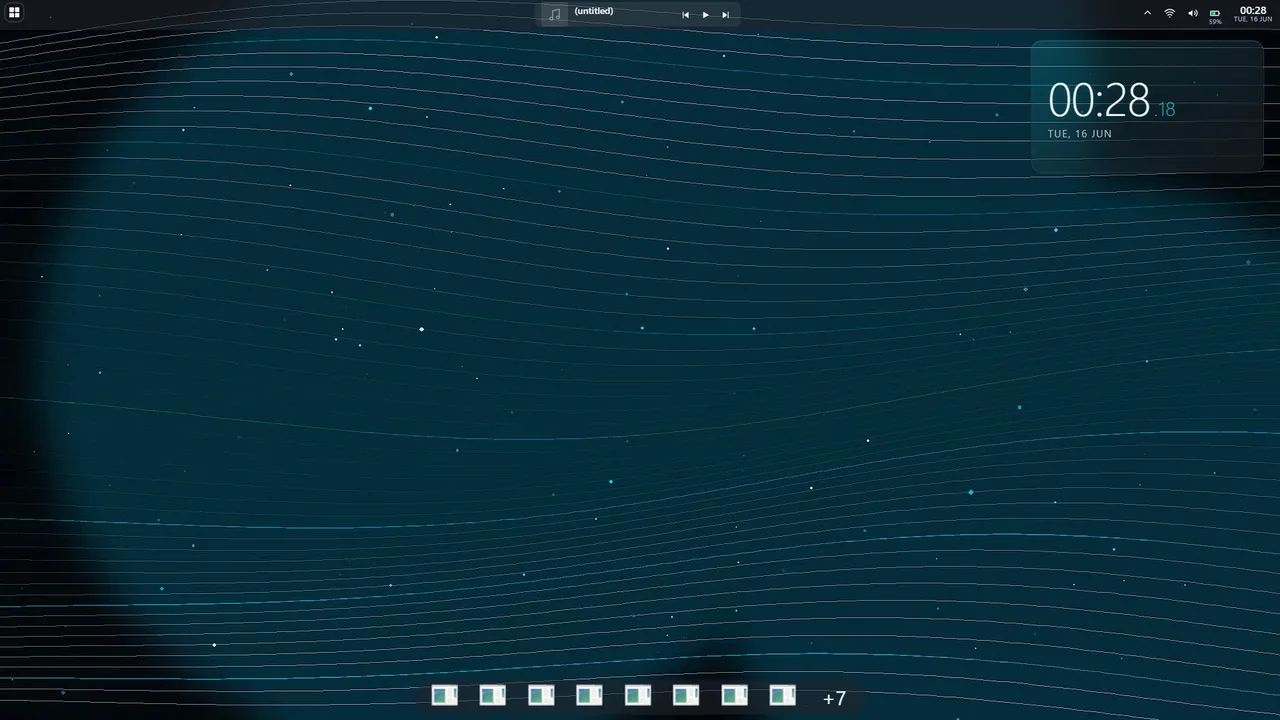
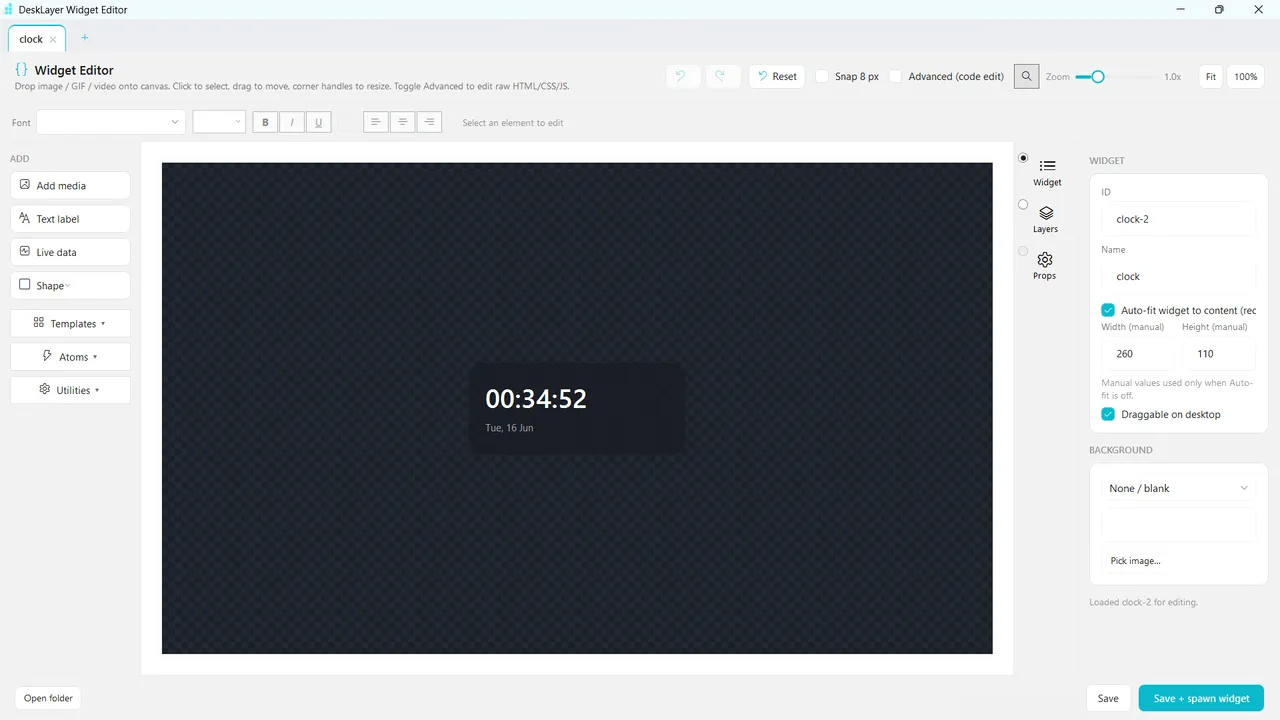
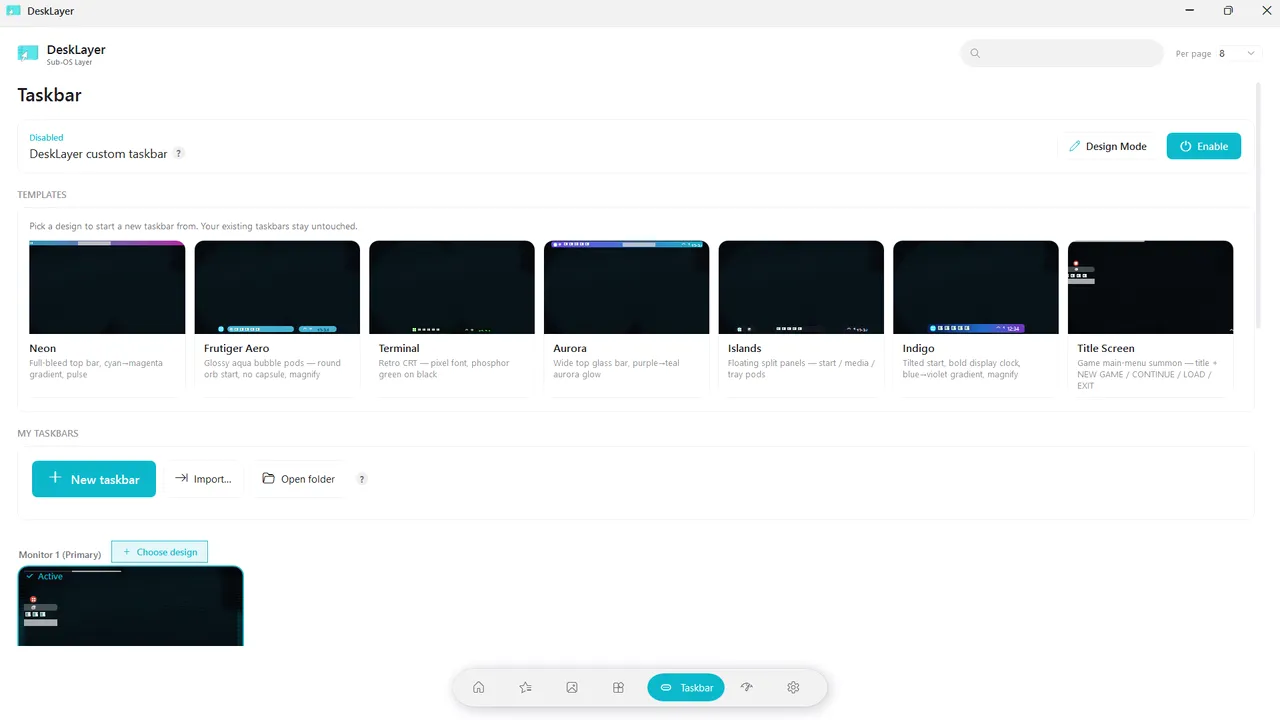
The core premise is radical in its simplicity. Rather than tweaking Windows within its constraints, DeskLayer strips away the taskbar entirely and replaces it with a fully editable floating dock that you design pixel by pixel. Every element—app icons, the system tray, clock, media controls, volume slider—becomes a movable, resizable, and styleable component. This is not a theme or a skin that sits atop Windows; it is a functional replacement for the taskbar that retains all its core behaviours: pinning, app grouping, window previews on hover, and right-click jump lists.
Customisation Without Limits
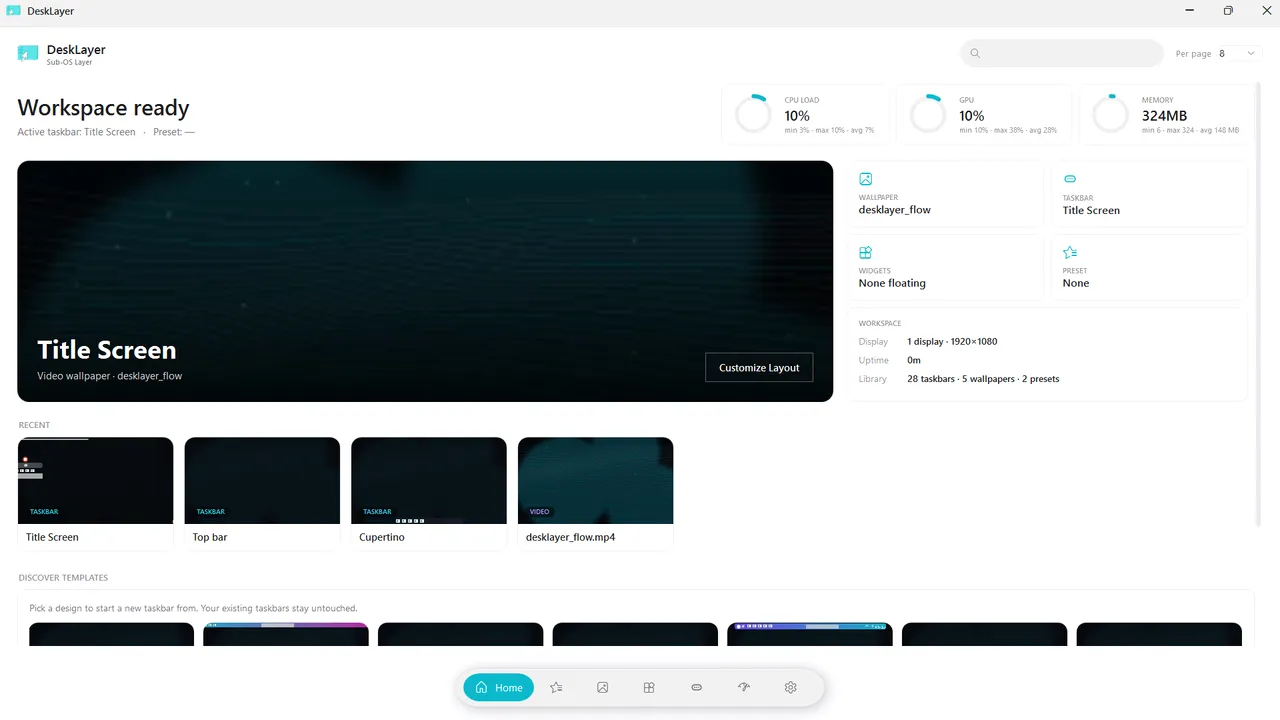
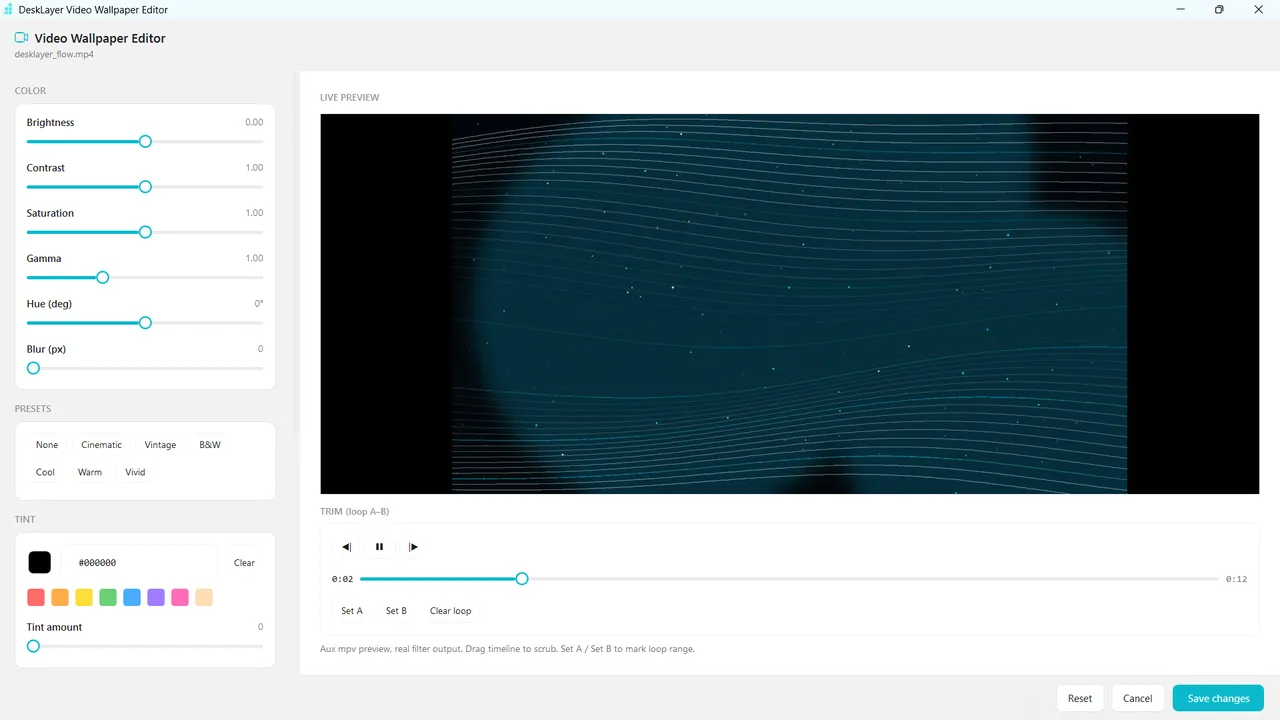
The depth lies in how far customisation extends. You can shape your dock as a pill, a full panel, or something entirely unique. Gradients, bevels, fonts, and themes are all adjustable. Individual app tiles can have separate states for active, running, and notification modes, each with its own visual treatment. Smart alignment guides ensure elements snap cleanly even in freeform layouts. Live HTML and video wallpapers sit beneath this system, turning your desktop background into an interactive or animated surface rather than a static image.
The design choice here carries a genuine tension. Total freedom to reshape the interface means the learning curve is steep—first-time users will need to understand how to build rather than simply configure. The floating dock must remain stable and responsive, and any lag or visual glitching would undermine the entire premise. Whether Buraito-stack has solved those technical challenges at launch is the unproven part.
Release Date and Platforms
The release date is July 17, 2026, with PC as the only confirmed platform. This narrow initial scope suggests a focused, Windows-first development cycle rather than a scattered multiplatform push, which favours stability and depth over breadth.
This is software for people who have spent years frustrated by Windows defaults and are willing to invest time configuring an alternative. It rewards both aesthetic vision and technical patience, and it assumes you know what you want your desktop to be before you start. Skip it if you prefer simplicity; pick it up on launch if you are the kind of person who has ever wished for control over every pixel of your interface.
Features
System requirements
Minimum
- OS
- Windows 10 64-bit, version 2004 (build 19041) or newer
- Processor
- Dual-core 2.0 GHz
- Memory
- 8 GB RAM
- Graphics
- DirectX 11 capable GPU (integrated graphics OK)
- DirectX
- Version 11
- Storage
- 400 MB available space
- Additional Notes
- Requires the Microsoft Edge WebView2 Runtime (preinstalled on Windows 11; installed automatically on Windows 10).
Recommended
- OS
- Windows 11 64-bit
- Processor
- Quad-core 3.0 GHz
- Memory
- 16 GB RAM
- Graphics
- GPU with hardware H.264 decode (AMD, Intel or NVIDIA) for low-power video wallpaper
- DirectX
- Version 12
- Storage
- 600 MB available space
- Additional Notes
- A GPU with hardware video decode (AMF, Quick Sync or NVENC) gives the smoothest live wallpaper at near-zero GPU load.





No comments yet. Be the first to share your thoughts.