
About Bearicade
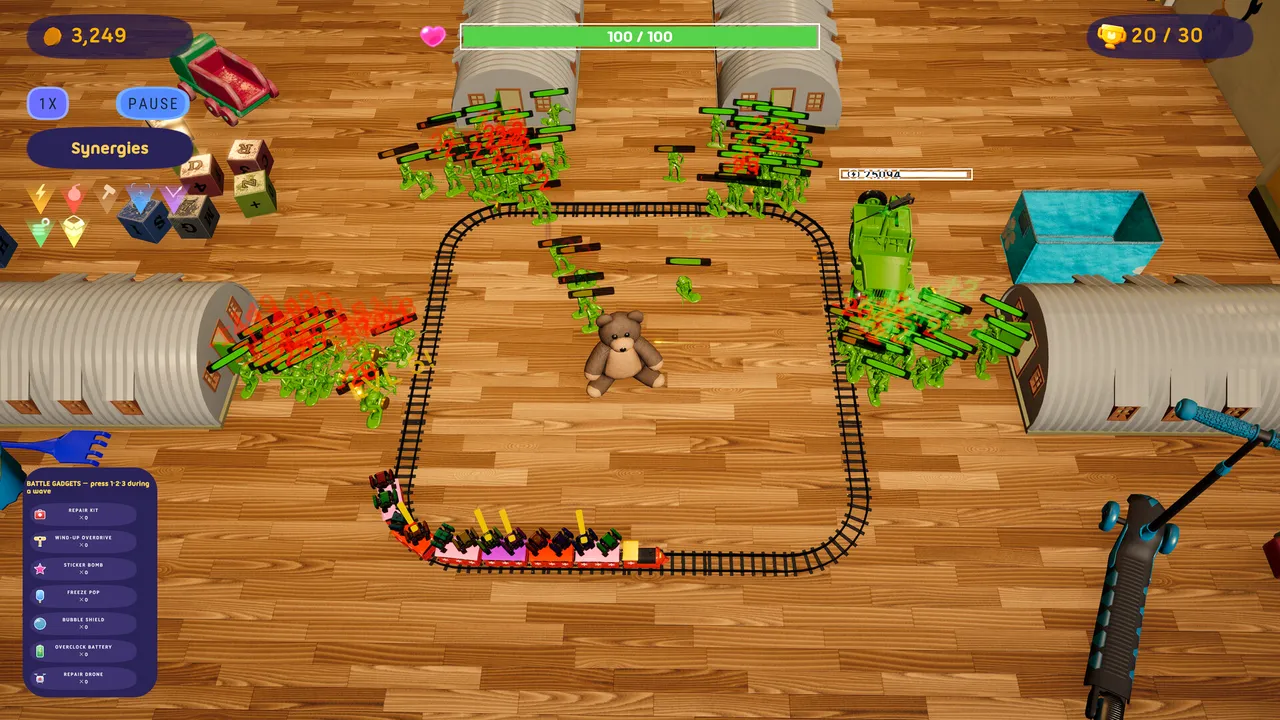
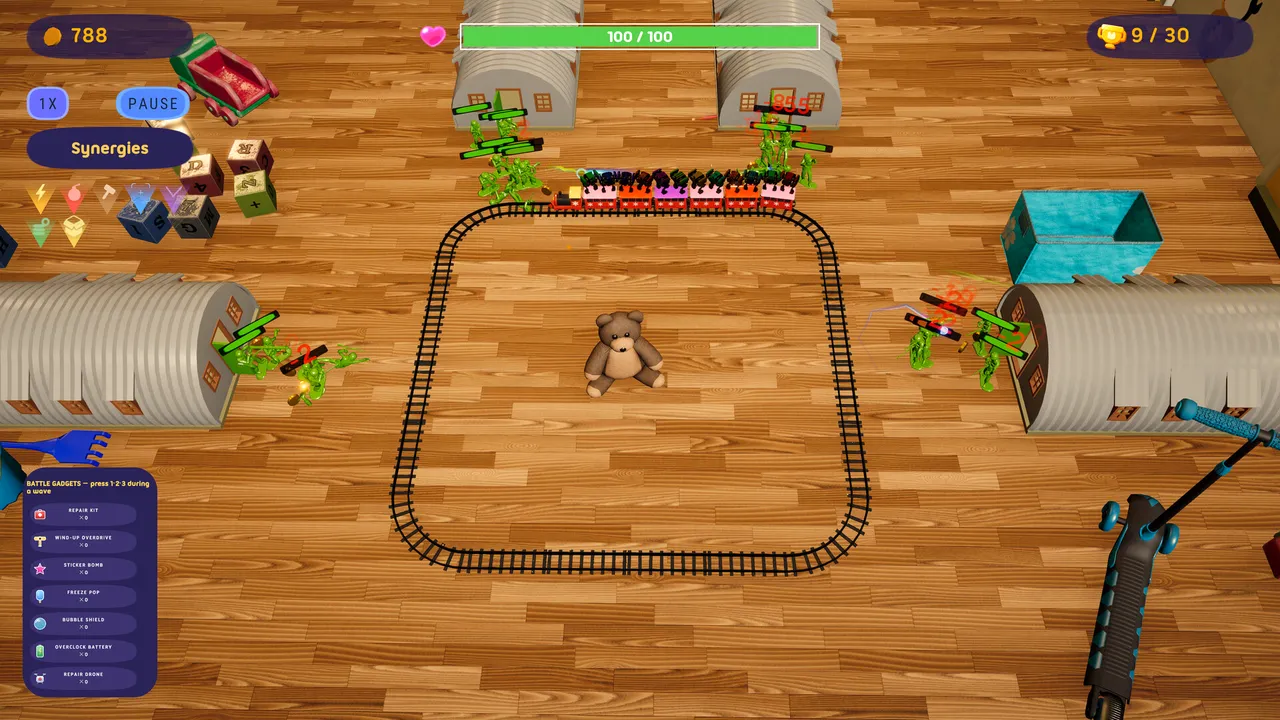
Bearicade stakes its tower defense roguelite on a single radical constraint: your towers move. Every weapon—dart blasters, cap guns, spud cannons—bolts onto wagons of a wind-up train that circles your teddy bear in an endless loop, turning static placement strategy into a rhythm of momentum and collision. The locomotive itself becomes a bludgeon, ramming anything that wanders onto the track. This is not about positioning towers on a fixed grid; it is about timing when to pass a weapon through a zone and which colored wagon beneath it unlocks the right bonus.
Rolling defense and wagon synergy
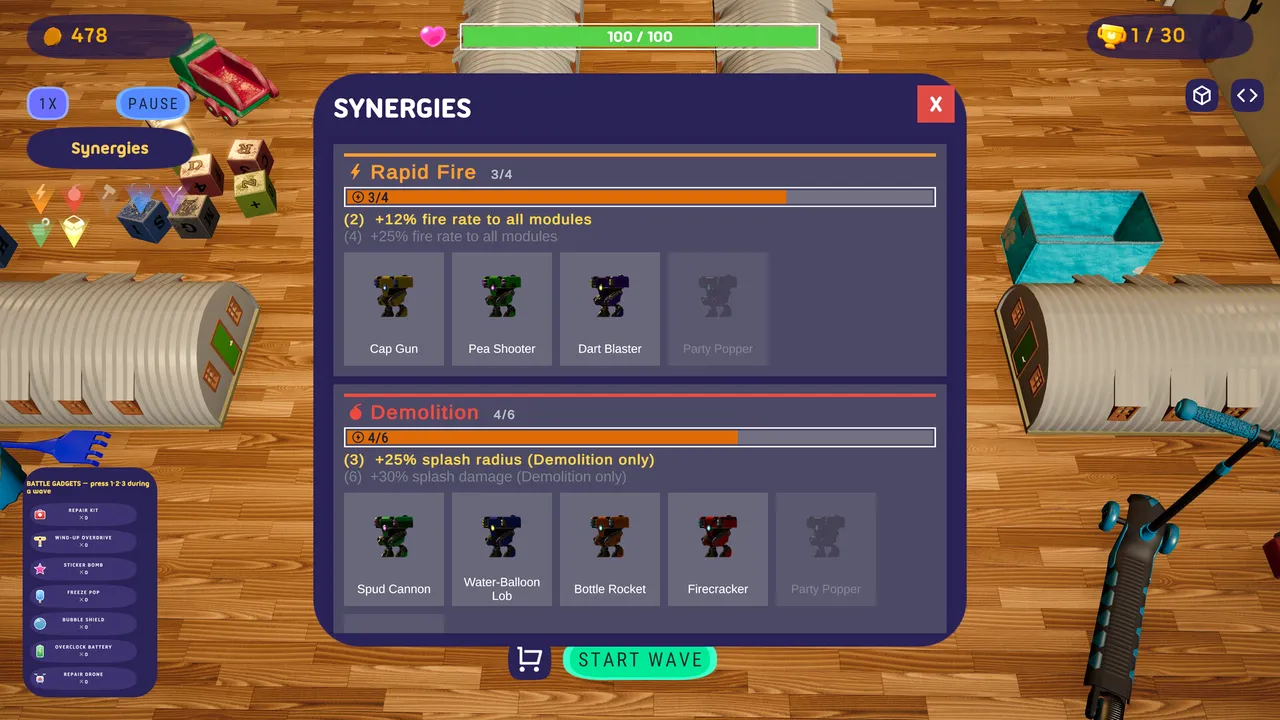
The 12 wagon colors form the spine of Bearicade's progression system. Each carries a hidden rule: one grants extra gold, another speeds leveling, a third compounds bonuses the longer a tower stays mounted. Choosing where to slot a tower becomes as crucial as choosing which tower to draft. A mid-tier cannon on the right wagon outperforms a high-tier blaster on the wrong one, forcing players to think ahead about wagon rotations and which bonuses will stack. This wagon system is where the game's promise lives or dies—whether stacking synergies feels rewarding or whether the moving train becomes a constraint that frustrates rather than excites.
The release date and core loop
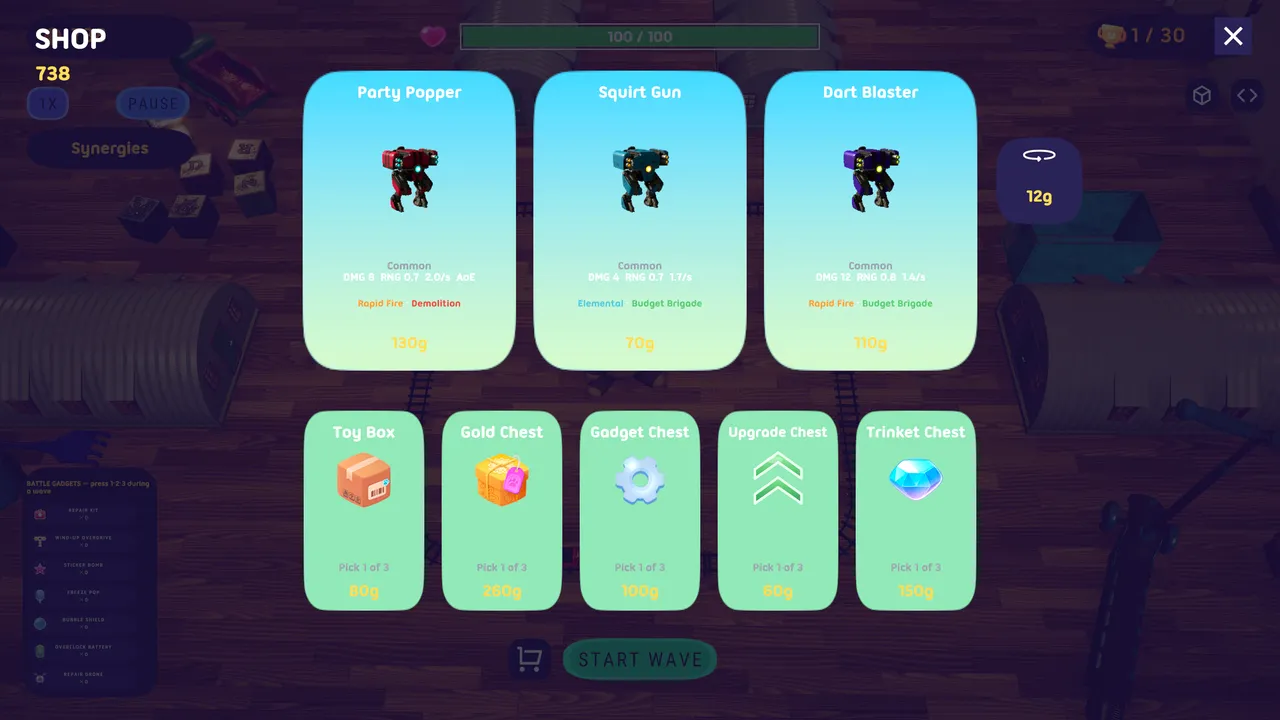
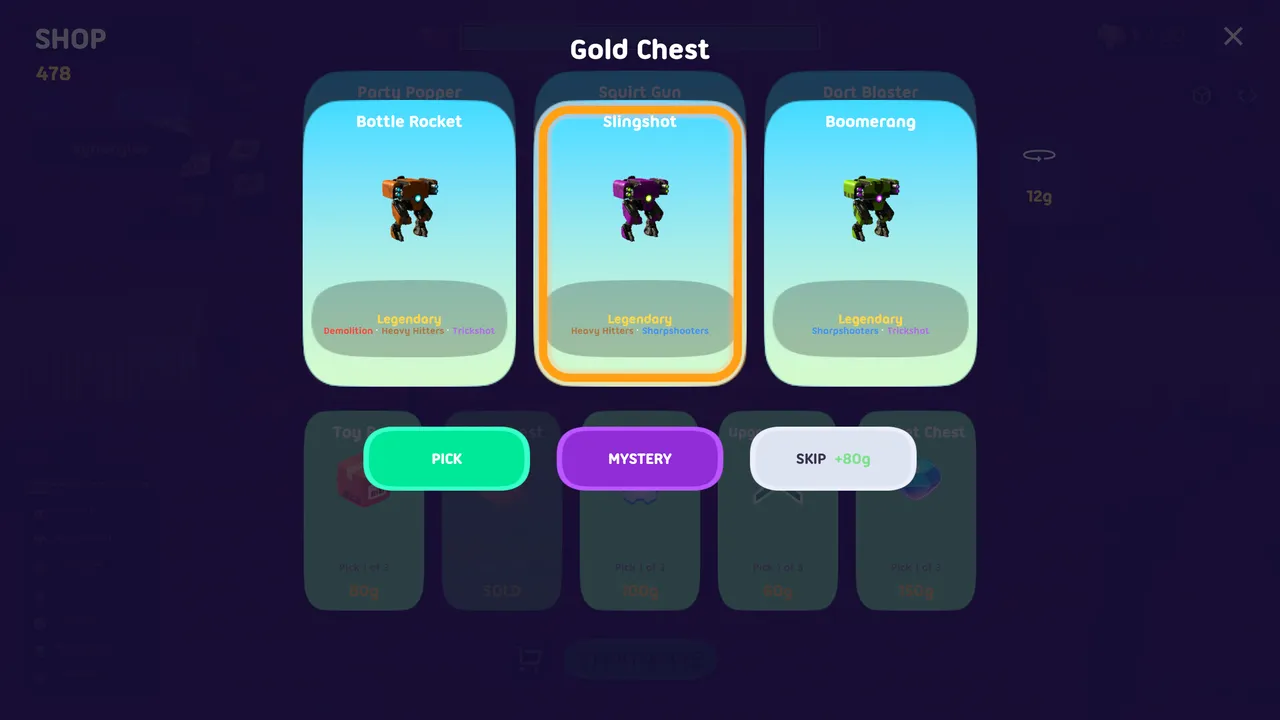
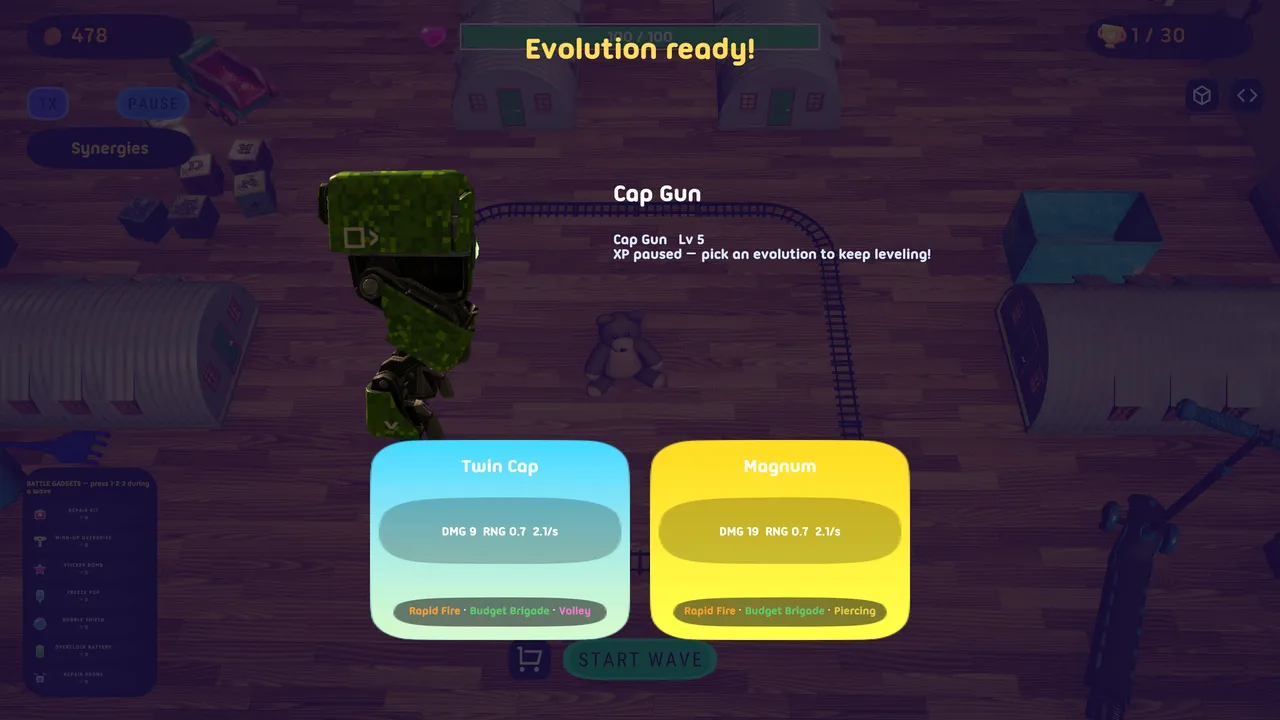
Bearicade releases on PC on July 20, 2026. Between waves, the shop deals three cards: take one, pay to reroll with inflating prices, or pass. Five toy chests—Toy Box, Gold Chest, Gadget Chest, Upgrade Chest, Trinket Chest—each offer a choice: grab a visible prize, gamble on a hidden reward from the full pool, or cash out. Towers level up free, so the loop is less about grinding and more about reading which offers bend toward your current train and which risks pay off. The release date timing catches it in a crowded year for strategy indie releases, so execution on the draft-and-gamble tension is everything.
The central gamble is whether a moving defense can sustain tension across a full run. Static tower defense works because placement decisions lock in; here, every tower rotates through the same zones on repeat, which could feel hypnotic or tedious depending on wave design and difficulty pacing. Players who loved Balatro's deck-building chaos or FTL's relentless scaling curve will recognize the draft-and-adapt rhythm. Anyone seeking a meditative, spatial tower defense should wait for reviews first—this prioritises momentum and card economy over the quiet satisfaction of a perfectly placed perimeter.
Features
System requirements
Minimum
- OS
- Windows 10 64-bit
- Processor
- Intel Core i3 (dual-core, 2.4 GHz) or AMD equivalent
- Memory
- 4 GB RAM
- Graphics
- DirectX 11 capable GPU with 1 GB VRAM (Intel HD Graphics 5000 / NVIDIA GeForce GT 730 / AMD Radeon R7 240)
- DirectX
- Version 11
- Storage
- 2 GB available space
Recommended
- OS
- Windows 10/11 64-bit
- Processor
- Intel Core i5 (quad-core, 3.0 GHz) / AMD Ryzen 3 or better
- Memory
- 8 GB RAM
- Graphics
- NVIDIA GeForce GTX 1050 / AMD Radeon RX 560 (2 GB VRAM) or better
- DirectX
- Version 12
- Storage
- 2 GB available space




No comments yet. Be the first to share your thoughts.